Thursday, May 21, 2026
Home Blog Page 8

Kaliro ONC Coordinator warns headteachers against sending students home over school requirements

0

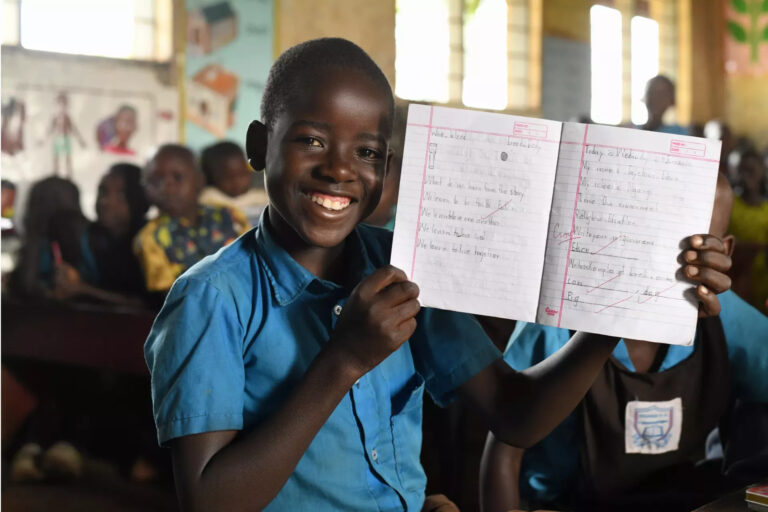
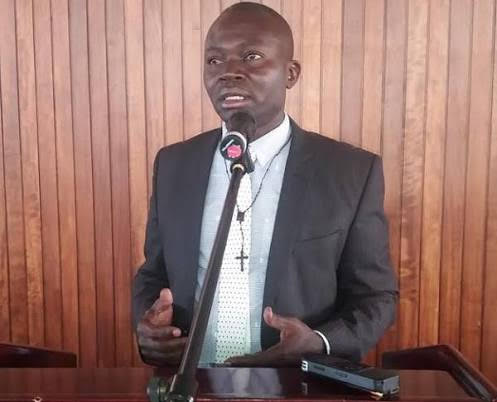
The Office of the National Chairman (ONC) District Coordinator for Kaliro, Wabwire Andrew, has issued a strong warning to headteachers of government-aided schools against sending students home over what he described as excessive “school requirements.”

In a statement released this week, Wabwire expressed concern that some school administrators are imposing heavy charges on parents, allegedly under the guise of school requirements, and denying learners access to education when payments are not made.

“When the NRM government came into power in 1986, it introduced free education at both primary and secondary levels to support children from underprivileged families and curb illiteracy,” Wabwire said. “It is unfortunate that some administrators have shifted from the spirit of this program.”

He cited reports indicating that in some government schools, parents are being asked to pay between Shs100,000 and Shs200,000 per child. According to him, students who fail to meet these payments are sometimes denied entry into school, leading to increased dropout rates.

Wabwire noted that for families with multiple school-going children, the financial burden can be overwhelming. “A parent with four children paying Shs200,000 per child would need Shs800,000 per term. This places unnecessary stress on families and creates frustration that is wrongly directed at government,” he said.

He emphasized that the government has already established measures to facilitate free education under the Universal Primary Education (UPE) and Universal Secondary Education (USE) programs, and no learner should be sent home due to inability to pay additional charges.

On the issue of school meals, Wabwire clarified that while parents may contribute towards lunch, failure to do so should not result in a child being denied access to school. “Education is a right, not a privilege,” he stated.

The ONC coordinator further revealed that some schools reportedly send students home on the first day of term over unpaid requirements — a practice he described as unacceptable and one that must cease immediately.

“As ONC, and in line with our 2026 slogan of ‘Protecting the Gains,’ we are committed to ensuring that all children benefit from the free education policy,” Wabwire said. He warned that failure by headteachers to comply with government policy would attract appropriate action in accordance with the law.

Education authorities in the district had not yet issued an official response by press time.

INTEGRATED KNOWLEDGE: Why Uganda needs the arts and social sciences towards the 22nd century

0

By Oweyegha-Afunaduula

Introduction

A dangerous and short-sighted intellectual apartheid is being engineered in Uganda today. The NRM regime, with President Tibuhaburwa Museveni as its most vocal proponent, has openly declared an unprincipled and deceptive war on the Arts and Social Sciences. This is not merely a policy preference for the natural sciences; it is a deliberate strategy of mind-shaping with profound consequences for our nation’s future as we march towards the 22nd Century.

The government’s stance is clear and damaging: they actively discourage students from pursuing Arts and Social Sciences, falsely claiming that only natural sciences can secure their future. This is propagated despite the reality of our digital age, where a software developer, a data analyst, a content strategist, or a systems manager can emerge from any field of study, provided they have critical thinking, creativity, and adaptability—skills honed supremely well in the Arts and Social Sciences.

The discrimination is institutionalized and financial. A PhD holder in a natural science discipline is valued—and paid—more by the state than a PhD in Political Science, Literature, or Social Work. This is not an accident of the market but a calculated devaluation. The regime’s “commitment to science” is visible in targeted funding, presidential directives, and the construction of specialized institutions, all while faculties of humanities and social sciences are starved of resources and morale.

The Strategy: Divide, Rule, and Repress

This strategy has insidiously polarized our universities, pitting knowledge worker against knowledge worker. It is a classic divide-and-rule tactic, creating an apartheid hierarchy of disciplines. The oppression is felt daily. When academics in the Arts and Social Sciences raise their voices against this discrimination, they are often suppressed by their own administrators, who increasingly act as extensions of the ruling class rather than defenders of academic freedom.

A cursory analysis of Makerere University’s leadership structure is revealing. One must ask: Who is the Chancellor? Who Vice-Chancellor? Who is the Chairman of the University Council? Who is the Chairman of the Appointments Board? And who are the members of the University Council and the Appointments Board?

From Diagnosis to Prescription: Building Uganda’s 22nd Century Knowledge Ecosystem

Having established the strategic folly and oppressive nature of the current policy, we must now turn to the blueprint for the future. Rejecting the apartheid of knowledge is the first step; the second, more crucial one, is actively constructing an educational and societal framework where the Arts, Social Sciences, and Natural Sciences are dynamically integrated. This is not a utopian ideal but a practical necessity for survival and thriving in the coming century.

1. Curriculum Revolution: From Silos to Synergy

The change must begin in our classrooms, from primary school to postgraduate study. We need a curriculum that:

· Promotes Problem-Based Learning (PBL) from Day One: Instead of teaching Biology, History, and English Literature in isolated periods, students should tackle projects like “The Health of Lake Victoria.” This would require scientific study of pollution, historical analysis of fishing policies and community displacement, economic assessment of livelihoods, and creative communication through writing or film to advocate for solutions. This mirrors the extradisciplinary reality of life itself.

· Mandates Cross-Registration in Universities: A medical student should take a course in Medical Anthropology. An engineering student should engage with Philosophy of Technology and Ethics. A literature student should understand the basics of environmental science. This breaks down the institutional barriers that currently enforce intellectual segregation.

2. Redefining “Productivity” and National Value

The regime’s bias stems from a narrowly economistic view of productivity. We must champion a broader definition of national value that includes:

· Social Cohesion and Peacebuilding: The work of historians, sociologists, and conflict-resolution experts in healing community fractures is as vital to national stability as any infrastructure project.

· Cultural Capital and Soft Power: Uganda’s global influence in the 22nd century will depend not just on its exports but on its cultural exports—its literature, music, philosophical thought, and ethical leadership. The Arts are the engine of this soft power.

· Governance and Institutional Integrity: Political scientists, public administrators, and legal philosophers are the architects and auditors of effective, just institutions. Devaluing them is an invitation to corruption and tyranny.

3. The 22nd Century’s “Wicked Problems” Demand Integrated Minds

Let us be specific about the challenges on the horizon that will scorn disciplinary narrowness:

· Climate Crisis Adaptation: While climate scientists model rainfall patterns, it is the social scientist who designs the fair social policy for climate migrants, and the artist who crafts the narratives that motivate collective behavioral change.

· The Fourth Industrial Revolution (AI, Biotechnology): Computer scientists will build AI systems. But without ethicists, linguists, and sociologists at the design table, we risk encoding our worst biases into algorithms that could devastate societies. The governance of biotechnology cannot be left to biologists alone.

· Urbanization and Future Cities: The engineer designs the smart city’s infrastructure, but the quality of life within it is determined by urban planners (geography), social workers, and the community artists who create public spaces that foster human connection.

4. Reclaiming Our Pre-Colonial Intellectual Heritage

As I alluded to earlier, this integration is not a foreign import. It is a return to our roots. In pre-colonial Ugandan societies, the “expert” was often an integrated thinker: a farmer who understood astronomy for planting, meteorology for weather prediction, botany for medicine, sociology for community leadership, and oral literature for preserving history and ethics. The colonial project dismantled this holistic knowledge system, replacing it with fragmented disciplines that served a bureaucratic and extractive administration. The current regime’s policy is, tragically, an extension of this colonial logic.

Conclusion: The Legacy We Choose

My father’s life—and my own trajectory—stand as testament to the power and resilience of the integrated mind. He was not a collection of fragmented roles but a whole person applying a symphony of skills and understandings to the challenges of his community. This is the model for the 22st-century Ugandan citizen.

Therefore, the call to action is clear. We must:

· Advocate for policy and funding parity at all levels of government and university management.

· Empower university senates and academic staff associations to resist political manipulation and champion curricular integration.

· Celebrate and fund research clusters that are inherently transdisciplinary.

· As parents and teachers, encourage young people to cultivate wide-ranging curiosity and to see knowledge as a web, not a series of isolated boxes.

The journey to the 22nd century has already begun. Will Uganda arrive as a fractured society led by technically proficient but socially and ethically myopic specialists, easily manipulated by power? Or will we arrive as an innovative, cohesive, and wise society, led by integrated thinkers who can navigate complexity with both technical skill and profound human understanding?

The answer lies in the choices we make today about the value we place on the Arts and Social Sciences. Let us choose integration over apartheid, wisdom over mere information, and reclaim the holistic intellectual spirit that has always been our true heritage.

*Oweyegha-Afunaduula is a natural scientist, academic, public intellectual, and former Secretary General of the Makerere University Academic Staff Association and former Chairman of the Nile Basin Discourse.

Prof Oweyegha-Afunaduula is a Conservation Biologist and member Center for Critical Thinking and Alternative Analysis

UCE RESULTS RELEASE: 2025 Uganda Certificate of Education exam results to shape policy and curriculum reforms, UNEB says

0

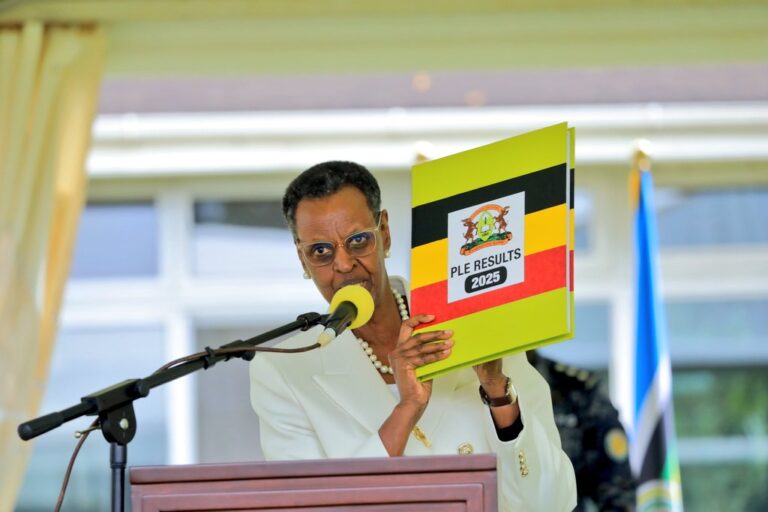
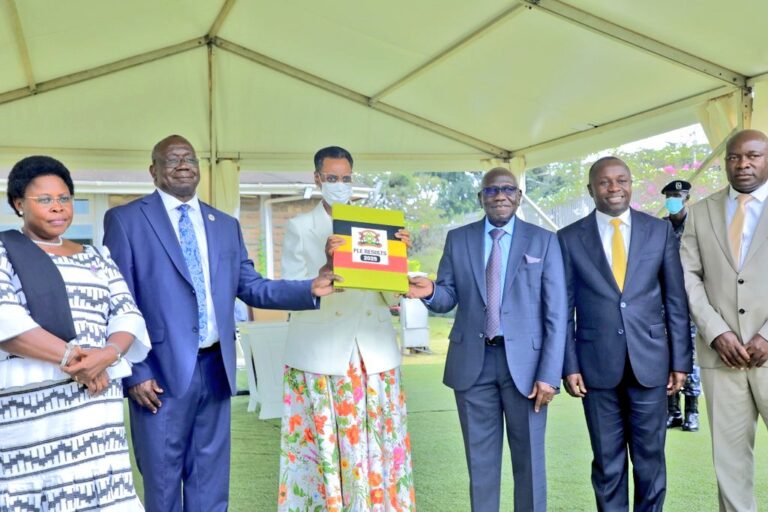
The 2025 Uganda Certificate of Education (UCE) examination results will be officially released tomorrow, February 13, 2026, by the Minister of Education and Sports, First Lady Mama Janet Museveni, at State House, Nakasero. The announcement was made by the Uganda National Examinations Board (UNEB).

The UCE examinations, taken by hundreds of thousands of students nationwide, are a critical milestone in Uganda’s education system, determining progression to advanced level studies and vocational pathways. The 2025 exams were conducted under stringent supervision to uphold fairness and maintain national standards.

UNEB has advised candidates and parents to access results through official channels, including the UNEB portal and authorized SMS services, cautioning against unofficial sources that may spread inaccurate information.

The release event is expected to be attended by top education officials, policymakers, and other stakeholders, reflecting the government’s commitment to transparent and credible examination processes.

The Ministry of Education has emphasized that the results will not only indicate individual performance but also provide insight into national trends in education, helping inform policy and curriculum improvements.

In recent years, the ministry has focused on enhancing teacher training, expanding access to quality learning materials, and modernizing science and vocational education to better prepare students for higher education and the workforce.

Candidates are encouraged to review their results carefully and seek guidance on next steps, as the outcomes will shape their academic and career trajectories.

DESTRUCTIVE TRIAD: How ecocide, ethnocide, and intellectual death are wrecking education in Uganda

0

By Oweyegha-Afunaduula

Abstract

Uganda’s education system, once a beacon of post-independence promise, is being systematically wrecked by three interlocking forces: Ecocide (the destruction of environmental understanding and belonging), Ethnocide (the erosion of cultural and collective identity), and Intellectual Death (the suffocation of critical thought and public scholarship). This article argues that under a Machiavellian state model, education has been reconfigured not for societal liberation or intellectual advancement, but as a tool for cheap labour production, political subjugation, and the consolidation of power for a ruling class. Through familial control, privatisation, curricular manipulation, and the militarisation of minds, the system cultivates dependency and a cadre of “educated fools.” Crucially, we also examine the paradoxical role of the Internet, social media, and Artificial Intelligence (AI) as both tools of this diminishment and, potentially, the essential instruments for a pedagogy of liberation in an increasingly globalized yet diminishing world.

1.0 Introduction: Redefining the Triad for a Digital Age

In our earlier analysis of healthcare as a theatre of concealed genocide, we delineated how systemic neglect weaponises policy. Applying the same lens to education in a hyper-connected era requires redefining our triad:

· Ecocide in Education: Not merely physical environmental destruction, but the pedagogical killing of ecological understanding. It is the cultivation of an “environmental psyche” that teaches students they are apart from nature, not a part of it. This breeds biocultural illiteracy, natural belonging illiteracy, and ecological belonging illiteracy, rendering citizens passive witnesses to land grabs. In a digital age, this illiteracy is compounded by a curriculum for the past, deliberately disconnected from the tools that could map and resist environmental plunder.

· Ethnocide in Education: The systematic dismantling of collective identity and communal values through schooling. It is achieved via privatisation and commodification, which atomises society, and the suppression of political discourse, severing education from critical consciousness. The “Machiavellian individualist merit approach” pits students against each other, eroding Ubuntu. Meanwhile, the globalizing force of the Internet presents both a threat of cultural homogenization and an unprecedented tool for cultural preservation and resistance.

· Intellectual Death in Education: The deliberate closure of intellectual space and the devaluation of intellectual capital. This is enforced by prioritising loyalty over competence, appointing NRM cadres to lead institutions, and militarising thought. It results in “inactivated public intellectuals” and “masses of educated fools.” Here, the control over knowledge is extended into the digital realm, where access to information is monitored, yet where AI and global networks also offer clandestine avenues for intellectual resurrection and global solidarity.

These three pillars are orchestrated through a Machiavellian framework where education is purely an instrument of power retention.

2.0 The Machiavellian Architecture: Familial Control and Political Weaponisation

The management of Uganda’s education sector exemplifies a patronage-based, neo-patrimonial state. President Tibuhaburwa Museveni’s direct and familial oversight—with the First Lady as Minister of Education and Sport—symbolises the sector’s repurposing for political ends. This “Presidentialism in education” ensures personalist initiatives trump systemic planning.

The underfunding of the Ministry, despite its high-profile leadership, is a strategic crisis that justifies privatisation and deceptive “seed schools.” This leads to Educational Apartheid: a two-tier system where quality is a commodity for the elite, and the majority are funneled into facilities designed for “education for cheap labour.” This model deliberately neglects to prepare students for a world shaped by the Internet and AI, instead producing workers for a diminishing globalized world of exploitation.

3.0 Ecocide: Cultivating Environmental Illiteracy in a Data-Rich World

The curriculum remains a primary tool for ecological disconnection. Teaching “Environment” as what merely “surrounds us” philosophically exiles the student from the ecosystem. This is compounded by the militarisation of environmental management, which disconnects indigenous societies from their stewardship knowledge.

The result is a citizenry ecologically illiterate, unable to comprehend the assault on land through grabbing. This is a profound failure in an age where satellite imagery and global databases could empower communities to protect their resources. The state’s model fosters ignorance about ecology and ecosystems, ensuring that the digital tools that could liberate environmental understanding remain unused, while the environmental psyche of separation is reinforced.

4.0 Ethnocide: Privatisation, Digital Homogenization, and the Struggle for Cultural Memory

The aggressive privatisation of education serves as a potent ethnocidal engine, transforming learning into a private transaction that negates communal values. The “money as the centrepiece” ethos promotes a ruthless individualist meritocracy.

Concurrently, fear and silence are enforced. Debates and genuine political education are suspended. However, this ethnocide now operates in the digital sphere. While the state suppresses local discourse, global social media and the Internet bombard youth with homogenizing, consumerist cultures. Yet, paradoxically, these same platforms are the new frontier of cultural resistance. Diasporas and cultural custodians use them to archive languages and practices, creating a digital counter-narrative against the ethnocide enacted by the formal system. The battle for identity is now fought on TikTok, YouTube, and in encrypted forums, as much as in the classroom.

5.0 Intellectual Death: Cadres, Corruption, and the Digital Battle for Minds

Intellectual death is institutionalised. Leadership is entrusted to NRM cadres, whose primary qualification is loyalty. Corruption, the state’s foundational bedrock, replaces meritocracy.

The massification of education without intellectual rigour produces “educated fools.” Knowledge is fragmented; universities resist interdisciplinarity and transdisciplinarity, making holistic education impossible. Into this void steps the digital world as both a threat and a salvation. The state views the Internet with a Machiavellian eye—a tool for surveillance and propaganda. Yet, it is also a leaky system. Students use VPNs to access banned scholarship; AI-powered tools can deconstruct state narratives and simulate complex ecological and social systems; online forums revive political education. The Internet becomes the expanded intellectual space, a digital commons where public scholarship can persist, albeit under threat. AI, rather than being harnessed for critical, contextual learning, is ignored or feared, perpetuating education for the past while the future unfolds online.

6.0 Synthesis and Liberation: Reclaiming Education in a Diminishing World

The destructive triad operates in synergy: Ecocide in the curriculum prepares the populace to accept physical ecocide. Ethnocide dismantles collective resistance. Intellectual Death ensures no critical vanguard emerges.

The result is education for dependency and despondency, engineered to produce a technically trained but critically neutered populace. It is education for the past in a digital age. However, a counter-narrative is embedded within the very technologies of globalization. The liberatory potential of the Internet, social media, and AI presents a profound contradiction to the state’s project:

· The Internet as Democratizer: It shatters the state’s monopoly on knowledge, allowing access to global journals, indigenous knowledge repositories, and real-time environmental data, directly countering biocultural illiteracy and intellectual death.

· Social Media as Counter-Public Sphere: It amplifies subaltern voices, exposes the deception of seed schools and corruption, and creates digital solidarity networks, challenging the fear factor and silence that underpin ethnocide.

· AI as Personalized Liberatory Pedagogy: If reclaimed, AI could curate transdisciplinary curricula, simulate the impacts of policy, preserve languages, and critically deconstruct hegemony, forcibly reintegrating knowledge and equipping minds to tackle wicked problems.

7.0 Conclusion: The Digital Frontier of the Struggle

The battle for Uganda’s education is no longer confined to dilapidated classrooms. It has expanded into the digital ether. The state’s Machiavellian model, focused on power retention, is inherently threatened by these technologies of connection and critical analysis. Therefore, the path to salvaging education requires a conscious, collective struggle to:

1. Seize Digital Tools: Train students and teachers in digital literacy, critical media analysis, and the use of AI for contextual problem-solving, not just rote learning.

2. Build Digital Archives: Systematically use digital platforms to preserve and teach indigenous knowledge and biocultural heritage, forging a digital shield against ethnocide.

3. Foster a Networked Intellectual Commons: Support platforms for uncensored public scholarship and debate, recreating the intellectual space suffocated in physical institutions.

4. Demand an Education for the Future: Challenge a curriculum of the past by integrating ecological digital tools and ethical tech studies, preparing citizens not for cheap labour, but for sovereign engagement in a complex world.

The Destructive Triad seeks to wreck education by disconnecting people from their land, their culture, and their own critical minds. The emergent, liberatory use of digital technology offers a triad of reconnection: Ecological Re-embedding, Cultural Re-membrance, and Intellectual Resurrection. The classroom is now everywhere; the curriculum must be rewritten by the people, byte by liberating byte.

For God and My Country.

Prof.  Oweyegha-Afunaduula is Conservation Biologist and member of Center for Critical Thinking and Alternative Analysis

WORLD CANCER DAY: We shouldn’t curtail the unique efforts of nascent cancer actors in Uganda

0

By Jumbwike Sam

As the world commemorates World Cancer Day today, it is clear to many people in Uganda that cancer is no longer a far-off threat but a reality in our homes, communities and towns. Cancer has claimed and continues to claim thousands of lives in Uganda, many of which would have been prevented through early detection, timely treatment and psychosocial support. 

Low awareness has consistently been shown as the precursor to late diagnosis and treatment because it delays people from seeking help for cancer-like symptoms. Lack of awareness about the curability of cancer has also had an impact on health-seeking behaviour towards cancer. Every cancer patient’s journey presents with its unique experience, with some struggling with diminished psychological well-being, increased stress, anxiety and depressive symptoms which require holistic approaches for meaningful, manageable and comprehensible experiences on their journeys. 

As we amplify this year’s theme, “United by Unique”, it is vital for us to remember that the fight against cancer can never be managed single-handedly but through concerted efforts with all benign stakeholders. It is without doubt that Uganda’s health system is already stretched with few specialists, low resources and geographical challenges for far-off communities to get to cancer centres.

In many contexts, NGOs are the first responders in the cancer fight. NGOs have been combing the hard-to-reach areas to extend community-based screening, interpreting information into local languages, supporting patients with transport and accommodation, and confronting the myths and stigma. Others have been providing palliative care where hospitals haven’t been able to. We must resist policy bottlenecks, practices and mentalities that suffocate other stakeholders in the fight and create a collaborative environment between the state and non-state actors. 

Lately, NGOs in Uganda are facing increasing regulatory hostilities and pressure in the name of traditionalism and national security. Whereas regulation and accountability are essential, unrealistic bureaucracy, delayed approvals and big fines from agencies like the Uganda Revenue Authority and the Uganda Registration Service Bureau have strangled organisations that are already operating on limited budgets. NGOs spend a lot of time and resources on navigating paperwork and paying fines, using their meagre resources that would have been spent on services.

Whenever NGOs are deregistered or suspended, programmes shut down. Community trust is disrupted by abrupt closures, and people in communities stop seeking care. The current rigid one-size-fits-all approach to NGO oversight is a huge setback for cancer NGOs that survive on individual supporters. Rather than suffocating innovation, there should be proportional regulation and open channels of dialogue with the critical entities in cancer care.  Regulators like the Uganda Cancer Institute should not look at NGOs as competitors but as partners that require trust, mutual respect and closer collaboration. Let us utilise this World Cancer Day to renew our commitment to collaboration and respect for everyone’s unique contribution to the cancer fight in Uganda.

The writer is a cancer activist and works at the Saam Salley Humanitarian Ad Agency.

FUNDAMENTAL PURPOSE: Preparing and assessing learners at all levels of education for the past, not the future

0

By Oweyegha-Afunaduula

Introduction

In an era defined by the Fourth Industrial Revolution, where the Internet, Social Media, and Artificial Intelligence (AI) are reshaping every facet of human existence, the fundamental purpose of education must be re-examined. Education is no longer merely the transmission of accumulated knowledge; it is the preparation of minds to navigate, shape, and thrive in a complex, interconnected, and rapidly evolving digital ecosystem. Yet, in Uganda, and across much of Africa, our educational systems remain stubbornly anchored in the 20th century, preparing learners for a world that no longer exists. This essay argues that without a deliberate, urgent, and central integration of these three technological influencers into our education policy, curriculum, and assessment, Uganda will condemn itself and its citizens to perpetual irrelevance, becoming a relic of the past transplanted into the future.

The Disconnect: Authoritarian Control vs. Digital Imperative

The primary obstacle to educational futurism in Uganda is not a lack of awareness, but a systemic preference for political control over communicative and cognitive empowerment. The current regime, like many authoritarian systems, perceives the open, democratizing, and disruptive nature of the Internet, Social Media, and AI as a threat to its hegemony. Consequently, laws and policies are designed not to harness these tools, but to disempower and disconnect the populace. This digital authoritarianism prioritizes political survivability over national progress, creating a society where access to information is policed and digital literacy is stifled.

This political posture is tragically mirrored in our educational philosophy. We train learners in rigid, siloed disciplines, using pedagogies and assessments designed for a pre-digital age. Our students are assessed on their ability to recall facts, not on their capacity to find, verify, synthesize, and create new knowledge using digital tools. We fear the smartphone in the classroom more than we fear the obsolete textbook. This approach produces graduates who are disconnected from the very platforms and technologies that define global discourse, innovation, and the economy.

From Disciplinary Silos to Extradisciplinary Synthesis: AI as the Catalyst

The future belongs to integrators, not segregators. The complex, “wicked” challenges of our time—climate change, pandemics, sustainable development—demand more than just interdisciplinarity or transdisciplinarity. They demand extradisciplinarity: the conscious seeking of knowledge and solutions from outside the formal boundaries of established academic disciplines altogether. This means valuing indigenous knowledge systems, community wisdom, artistic intuition, and spiritual understandings as critical data points in the quest for truth and innovation.

Herein lies the most profound potential of the digital pivot. Artificial Intelligence is, by its nature, an extradisciplinary engine. Unlike the human scholar trained within a specific canon, AI operates without inherent bias for where knowledge originates. Its algorithms can process datasets from satellite imagery, social media sentiment, oral history recordings, genomic sequences, and market trends with equal analytical rigor. It can find correlations between a folk song’s lyrical patterns and ecological cycles, or model economic resilience based on both formal indices and informal community savings practices. AI offers us an unprecedented tool to decolonize our epistemology—to validate, integrate, and elevate African knowledge systems into a dynamic, global conversation. However, our institutions remain bastions of “rigid disciplinary discourses.”

Academics often “write to themselves and listen to themselves” in obscure journals, their impact confined to narrow echo chambers. By failing to integrate AI and the connective power of the Internet and Social Media into learning, we are not just being technologically backward; we are perpetuating a form of epistemic colonialism. We insist that valid knowledge can only flow from certified disciplines while actively ignoring the extradisciplinary intelligence embedded in our own cultures, languages, and lived experiences. To prepare learners for the future, we must use these tools to train them as synthesizers of all knowledge.

Futuristic Recommendations for All Seasons

To cease being a relic and become a pioneer, Uganda must undergo a radical reimagining of its educational project. The following recommendations are non-negotiable for progress:

1. Declare Digital Access a Fundamental Educational Right: Policy must mandate that every school, from primary to university, has reliable, affordable, and uncensored Internet access. National investment in digital infrastructure must be treated with the same urgency as roads and electricity.

2. Redesign Curricula Around Digital Fluency, AI Literacy, and Extradisciplinary Inquiry: Curricula must integrate coding, data literacy, and digital ethics with modules designed for extradisciplinary exploration. Students should use AI tools to analyze local environmental data alongside indigenous conservation practices, or study public health through both medical journals and community caregiver narratives. Assessment must evaluate problem-solving using these integrated digital resources.

3. Empower Teachers as Guides in the Extradisciplinary Landscape: Teacher training must be revolutionized to equip educators as facilitators of digital and extradisciplinary exploration. They must learn to use AI-assisted tools and guide students in responsibly navigating and synthesizing knowledge from a vast array of online and community sources.

4. Foster Open, Synthesizing Digital Ecosystems: Mandate and fund the development of open digital platforms that connect classroom learning with community knowledge repositories. Encourage academic work to be published and debated on interactive, public forums, using AI to translate and disseminate findings across language and knowledge boundaries.

5. Depoliticize the Digital Sphere for Epistemic Liberation: This is the foundational imperative. The government must separate political strategy from communications and education policy. Laws that weaponize the digital space for control must be repealed. Advisory roles must be filled by forward-looking, ethical technologists and educators, not political loyalists blind to the future. If we continue to subordinate the transformative power of the Internet, AI, and Social Media to short-term politics, we will remain a 20th-century relic, blurring our future and forfeiting our place in the 22nd century.

Conclusion: The Choice Between Epistemic Colonialism and Intellectual Sovereignty

Uganda stands at an epistemic crossroads. One path continues to prepare learners for a fragmented past, using education as a tool for political compliance and disciplinary confinement. This path of digital authoritarianism and intellectual siloing ensures we remain a 20th-century relic in the 21st century, our future blurred, our progress stalled. Our graduates will be illiterate in the language of their own time.

The other path leads to intellectual sovereignty. By courageously placing the Internet, AI, and Social Media at the core of education, we empower a generation of agile, critical synthesizers. We unlock an extradisciplinary approach where AI becomes the bridge between our rich heritage and the future’s toolkit, enabling uniquely African solutions to global challenges. This transforms Uganda from a consumer of imported knowledge into a producer of integrated wisdom.

The choice is stark. Let us educate for an open, synthesizing, and sovereign future. Let us embrace the extradisciplinary potential of our age, or be prepared to be erased by it. The time for teaching to the past is over. The future demands its own architects.

For God and My Country.

Prof.  Oweyegha-Afunaduula is a Conservation Biologist and member of Center for Critical Thinking and Alternative Analysis


NEW VOTING DATE: Electoral Commission moves to safeguard local democracy by rescheduling disrupted polls to a later date this month

0

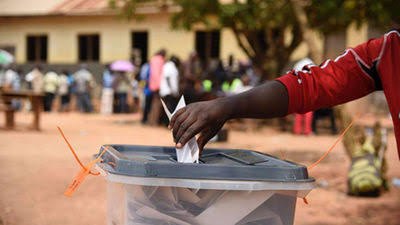
The Electoral Commission (EC) has moved to protect the integrity of local governance by rescheduling elections in areas where polling was disrupted, setting Tuesday, February 17, 2026, as the new voting date for affected Local Government Council electoral areas.

The decision follows the failure to conduct or conclude polling in some areas like Butebo district during the earlier electoral exercise, which had been scheduled for February 4, 2026. According to the EC, the postponement was necessitated by unforeseen circumstances, prompting the need for a fresh and orderly vote.

The rescheduled elections will cover a range of leadership positions at the City/District, Municipality/City Division and Sub-county, Town or Municipal Division levels. These include chairpersons, directly elected councillors, women councillors, as well as representatives of special interest groups, namely youths, older persons, workers and persons with disabilities.

Voting in the affected areas will take place at all gazetted polling stations and, where applicable, at venues designated for electoral colleges. Polling will open at 7:00 a.m. and close at 4:00 p.m., with counting and declaration of results to follow at the respective polling stations.

While announcing the new date, the EC was keen to draw a clear distinction between the rescheduled polls and the broader national programme. The Commission emphasized that February 4 remains the official polling day under the General Elections Roadmap for sub-county, town and municipal division elections nationwide, where voting will proceed as planned through universal adult suffrage.

EC Chairperson Justice Byabakama Mugenyi Simon called on all electoral stakeholders to use the extended window to prepare for a peaceful and law-abiding exercise, noting that the Commission’s priority is to ensure every eligible voter in the affected areas has a fair opportunity to participate.

The announcement underscores the Commission’s effort to balance adherence to the electoral roadmap with the need to guarantee credible and inclusive local elections, particularly in communities where the initial vote was interrupted.

EDUCATION IMPERATIVE: Embracing the sciences of interconnectedness of learning in Uganda

0

By Oweyegha-Afunaduula

From Disciplinary Silos to Holistic Solutions for the 21st Century

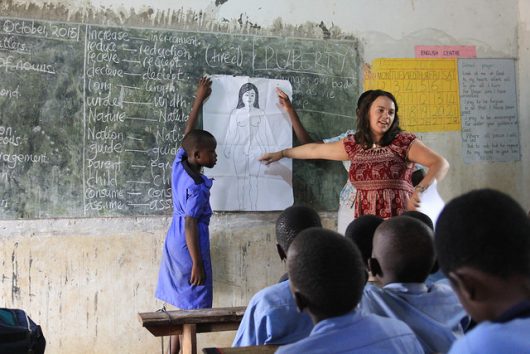
For generations, Uganda’s education system has been structured around rigid disciplinary lines—a model inherited from colonial pedagogy and later adapted for political compliance. This system produces graduates who are highly specialized in narrow fields but are often alienated from their communities and unprepared to tackle the interconnected, “wicked” problems of the modern world, such as climate change, food security, and ethical technological integration.

The digital age, dominated by the internet, social media, and artificial intelligence, demands a different kind of thinker. It requires minds that can integrate, innovate, and operate beyond traditional boundaries. The path forward lies in institutionalizing what we term the Sciences of Interconnectedness: a deliberate progression from interdisciplinary to crossdisciplinary, transdisciplinary, and ultimately, extradisciplinary learning.

The Framework of Interconnectedness: A Progression of Thought

To move forward, we must understand the distinct yet connected sciences that break down academic silos:

· Interdisciplinarity represents the first, crucial step beyond a single discipline. It involves integrating methods and insights from two or more disciplines to solve problems that one field cannot address alone. For example, developing a public health policy requires integrating medicine, statistics, economics, and sociology.

· Crossdisciplinarity involves viewing one subject through the lens of a completely different discipline. It’s the act of applying the logic of computer science to analyze historical patterns or using artistic principles to improve engineering design. This approach “master[s] different ways of working across subjects”.

· Transdisciplinarity transcends and unites academic disciplines to address complex real-world challenges. It focuses on the problem itself, such as sustainable agriculture or urban planning, and involves co-creating knowledge with stakeholders outside academia—farmers, community leaders, policymakers, and industry. As one program describes, it aims to “create an environment for University Students… to meet with experts and non-experts”. A visual analogy is a baked cake: once mixed, the individual ingredients (disciplines) are indistinguishable, creating something entirely new and unified.

· Extradisciplinary thought is the frontier. It operates entirely “beyond the disciplines,” free from their restrictions. It draws upon and validates knowledge from outside the formal academic canon, such as indigenous wisdom, traditional ecological knowledge, and community-based innovation. This is where true, unrestricted innovation in fields like information technology often begins.

From Theory to Practice: Seeds of Change in Uganda and Beyond

This framework is not merely theoretical. Pioneering initiatives in East Africa demonstrate its practical application and transformative potential:

· Agroecology as a Transdisciplinary Model: The Transdisciplinary Learning Initiatives (TDLI) programme, coordinated by Biovision Africa Trust in partnership with Makerere University, is a prime example. Its international training course brings together students, researchers, farmers, and policymakers to co-create solutions for sustainable agri-food systems. Learning moves sequentially from online theory to field excursions, practical data collection, and finally, workshops with farmers and policymakers. This model dissolves the wall between the university and the world it should serve.

· The Power of University-Community Engagement: Research on Ugandan universities shows that community engagement programs create a vital feedback loop. Students and faculty gain real-world context and practical skills, while communities benefit from academic resources and collaborative problem-solving. This relationship is a practical engine for transdisciplinary and extradisciplinary learning, fostering “an improved understanding of community issues and the development of collective capacity”.

· A Foundational Mindset in Primary Education: Even at the primary level, institutions like the International School of Uganda are cultivating this integrative mindset through the International Baccalaureate’s Primary Years Programme. Learning is organized around broad, transdisciplinary themes like “How the world works” and “Sharing the planet,” uniting knowledge from language, mathematics, and science to build a holistic understanding from an early age.

A Blueprint for Action: Integrating Interconnectedness into Uganda’s System

For Uganda to harness these sciences, a multi-level strategy is required:

· For Policymakers & University Leadership: Mandate and fund the development of new, problem-centered degree programs and research institutes that are structured around themes (e.g., Water Security, Urban Futures) rather than departments. Revise promotion and tenure guidelines to reward collaborative, community-engaged research and teaching.

· For Educators & Curriculum Designers: Replace some traditional, single-subject courses with project-based modules. For instance, a module on “Lake Victoria’s Future” could integrate biology, economics, political science, and communication studies. Actively invite practitioners and community experts as guest lecturers and co-teachers.

· For Students & Scholars: Actively seek out courses and projects that challenge disciplinary boundaries. Develop the skill of “knowledge translation”—learning to communicate complex ideas across different fields and to the public. Embrace the identity of being a “team scientist”.

The resistance from entrenched disciplinary interests, which one source aptly characterizes as “slow professors,” is significant. Overcoming this requires courageous leadership and a societal recognition that the complexity of our era cannot be solved by the fragmented knowledge of the past.

Conclusion: Reconnecting Knowledge for a Sovereign Future

The call for the Sciences of Interconnectedness is more than an academic reform; it is a project of national reclamation and future-proofing. It seeks to heal the alienation between the educated elite and their communities, producing graduates who are not “Yes Sir” technicians but critical, innovative, and holistic problem-solvers.

By moving beyond the rigid disciplinarity of the 20th century, Uganda can educate citizens who are sovereign in thought, capable of ethical innovation, and equipped to navigate the uncertainties of the 21st century and beyond. The ingredients for this transformation—from transdisciplinary agricultural programs to community-engaged universities—already exist within our borders. What is needed now is the decisive will to mix them into a new, more nourishing future for Ugandan education.

For God and My Country.

Further Reading

Historical & Political Context of Uganda’s Education

· Reference: Kamya, B. (Date). Analysis of the Different Education Policy Reforms in Uganda, 1922-2000 [Working Paper].

· Why it fits: This academic analysis directly supports the article’s core critique. It argues that reforms from the colonial era through independence have failed to achieve quality and equity, leaving the system burdened by its past. This source is excellent for grounding your historical argument.

· Where to cite it: When discussing the colonial legacy and the failure of post-independence reforms to break from the rigid disciplinary model.

Foundational Frameworks for the “Sciences of Interconnectedness”

· Reference: Claremont Graduate University (2021). Abilities, Domains, and the Transdisciplinary Mindset. See also: Resources – Transdisciplinary Studies.

· Why it fits: These resources provide the authoritative, detailed definitions your article needs. They clearly differentiate interdisciplinary, transdisciplinary, and related concepts, and outline the specific abilities (e.g., integrative skills, effective collaboration) and competencies (e.g., systems thinking, design thinking) required.

· Where to cite it:

  · In the section defining “Interdisciplinarity,””Transdisciplinarity,” etc.

  · When describing the skills and mindset needed for future-ready graduates.

· Reference: Institute for the Future (2011). Future Work Skills 2020.

· Why it fits: This report forecasts that future work will require the ability to understand concepts across multiple disciplines. It provides external, global validation for the argument that integrative thinking is an economic and social imperative.

· Where to cite it: When making the case that the globalized world and future economy demand a shift away from siloed knowledge.

Practical Examples & Pathways for Uganda

· Reference: Laudato Youth Initiative (2025, September 22). Integrating Environmental Education into Uganda’s National Curricula: Unleashing Innovation for Agriculture, Biology, and Livelihoods.

· Why it fits: This is a powerful, timely Ugandan case study. It argues for a competence-based, holistic approach to environmental education that integrates science, indigenous knowledge, and ethics—a perfect example of transdisciplinary learning in action. It also references Uganda’s Vision 2040 and competence-based curriculum.

· Where to cite it:

  · As a concrete example of a transdisciplinary model within the Ugandan context.

  · When discussing the integration of indigenous knowledge and community-based learning.

· Reference: Oweyegha-Afunaduula, F. C. (2024). Advancing Environmental Public Learning in Uganda.

· Why it fits: This article is essential. It directly calls for adopting the “learning sciences of interdisciplinarity, crossdisciplinarity, transdisciplinarity and extradisciplinarity” in Ugandan universities. It provides the philosophical grounding for the multidimensional approach the article champions.

· Where to cite it: To anchor the entire argument in my own established scholarship on this topic, particularly when introducing the “Sciences of Interconnectedness.”

Additional Supporting References

· For benefits of interdisciplinary learning: Interdisciplinary Studies: Preparing Students for a Complex World discusses how it enhances critical thinking and problem-solving. Interdisciplinary Learning: Building Future-Ready Thinkers argues it builds skills for an interconnected world and mentions changing workforce demands.

· For pedagogical strategies: Linking Interdisciplinary Units to Real-World Issues offers a practical, step-by-step guide for designing interdisciplinary curricula around global themes.

For God and My Country

Prof. Oweyegha-Afunaduula is a Conservation Biologist and member of Center for Critical Thinking and Alternative Analysis
BUNYA COUNTY EAST: Court nullifies election petition by NUP candidate who backed age limit bill

0

By Bamutaze Sam Mwanjje

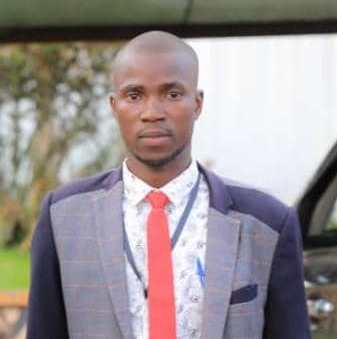
The Chief Magistrate’s Court of Mayuge District has dismissed an election petition filed by Waira Kiwalabye Majegere James, the National Unity Platform (NUP) candidate for Bunya County East, challenging the outcome of the January 15, 2026 general election.

Majegere, a former two-term Member of Parliament, lost the seat to Bishop Ekoro Alex Irukan of the National Resistance Movement (NRM). According to results declared by the Electoral Commission, Irukan garnered 13,994 votes, while Majegere obtained 13,573 votes.

Through his lawyers led by Counsel Kilema Faizo, Majegere petitioned the Chief Magistrate’s Court seeking a recount of votes, alleging electoral malpractice and vote rigging by the NRM candidate.

However, in a ruling delivered at 1:30pm, Chief Magistrate John Paul Osauro dismissed the application, citing failure by the petitioner to comply with mandatory provisions of the Parliamentary Elections Act.

The court found that Majegere did not properly deposit the required security for costs, noting that proof of payment was only presented on the day of hearing, contrary to the law.

The magistrate further ruled that the law requires applications for vote recounts to be filed within four days, and in any case not later than seven days after the declaration of results. The court held that Majegere failed to meet these statutory timelines.

“On those grounds, the application is null and void,” the magistrate ruled.

Majegere’s petition was therefore dismissed without the court delving into the merits of the alleged electoral irregularities.

Majegere is among the former Members of Parliament who voted in favour of the removal of presidential age limits before later crossing to the National Unity Platform in 2022.

INSTANT ACCESS: How to check PLE 2025 results on your phone

0

The Uganda National Examinations Board (UNEB) has officially released the 2025 Primary Leaving Examination (PLE) results.

UNEB has advised candidates and parents that the results can be easily accessed using a mobile phone through the SMS service available on MTN and Airtel networks.

Steps to Check PLE Results by Phone

1.            Go to Messages on your phone

2.            Type PLE

3.            Leave a space

4.            Enter the full index number of the candidate

5.            Send the message to 6600

Example:

To check results for a candidate with index number 654321/001, type:

PLE 654321/001 and send to 6600

Each SMS costs Shs500 per candidate, and the results will be delivered instantly if the correct procedure is followed.