
Thursday, May 21, 2026
Home Blog Page 9

NEW CURRICULUM WORRIES: UNEB flags gaps in Competency-Based Learning as majority of PLE 2025 candidates remain in mid-level performance

0

The Uganda National Examinations Board (UNEB) has raised concern over gaps in the implementation of competency-based learning after the majority of candidates who sat the 2025 Primary Leaving Examination (PLE) demonstrated only medium-level mastery of subject knowledge.

According to the official PLE 2025 results released on Friday, nearly two-thirds of candidates across all four subjects — English, Mathematics, Integrated Science, and Social Studies with Religious Education — fell under the medium ability category, with fewer than 20 per cent exhibiting higher-order skills such as application and problem-solving in new situations .

UNEB said the findings point to persistent challenges in transitioning classroom instruction from rote learning to competency-based education, which emphasizes critical thinking, application of knowledge, and real-life problem solving.

English Shows Progress, SST Raises Alarm

The item response analysis shows that English recorded the strongest performance, with 18.5 per cent of candidates demonstrating higher-level ability, followed by Mathematics (16.4%), Integrated Science (15.6%), and Social Studies with Religious Education (15.9%) .

Despite English showing improvement compared to 2024, UNEB reported a sharp decline in Social Studies and Religious Education, attributing the drop to teachers’ slow adjustment to competency-based teaching approaches. Examiners noted that many candidates struggled with questions requiring application of knowledge to their communities, national issues, and real-life scenarios in Uganda.

Persistent Learning Gaps Identified

UNEB highlighted specific learning areas where candidates — including those in the higher-ability category — faced difficulties. In Mathematics, candidates struggled with applying percentages in real-life contexts such as buying and selling, interpreting bearings, and solving distance-time-speed problems. In English, weaknesses were noted in composition structure, punctuation, vocabulary, and inferential comprehension .

In Integrated Science, candidates had difficulty explaining practical concepts such as flotation, fire control, first aid responsibilities, and simple machines, while Social Studies candidates struggled with climate factors, rights of children, factors of production, and lessons from the National Anthem.

UNEB warned that these gaps, if not addressed, could undermine the objectives of the new lower secondary curriculum that builds on foundational competencies developed at primary level.

Growing Numbers, Strong Participation

A total of 817,883 candidates registered for the 2025 PLE, marking a 2.6 per cent increase from 2024. Of these, 807,313 candidates sat the examination, while 10,570 candidates (1.3%) were absent — the same absentee rate recorded the previous year and lower than in earlier years .

Girls continued to outnumber boys, accounting for 52.4 per cent of registered candidates, reinforcing UNEB’s observation that more girls are completing the primary education cycle.

Division Results Show Mixed Picture

While overall pass numbers improved, UNEB data show that performance remains heavily concentrated in Division Two, which accounted for 48.1 per cent of candidates. Division One passes increased to 91,990, up from 84,301 in 2024, while the proportion of ungraded candidates also rose slightly to 9.55 per cent.

UNEB said the results reflect steady progress at the top end but called for renewed focus on learners at the lower end of the performance spectrum.

Malpractice Threatens Examination Integrity

UNEB also sounded the alarm over increasingly organised examination malpractice, revealing that some school administrators and directors bribed or threatened invigilators to allow teacher assistance in examination rooms. As a result, results for affected candidates have been withheld pending investigations, particularly in districts including Kampala, Mukono, Kisoro, Kassanda, Buyende and Kaliro.

The Board, however, praised districts such as Kyenjojo, where strict enforcement in previous years has led to improved compliance.

Call for Teacher Re-training

UNEB urged the Ministry of Education and Sports to intensify teacher support, re-training, and supervision to align classroom practices with competency-based assessment.

Detailed subject performance reports will be shared with schools to guide remedial teaching and curriculum improvement.
MAN ON THE RUN: Bobi Wine dares Gen Muhoozi to catch him after threats on social media

0

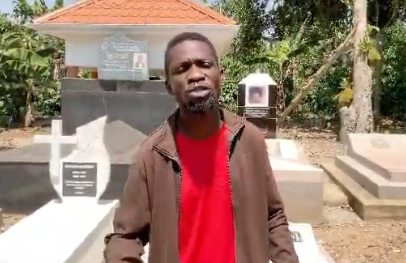
In a dramatic response to a series of erratic social media posts by Uganda’s Chief of Defence Forces, Gen. Muhoozi Kainerugaba, opposition leader Robert Kyagulanyi Ssentamu, popularly known as Bobi Wine, has dared the military leader to catch him if he can.

The challenge came after Gen. Muhoozi posted on X, formerly Twitter, that the military was hunting for Bobi Wine, who is currently in hiding. Gen. Muhoozi described Bobi Wine as “wanted dead or alive” and stated that it did not matter how long it took for security forces to apprehend him.

In a post on X this morning, Bobi Wine attached a screenshot of Gen. Muhoozi’s post and responded, “A rebel without a gun, hiding in plain sight and yet you can’t find me because I’m concealed by the people.” The opposition leader’s response has sparked widespread reaction on social media, with many Ugandans expressing outrage and concern over the safety of opposition figures in the country.

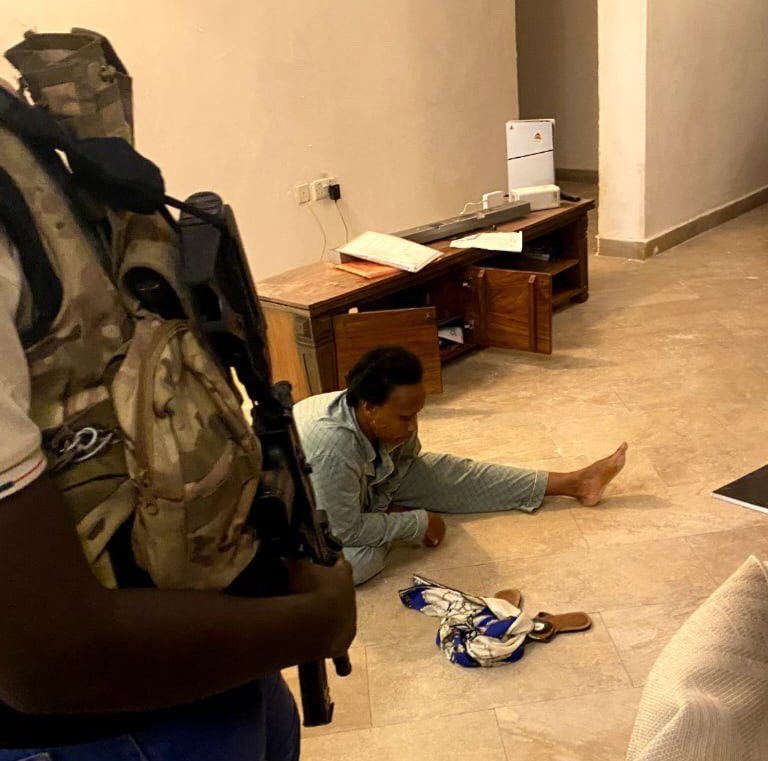
The controversy began after Gen. Muhoozi revealed that the military had briefly detained Bobi Wine’s wife, Barbie Kyagulanyi, during a raid on their Magere residence. However, in a surprising turn of events, Gen. Muhoozi seemed to backtrack on his earlier comments, describing Barbie as a “decent lady” and stating that any soldier who attempted to touch her would be punished severely.

The developments come amid renewed debate over the safety of opposition figures in Uganda, particularly after the disputed presidential election on January 15, 2026.

Bobi Wine, the leader of the National Unity Platform (NUP), was President Yoweri Museveni’s main challenger in the election, which the Electoral Commission declared Museveni won with 72% of the vote against Bobi Wine’s 24%. Bobi Wine and his party rejected the results, citing widespread irregularities.

The government and police officials have previously denied that the state was pursuing or hunting Bobi Wine, but Gen. Muhoozi’s comments have raised concerns about the intentions of the military and the government. The situation remains tense, with many Ugandans calling for calm and restraint.

As the situation continues to unfold, Bobi Wine’s dare to Gen. Muhoozi has set the stage for a potentially dramatic confrontation. Will the military be able to catch Bobi Wine, or will he continue to evade capture? Only time will tell.

ARCHITECTURE OF CIRCUMVENTION: How the Ugandan executive sidelines the public interest

0

By Oweyegha-Afunaduula and Center for Critical Thinking and Alternative Analysis

Introduction: The Broken Covenant

When the National Resistance Movement (NRM) assumed power four decades ago, it pledged a fundamental break from a past marred by strife and misrule, promising a government that would finally serve the public interest. The 1995 Constitution, born of this promise, solemnly commits the state to principles of democracy, social justice, balanced development, and the protection of natural resources for the people of Uganda. Yet, a profound disconnection has emerged between this constitutional mandate and the lived reality of governance.

This essay argues that the Ugandan executive, under President Tibuhaburwa Museveni, has not merely failed to uphold the public interest but has engineered a sophisticated architecture to systematically circumvent it. This architecture is built upon three interlocking pillars: the militarization of the state, the political economy of dispossession, and the strategic subversion of constitutionalism. Through these mechanisms, a philosophy that prioritizes elite interests, political survival, and a narrow vision of development over the welfare, identity, and ecological belonging of the citizenry has been institutionalized, betraying the very covenant upon which modern Uganda was to be built.

I. The Garrison State: Militarization as the Foundation of Control

The primary mechanism for circumventing public interest is the transformation of the state into a garrison, where security apparatuses are designed for regime preservation rather than public protection. This represents not a security strategy but a political project for perpetual control. The executive has meticulously blurred the lines between military and civilian spheres, ensuring that all levers of state coercion align with presidential interests.

This is evidenced by the systematic militarization of the police force. Once envisioned as a civilian institution, its leadership is now dominated by high-ranking military officers, effectively rebranding it into a brutal, militarized arm of the executive. Its function has shifted from service to suppression, particularly during electoral cycles or public dissent.

Furthermore, the weaponization of justice through the use of military courts to try civilians for political offenses shreds the constitutional right to a fair trial before an independent judiciary. This practice, a direct inheritance from the colonial King’s African Rifles model of suppressing dissent, has been modernized and intensified.

The military’s penetration extends into agriculture (Operation Wealth Creation), infrastructure, and local administration, embedding a command-and-control ethos into the fabric of daily governance. This structure directly facilitates the Power Retention Project, enforces an Apartheid-like governance model where rights are conditional on political compliance, and enables the Ethnisation of everything by ensuring that key security and resource controls reside within a trusted ethnic and familial cadre. This creates a functional “Bantustanisation” of the state itself, where control is centralized and dissent is securitized.

II. The Political Economy of Dispossession: From Colonial Law to Modern Land Grabs

The second pillar is an economic model that conflates national development with elite accumulation and territorial control, actively dispossessing the public of their land, heritage, and future. This model has a clear legal genealogy. The 1938 Busuulu and Envujo Law, which commodified Mailo land and entrenched tenant-landlord conflicts, established a precedent where statutory law overrides customary land rights to facilitate control and revenue extraction. The modern executive operates on this same principle, advancing a philosophy that “development should come before environment, nature and people.”

This philosophy manifests with devastating clarity in the case of the Benet community on Mount Elgon. Violently evicted from their ancestral lands in the early 2000s to create the Mount Elgon National Park, they were rendered “conservation refugees.” Over a decade later, despite presidential promises, they remain in temporary camps with inadequate water, sanitation, or healthcare—a permanent underclass in their own territory. This is not an isolated incident but part of a systemic pattern of state-sanctioned land grabbing, repeated in Apaa, Zoka Forest, and Kiryandongo for wildlife reserves and industrial farms.

The consequence is more than physical displacement; it is the infliction of solastalgia—a profound psychic distress caused by the obliteration of one’s ecological home. This process leads to the deliberate erasure of culture and associated ecological belonging, severing communities from their ecological memories and autobiographies. The land is then often transferred to exogenes, facilitating the primitive accumulation of wealth for a connected few.

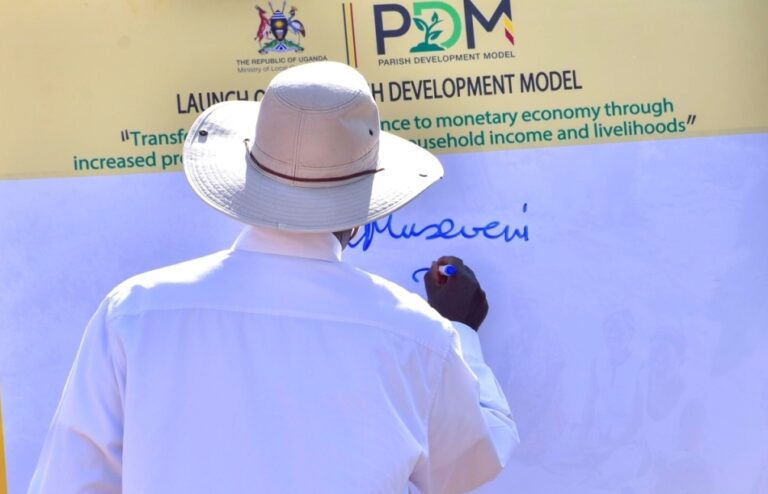
Loan-driven programs like the Parish Development Model or Myooga, launched with great fanfare but little circumspection for political gain, further this cycle by indebting individuals and communities, often forcing them to sell their only asset—land—to repay state-facilitated loans. This individualisation of development and Bantustanisation project fractures communal solidarity and creates a population dependent on and vulnerable to executive patronage.

III. The Façade of Legalism: Subversion and Diversion

The third pillar involves hollowing out the constitutional order from within while diverting national resources to serve parallel interests, creating a facade of legality. A deliberate and widening chasm exists between the letter of the Constitution and the practice of governance. While the Directive Principles of State Policy command the state to ensure balanced development, protect natural resources for the people, and involve them in development programmes, executive action consistently trends in the opposite direction.

Fiscal policy exemplifies this subversion. Despite modest GDP growth, the state’s overallocation of money to non-productive, overconsumptive ventures—most notably the ever-expanding budget of State House and the military—actively siphons capital away from social development, healthcare, and education. This entrenched inequality is a policy choice, as government action has had a “very modest effect” on reducing high inequality, partly due to chronically low social spending.

Simultaneously, the executive promotes a “refugee economy.” While hosting refugees is a humanitarian imperative, the strategic emphasis on this sector, amidst chronic underfunding of international responses, raises questions about its role as a diversion of resources and a source of political capital on the international stage, often at the expense of marginalized indigenous groups.

Furthermore, the executive cultivates a political and discursive monoculture. Just as agricultural monocultures destroy biodiversity, a monoculture of a single, dominant political narrative is enforced where “fear and repression have largely silenced opposing voices.” This environment enables prioritizing Politics and personalist leadership over policy, where initiatives are launched for political gain rather than public good, and the hereditary presidency is normalized through the manipulation of legal and political processes. This environment allows the executive to ignore with impunity the judiciary’s occasional courageous rulings—such as those against illegal evictions—revealing the stark limits of paper-based constitutionalism.

IV. Synthesis: The Executive’s Architecture and the Enfeebled State

The executive’s sophisticated architecture for circumventing public interest does not operate in a vacuum. Its effectiveness is contingent upon, and actively cultivates, the strategic enfeeblement of the other constitutional arms of the state—the Legislature and the Judiciary.

The Legislature: From Overseer to Rubber Stamp

Parliament has been systematically neutered. The executive ensures this through the weaponization of its overwhelming majority, transforming the legislature from a debating chamber into a voting machine for executive-centric budgets and legislation. Furthermore, patronage systems like the Parish Development Model create dependency, undermining legislators’ independent advocacy and fostering the “individualisation of development.” Coupled with a repressed civic space, this ensures robust parliamentary oversight is stifled.

The Judiciary: Brave Rulings, Weak Enforcement

The judiciary presents a more complex picture. Judges have delivered landmark rulings against executive excess, affirming constitutionalism. However, these victories are often pyrrhic. The executive routinely ignores or delays implementing unfavorable court orders, as seen in the perpetual plight of the Benet. The lack of enforcement mechanisms and personal consequences for contempt creates a “façade of legalism” where the executive enjoys the legitimacy of a constitutional order while subverting its substance.

Conclusion: The Unified Anatomy of Circumvention

Therefore, the circumvention of public interest is the central organizing principle of the Ugandan state. It is a unified anatomy with three interdependent parts: The Executive as the Architect, designing policies of militarization and dispossession; The Legislature as a Neutered Arena, reduced to a rubber stamp; and The Judiciary as a Contested Space, its rulings absorbed into a system of structured impunity.

The “public interest” sworn to be protected is fragmented and defeated at each turn: by the gun of the militarized state, by the pen of the co-opted legislature, and in the gap between the judiciary’s word and the executive’s deed. Reclaiming it, therefore, requires not isolated reforms but a simultaneous, systemic struggle to rebuild all three pillars of the state around their original, constitutional mandate—to serve not the interests of a few, but the identity, welfare, and future of all Ugandans.

For God and My Country.

THE TRUTH: General Muhoozi Kainerugaba reveals ongoing “Dead‑or‑Alive” manhunt for Bobi Wine and brief detention of his wife, Barbie Kyagulanyi

0

In a series of late‑night posts on the social‑media platform X (formerly Twitter), General Muhoozi Kainerugaba, the Chief of Defence Forces (CDF) of the Uganda People’s Defence Force (UPDF) and son of President Yoweri Museveni, announced that the military is actively hunting opposition figure Robert Kyagulanyi Ssentamu, better known as “Bobi Wine”, “dead or alive”.

The statements, first posted in the early hours of Friday, 30 January, 2026, marked a stark reversal from earlier government denials that security forces were seeking to arrest the former presidential candidate, who finished with roughly 24 % of the vote in the 15 January 2026, election that re‑elected Museveni with 72 % of the ballot.

“It doesn’t matter how long it takes – we will get him,” the CDF wrote in a brief tweet. In another tweet, attaching a photo of a woman believed to be Barbie Kyagulanyi, Bobi Wine’s wife, sitting under the watch of a soldier in a military vest and jeans, Gen Muhoozi said, “This is when our soldiers captured and then released Kabobi’s wife, Barbie. She was very helpful in helping us find her husband. Kabobi is next.”

In another post, Gen. Muhoozi added, “As he is taking selfies and videos, his wife was captured. The definition of an IDIOT!” He also warned foreign governments: “Any foreign powers who attempt to smuggle Kabobi outside the country are going to create a serious rupture in relations!”

When asked by Member of Parliament Daudi Kabanda (Kasambya County) whether there was any possibility of clemency for Kyagulanyi, Muhoozi replied, “PLU can forgive rebels even on their deathbeds.” The Patriotic League of Uganda (PLU) is a political pressure group that publicly aligns with the CDF.

Bobi Wine, who has been in exile inside Uganda since the night after the election, posts videos and photos on his own X account showing himself speaking from different locations.

Robert Kyagulanyi, a former pop star turned politician, first entered the national stage in 2017 with his “People Power” movement. He ran for president in 2021, finishing second behind President Museveni, who has ruled Uganda since 1986.

Following the 2026 vote, the government announced a crackdown on “terrorist” elements linked to the opposition, a claim that has been widely disputed.

For now, Bobi Wine remains “at large”, according to his own statements, and his whereabouts continue to be the subject of speculation.  

BUDGETING CYCLE: Parliament approves National Budget Framework Paper for next financial year

0

Parliament on Thursday evening approved the National Budget Framework Paper (NBFP) for the Financial Years 2026/27 after an extensive debate on the report of the Committee on Budget.

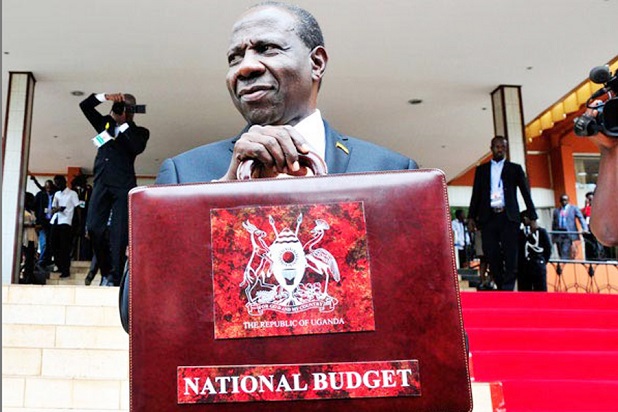
Presenting the government’s position, the Minister of State for Finance (General Duties), Henry Musasizi, said the strategic policy direction for the next financial year and the medium term is anchored on delivering tenfold economic growth, with the goal of expanding Uganda’s economy to USD 500 billion by 2040.

Musasizi told Parliament that the government will prioritise investment in key growth sectors under the ATMS and Enablers framework, alongside a strong push for export growth, to accelerate socio-economic transformation. He added that the economy is projected to grow between 6.5 per cent and 7 per cent in FY 2026/27.

In line with the strict timelines set out in the Public Finance Management Act (PFMA), Cap 171, the minister pledged the Finance Ministry’s full support to Parliament to ensure that the FY 2026/27 budget is processed by the end of April 2026, ahead of the inauguration of the 12th Parliament.

Musasizi outlined a number of priority actions Government will focus on in the next financial year, including stamping out budgetary practices that breed corruption, closing leakages in routine expenditures such as transfers to schools and health centres, and strengthening payroll management.

Other key focus areas include improving cash and liquidity management, enhancing Uganda’s sovereign credit ratings, diversifying sources of development finance through innovative instruments, strengthening internal controls and audit functions, and completing public procurement reforms.

The government also plans to improve the management and maintenance of public assets, increase domestic revenue mobilisation, strengthen governance and supervision of state-owned enterprises, and address challenges affecting project execution, including low absorption of borrowed funds and inadequate counterpart funding for externally financed projects.

Musasizi further said the government will strengthen the capacity of the Uganda Bureau of Standards (UNBS) to improve certification of products for both export and the domestic market, enhance performance management in the public service, improve coordination across government, and clear the existing stock of domestic arrears while preventing the accumulation of new ones. He noted that a strategy is already in place to eliminate the current arrears stock over three financial years starting in FY 2025/26.

According to the Ministry of Finance, the preliminary resource envelope for FY 2026/27 stands at Shs 69.399 trillion, down from Shs 72.376 trillion in FY 2025/26. Domestic revenues are projected at Shs 40.090 trillion, up from Shs 36.806 trillion in the current financial year.

Government discretionary funding, net of arrears, interest payments and domestic debt repayments, is projected at Shs 31.059 trillion, compared to Shs 32.480 trillion in FY 2025/26. Domestic borrowing is expected to reduce to Shs 8.952 trillion, down from Shs 11.381 trillion, while domestic debt refinancing is projected at Shs 9.68 trillion, also lower than the Shs 10.028 trillion projected for the current year.

External budget financing is projected to decline sharply from Shs 2.084 trillion in FY 2025/26 to Shs 330.97 billion, while external project financing is expected to reduce to Shs 10.018 trillion from Shs 11.327 trillion.

The FY 2026/27 budget will be financed through a mix of domestic and external resources, including tax revenues, loans and grants. The government will prioritise concessional borrowing for social projects and leverage innovative financing with competitive terms for high-return infrastructure investments.

Musasizi said the government will also reprioritise resources within the current fiscal framework to improve efficiency, intensify efforts to boost domestic revenue mobilisation, attract foreign direct investment, and maintain sound fiscal and monetary policies to safeguard macroeconomic stability and improve Uganda’s credit ratings.

HUMAN RIGHTS CONCERNS: Ssenyonyi declines to congratulate Museveni, vows to press government on missing NUP leaders, footsoldiers

0

The Leader of Opposition in Parliament, Joel Ssenyonyi, has declined to congratulate President Yoweri Kaguta Museveni and newly elected Members of Parliament following the recent general elections, saying there are outstanding issues that must first be addressed.

Speaking in Parliament, Ssenyonyi said his decision should not upset those in government, noting that there are many others willing to offer congratulations.

“There are people who can congratulate you other than me,” Ssenyonyi said, adding that unresolved electoral and human rights concerns make it premature for him to do so.

The Opposition leader also vowed to continue demanding accountability from government over the alleged abduction and detention of senior leaders of the National Unity Platform (NUP), despite complaints from some MPs that he is “pestering” the state.

Ssenyonyi argued that Parliament remains one of the legitimate platforms through which he can question government about the whereabouts of opposition supporters and leaders reportedly abducted by security operatives.

“The floor of Parliament is one of the avenues available to us to task government on where our people are,” he said.

High Court Habeas Corpus Hearing

Meanwhile, NUP Secretary General David Lewis Rubongoya revealed that the party had gone to the High Court seeking a habeas corpus order for Dr. Lina Zedriga Waru Abuku, the party’s Deputy President for Northern Uganda, whose whereabouts remain unknown.

“We’re at the High Court for the habeas corpus hearing for our Deputy President,” Rubongoya said. “The state has filed an affidavit claiming they don’t have her in any detention centres, despite her having been picked up by security operatives on January 15 in the presence of witnesses.”

Rubongoya described the situation as a grave abuse of power, saying the events surrounding the election period would be studied for years to come.

Multiple NUP Leaders Missing or Detained

Dr. Lina Zedriga Waru Abuku was reportedly abducted from her home on January 15, while Jolly Jacklyn Tukamushaba, NUP’s Deputy President for Western Uganda, was reportedly picked up a day earlier from Rukiga District. As of publication, the whereabouts of both leaders remain unknown.

Another senior party official, Muwanga Kivumbi, NUP’s Deputy President for the Central Region, was arrested and taken to Kira Division Police before being produced in court and remanded to Kitalya Mini-Max Prison. He has been charged with terrorism, charges the party has described as politically motivated.

Rubongoya said Kivumbi remains resolute despite his detention.

“He is of strong spirit and encourages everyone to fight on, knowing that this is just a phase of the struggle,” Rubongoya said, adding that the party’s legal team, alongside other lawyers, is working to secure his release.

The developments come amid heightened political tension following the elections, with opposition leaders intensifying calls for accountability, transparency, and respect for human rights during the post-election period.

Government denials

David Muhoozi, Minister of State for Internal Affairs, has denied allegations that the residence of Robert Kyagulanyi, President of the National Unity Platform has been turned into a prison, saying his home can only be deemed a prison if it is gazetted, with people occupying it, but Kyagulanyi himself isn’t home.

Muhoozi has also denied allegations of abducting Lina Zedriga and Lydia Tukamushabe, top leaders of NUP, saying although the government may delay to produce the victims past the 42 stipulated time, the State “doesn’t abduct” as alleged by Joel Ssenyonyi.

The Minister of ICT and National Guidance, Chris Baryomunsi has told Parliament that the there are no charges being preferred against former Presidential Candidate, Robert Kyagulanyi alias Bobi Wine, but instead, Bobi Wine voluntarily chose to go in hiding.

He defended the security deployment at Kyagulanyi’s home, saying it is intended to bar his supporters from using it as a public disorder hub.

LOW PDM MONEY RECOVERY: Only Shs9.340 billion from 18,105 beneficiaries has been recovered out of Shs3.258 trillion disbursed by government to 10,589 PDM SACCOs

0

The Auditor General, Edward Akol, has disclosed that only UGX 9.34 billion has been recovered from 18,105 beneficiaries in 709 Savings and Credit Cooperative Societies (SACCOs) across 30 local governments (LGs) as of January 2026, out of the UGX 3.258 trillion allocated to the Parish Development Model (PDM) in 2022.

This revelation was made during the presentation of the December 2025 Annual Audit Report to Parliament’s Speaker, Anita Among.

The PDM, a grassroots development initiative introduced in 2022 as part of President Yoweri Museveni’s government, aims to channel funds directly to local communities via SACCOs for infrastructure and development projects. However, the report highlights systemic challenges undermining its effectiveness.

Key Challenges Outlined

Akol identified critical issues, including funding of “ghost projects” (non-existent or fabricated initiatives), delays in disbursing funds to households, implementation of ineligible projects, diversion of funds for personal or unauthorized use, and duplicate recipients who received funds more than once.

“It is concerning that only 18,105 beneficiaries in 709 SACCOs out of the 10,589 PDM SACCOs have commenced voluntary recovery, and there is no evidence of preparedness in all LGs,” Akol stated.

He further noted that of the UGX 3.258 trillion released to SACCOs, only UGX 2.750 trillion (84%) was disbursed to households by the end of the 2024/25 fiscal year, leaving UGX 508.6 billion (16%) unutilized.

Speaker Calls for “Whip” in Fund Oversight

In response, Speaker Anita Among urged Akol to intensify auditing efforts to ensure transparency. “We want you to use the whip. This money should go to the right people,” she emphasized, stressing that the PDM’s success is a key reason for the NRM’s electoral victories.

“Most of the votes we got were because of people who received the PDM funds rightfully. But delays, duplication, and misalignment of projects must be addressed,” Among said, citing the need for accountability.

She criticized mismanagement, such as delayed disbursements and unregulated allocation, which she argued disproportionately benefit the wealthy while marginalizing poorer communities.

“We cannot appropriate money and see 70% of the rich getting it while 30% are left with nothing. This is your team’s task to uncover,” she added.

What’s at Stake?

The PDM’s intended goal is to empower communities by directing funds to local projects. However, the audit report paints a picture of significant mismanagement, with critics alleging widespread corruption. The low recovery rate and unutilized funds underscore gaps in oversight and implementation.

As the government scrambles to salvage the initiative, the Speaker’s call for stricter auditing reflects growing public demand for accountability. With upcoming elections in 2026, the integrity of PDM could significantly influence voter trust.

Next Steps

The Auditor General’s office has yet to outline specific measures to address the identified issues, but Among’s statements signal increased political pressure to act. The fate of the remaining UGX 508.6 billion and the 99% of SACCOs not part of the voluntary recovery process remain under scrutiny.

Context: The Parish Development Model (PDM) replaced the Local Government Finance Act in 2021, aiming to decentralize resource allocation to parishes (the smallest administrative unit in Uganda). Savings and Credit Cooperative Societies (SACCOs) serve as intermediaries, disbursing funds to households for community projects.

AN ANALYSIS: Why the Parliament of Uganda will never work in public interest beyond 2026

0

By Oweyegha-Afunaduula and the Center for Critical Thinking and Alternative Analysis

1. Defining the Contested Terrain: Public Interest vs. Presidential “Interests”

Public interest is a multidimensional, holistic concept encompassing the collective well-being of society. It includes:

· Political Goods: Democracy, freedom, justice, security, and peace.

· Social Goods: Quality education, accessible healthcare, passable roads, and cultural integrity.

· Ecological & Existential Goods: Natural belonging, ecological sustainability, and a healthy environment.

· Developmental Goods: Sustainable development, equitable progress, shared prosperity, and an enhanced quality of life for all citizens.

In stark contrast, President Yoweri Tibuhaburwa Museveni has consistently framed politics as a matter of “interests,” which in practice align with a narrower set of objectives: the consolidation of wealth, power, glory, control over resources, and regime perpetuity. This fundamental divergence sets the stage for institutional conflict, where mechanisms of the state are often tuned to the latter, at the expense of the former.

2. The Architecture of Subservience: Parliament’s Structural Failings

The Ugandan Parliament is structurally designed to prioritize presidential “interests” over the public good.

· NRM Caucus Dominance: The overwhelming numerical superiority of the NRM Caucus, coupled with the fact that the Speaker and Deputy Speaker are leading members, ensures that legislative and budgetary outcomes are predetermined by caucus decisions. This system operates on groupthink and absolute loyalty to the President, not on open, critical debate.

· The Militarized Legislature: The constitutionally embedded presence of 10 UPDF representatives, while historically justified as “neutral,” effectively injects a permanent executive influence. Past episodes of military and police invasions of Parliament (e.g., during the 2017 age-limit amendment debates) have shown that force is used to ensure compliance with the President’s wishes, legislating under an atmosphere of fear.

· The Corruption of Consent: There is a documented history of MPs, from both the NRM and opposition, being bribed with money (e.g., “handshake” scandals for votes on term limits or other contentious bills) to support presidential preferences. This transactional politics eviscerates representation.

· Deliberative Collapse: The ever-increasing number of MPs—driven by the bantustanisation of the country into smaller districts and constituencies—makes effective debate impossible. Critical issues of public interest are drowned in a sea of voices, with many MPs financially indebted from expensive campaigns and thus easily manipulated. The institution becomes unwieldy and ineffective by design.

3. A Historical Retrospective: Parliament as an Executive Tool

Since President Tibuhaburwa Museveni fully entered electoral politics in 1996, Parliament has progressively shed its independence.

· Legislating Presidential Wishes: Key legislation, from the UPDF Act amendments to the Coffee Act, has been pushed through to fulfill specific presidential directives, often against regional or sectoral public interest. The Speaker’s recorded ethnic bias during the coffee debates illustrated this clearly.

· Sovereignty for Sale? The approval of special economic privileges for individuals like Enrica Pinetti (the Italian-Arab businesswoman linked to the Gaddafi family and historic support for the NRA rebellion) against expert and public opinion shows Parliament ratifying opaque presidential commitments.

· The Five-Year Cycle of Disconnection: Parliament remains a centrally isolated, urban institution. Unlike the judiciary, it has failed to decentralize its ethos. MPs interact more with each other and the executive in Kampala than with their constituents. This explains the high turnover every election: citizens, feeling abandoned, vote out incumbents, only to elect new, inexperienced legislators who are immediately vulnerable to executive manipulation. The people, in effect, elect MPs for the President to use.

4. The Future Beyond 2026: A Parliament of Fear and Hereditary Transition?

The trajectory suggests further erosion of public interest representation.

· Deepening Militarization: With politics already over-militarized, parliamentary processes are likely to see even greater security service influence, ensuring all “sensitive” legislation aligns with regime security interests.

· The Hereditary Presidency Blueprint? Persistent rumors of a transition to a hereditary or “representative electoral college” system—where MPs, not the public, elect the president—are telling. The government’s silence on this specific concern, contrasted with its swift denials on other issues, is ominous. The post-2026 Parliament could be the vehicle to legalize such a fundamental reversal of democratic suffrage.

· The Inevitability of Groupthink: As long as the current political architecture remains, the Parliament will continue to be a rubber-stamp, not a deliberative assembly. It will work to insulate the President’s interests from public demand, not to bridge them.

5. Reclaiming Parliament for the Public: A Pathway to Transformation

For Parliament to become a prized tool for transforming Ugandan livelihoods in this century of knowledge and information, a foundational reset is required:

1. Constitutional & Electoral Reformation:

   · Abolish the institutional representation of the army in Parliament.

   · Introduce a mixed electoral system with proportional representation to break regional strongholds and foster issue-based politics.

   · Firmly cap the number of constituencies to halt politicized fragmentation.

2. Strengthening Institutional Autonomy:

   · The offices of Speaker and Deputy must be held by individuals who renounce membership in the ruling party caucus to ensure neutrality.

   · Empower committees with independent subpoena and investigative authority, protected from executive interference.

3. Building a Citizen-Parliament Nexus:

   · Mandate and fund constituency offices with permanent staff to maintain continuous dialogue between MPs and citizens.

   · Implement robust, publicly accessible recall mechanisms so constituents can hold non-performing MPs accountable before the five-year cycle ends.

4. Demilitarizing Politics:

   · Legislate clear boundaries against security force intrusion into parliamentary premises and proceedings.

   · Foster a culture where debate, not decree or fear, settles national issues.

5. Cultivating a New Political Ethos:

   · Support civic education to elevate the electorate’s demand for issue-based representation.

   · Encourage the rise of a new generation of legislators whose loyalty is to a multidimensional public interest, not to a person or a narrow set of survivalist interests.

Conclusion

The Parliament of Uganda stands at a precipice. Its current design and practice make it an instrument for managing a regime’s interests, not for championing the public’s. Beyond 2026, without deliberate, courageous, and structural change, it will continue to fail the people of Uganda.

The transformation required is monumental, but the alternative—a legislature that is a mere echo chamber for a single, perennial “interest”—is a guaranteed path to national stagnation and deepening conflict. The Parliament can yet be reclaimed, but only if the public interest is redefined as the non-negotiable core of politics, and the institution is rebuilt to serve that master alone.

For God and My Country

PRIMARY LEAVING EXAMS: Anxious wait for primary seven vacists ends as UNEB confirms PLE results date

0

The Uganda National Examinations Board (UNEB) has confirmed that the results of the 2025 Primary Leaving Examinations (PLE) will be released on Friday, 30 January 2026 at 11:00am.

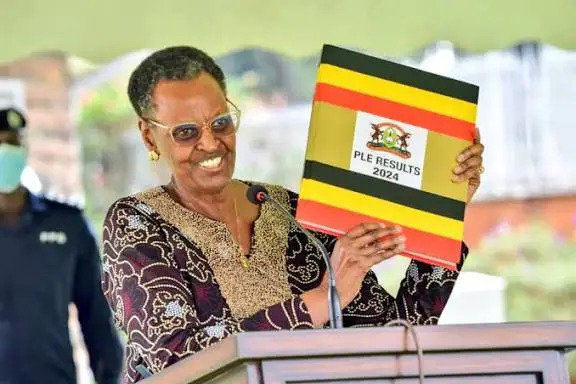
The confirmation followed a closed-door meeting between UNEB officials and the Minister of Education and Sports, Janet Kataha Museveni, who is also the First Lady.

UNEB spokesperson Ms Jennifer Kalule said the meeting, held on Wednesday, brought together key education stakeholders and finalised arrangements for the official release of the results.

Ms Museveni commended the examinations board for completing its work on time and ensuring that the results will be released as scheduled.

UNEB has also dismissed claims that the temporary internet shutdown ahead of the 15 January general elections could delay the release of the results. According to the board, all critical processes—including marking, verification and quality assurance—were completed without interruption.

Records indicate that 818,010 candidates registered for the 2025 PLE, slightly higher than the 797,444 candidates registered in the previous year. Of those who sat the examinations, 428,398 were girls while 389,589 were boys.

For comparison, the 2024 PLE results were released on 23 January, about a week earlier than this year’s schedule.

According to the 2026 education calendar, candidates who pass the PLE and qualify for Senior One are expected to report to their respective secondary schools on 16 February.

POLITICAL STABILITY: Namukuta Brenda makes history as Kaliro’s first two-term woman Member of Parliament

0

By Wabwire Andrew Goole

Namukuta Brenda has etched her name into the political history of Kaliro District after becoming the first Woman Member of Parliament to win a second consecutive term, shattering a long-held belief that the seat was only ever a single-term position.

For years, the Kaliro Woman MP seat had developed a reputation for political instability, with no holder managing to serve more than one term since the district’s creation. Many locals even dubbed it a “cursed” seat. However, Namukuta’s re-election has decisively broken that cycle.

Her political journey began in 2017, when she was elected District Councillor representing Workers. During her time on the council, she used the platform to build a strong grassroots base and lay the foundation for higher leadership. Barely a year into her term, she declared her intention to contest for the Kaliro District Woman Member of Parliament seat in the 2021 General Elections.

At the time, Namukuta Brenda was the youngest candidate in the race. She first secured victory in the 2020 party primaries with a commanding margin before going on to win the general election, making history as the district’s Woman MP.

Her success has largely been attributed to a results-driven leadership style rooted in service delivery. She openly rejected the locally criticised culture of “Tikulyamu bulya n’omala n’oyaba” (eat-and-go politics), instead embracing accountability, constant engagement with constituents, and visible impact on the ground.

As a Member of Parliament and a member of the Parliamentary Committee on Health, Namukuta played a key role in lobbying the Ministry of Health to equip Health Centre IIIs across Kaliro District with essential medical equipment. The intervention significantly improved healthcare delivery and strengthened confidence in public health services within the district.

Beyond health, she has consistently advocated for development projects and government programs, ensuring Kaliro benefits from national initiatives. Her accessibility, energy, and hands-on leadership have not only earned her widespread public support but have also inspired many young women to take an active interest in politics.

In the most recent elections, voters in Kaliro overwhelmingly renewed their trust in her leadership, granting her a second term and decisively ending the long-standing pattern of single-term representation.

Namukuta Brenda’s historic achievement stands as a powerful testament to how consistent service, integrity, and dedication can overturn entrenched political narratives and redefine leadership for future generations.

Mr Wabwire Andrew

 Goole is the ONC Coordinator, Kaliro District

Email: andrewwabwire872@gmail.com