


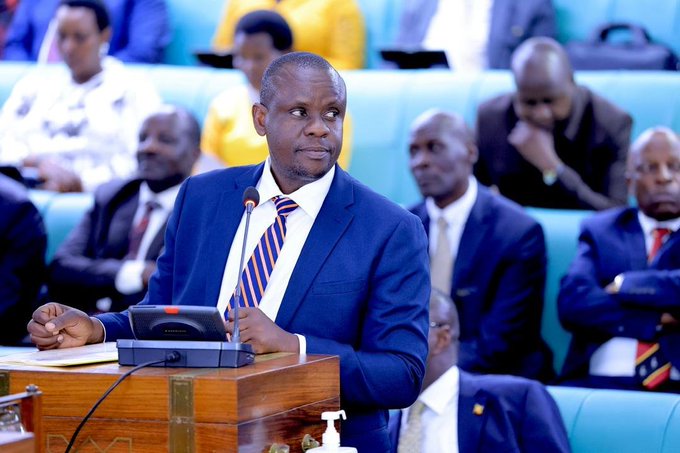
Government plans to introduce a Shs4 billion ceiling on the construction of district headquarters, with the savings redirected towards building more schools and health centres, Local Government Minister Balaam Barugahara has told Parliament.
Barugahara said the proposed cap is intended to curb excessive expenditure on administrative buildings and ensure that more public resources are channelled into essential social services.
He cited Jinja District, which he said was spending approximately Shs18 billion on its headquarters, compared with Kazo District, which constructed its headquarters at about Shs2.5 billion.
“Let us divert the rest of that money for district headquarters into building more health centres and more schools,” Barugahara urged.
The minister made the remarks during a parliamentary debate on his statement regarding the ongoing Expose the Corrupt people-led audit and anti-corruption campaign in the Ankole sub-region.
Although he outlined the proposed Shs4 billion ceiling, Barugahara did not provide an implementation date or explain how the cap would be enforced across districts.
Meanwhile, Kilak South MP Gilbert Olanya credited Barugahara’s anti-corruption visits to districts with helping revive road construction equipment that had remained idle for extended periods.
Olanya, who previously chaired Parliament’s Public Accounts Committee (Local Government), said approximately 90% of district road equipment was not working during his tenure.
He said the minister’s district engagements had prompted repairs, questioning how the resources for the rehabilitation were being mobilised.
“You wonder where the money is coming from to repair those road equipments,” Olanya said.
He backed Barugahara’s approach to fighting corruption, alleging that politically connected individuals suspected of involvement in corruption sometimes intimidate public officials and discourage them from taking action.
“Personally, I support someone who will stand straight and say no to corruption,” he said.
The debate highlighted concerns over public expenditure, accountability in local governments and the need to ensure that government resources deliver tangible services to communities.