Thursday, May 21, 2026
Home Blog Page 11

IGNORE OPPOSITION: Speaker Among, former Vice President Kazibwe, and EALA MP Kadogo rally Busoga to reclaim NRM support ahead of general elections

0

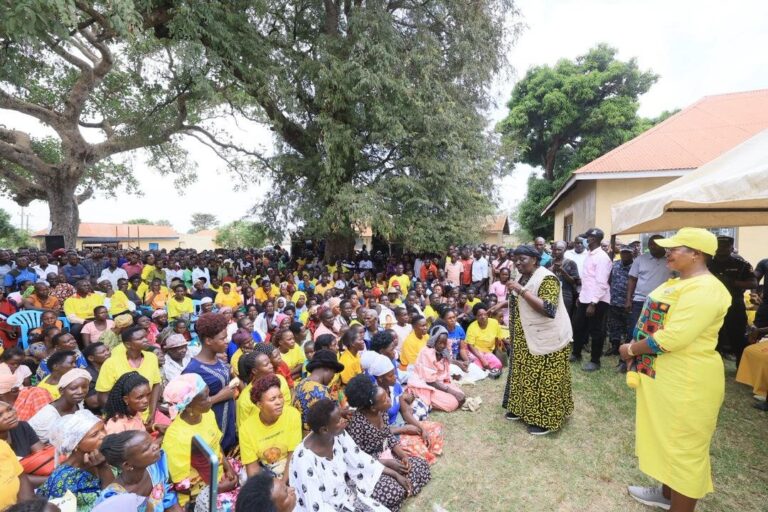
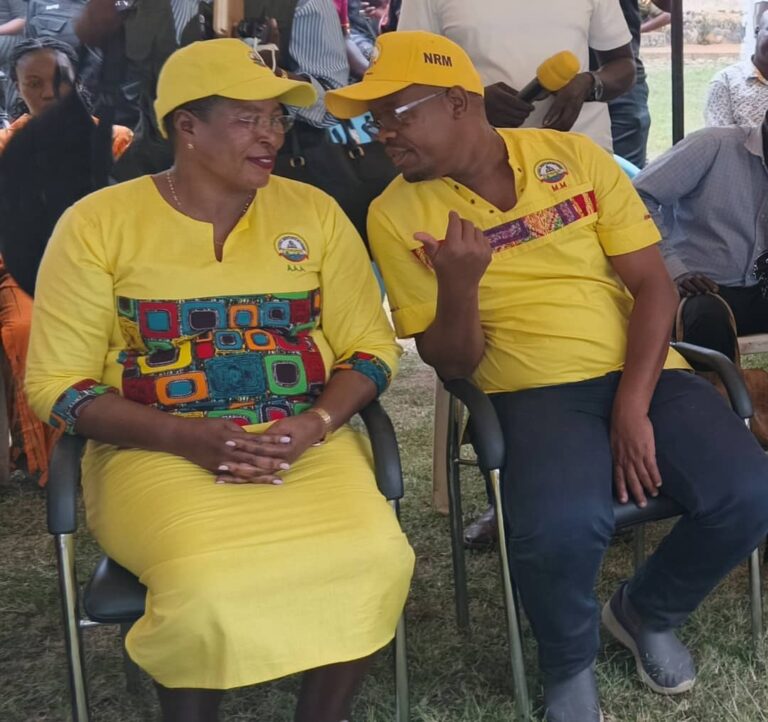
Speaker of Parliament Anita Among, former Vice President Dr. Speciosa Kazibwe, and East African Legislative Assembly (EALA) Member of Parliament Veronica Babirye Kadogo have called on Busoga residents to rediscover their historical support for the National Resistance Movement (NRM) and turn out in large numbers to protect the region’s gains in the forthcoming elections scheduled for 15 January 2026.

Addressing mobilisation rallies for NRM flag bearers at a rally in Buyende district on Monday, Among urged voters to embrace politics based on ideology and service delivery rather than identity and division, warning that divisive politics undermine development and social harmony.

“We should focus on ideology and service delivery, not identity, personal issues, or hate speech. Let us stop living in the past, grow out of illusions, and embrace leadership that prioritises development,” Among said.

She challenged Busoga to aim beyond an ordinary victory and instead deliver what she described as an “excellence performance” for President Yoweri Museveni and NRM candidates, with Budiope positioning itself as a leading district in the region based on the President’s vote share.

“We are not here just to mobilise a win. We want a win with distinction, a top-level performance that gives us a strong basis to bargain for the best for the people of Budiope,” she said.

Among dismissed opposition pledges as populist and misleading, urging voters to assess leadership based on tangible development outcomes.

“The Umbrella people are saying that in their first 100 days they will scrap the Parish Development Model. Do you really not need it? We are instead going to increase it and even create a wealth fund for those who do not qualify under PDM. Ignore empty propaganda and stick with Mzee and his team,” she told supporters.

She pledged continued support to Budiope, describing herself as a daughter-in-law committed to safeguarding the region’s gains, and outlined priorities for the next term including the establishment of a district hospital, expansion of piped water, operationalisation of the Bukungu ferry, rural electrification, and improved road networks.

“Vote leaders who understand you and will speak for you. If you love Uganda, speak well of it and protect development programmes such as tractors and markets for every sub-county and the Shs1 billion fund for the fishing community,” Among urged.

Former Vice President Dr. Speciosa Kazibwe called on Busoga leaders and communities to unite, overcome internal divisions, and reclaim the region’s traditional status as an NRM stronghold.

“President Museveni has repeatedly pointed out that internal fights and divisions are what keep Busoga lagging behind and trap our people in poverty. I will personally engage my sisters and leaders to harmonise and refocus on service delivery,” Kazibwe said.

EALA MP and former Buyende Woman MP Veronica Babirye Kadogo emphasised the importance of unity and collective effort, saying Busoga’s leaders should complement rather than compete against one another.

“We can serve our people in different capacities and positions. What matters is supporting one another and harnessing our shared potential for the common good of Budiope,” Kadogo said.

The leaders concluded by urging voters to turn out peacefully and in large numbers to support NRM candidates and consolidate development gains in Busoga.

BUDIOPE EAST: Returning Officer confirms Magogo unopposed; Speaker Anita Among offers congratulations

0

Buyende District Election Registrar and Returning Officer, George William Eriau, has clarified that there will be no voting for the directly elected Member of Parliament for Budiope East constituency after the incumbent and National Resistance Movement (NRM) flag bearer, Moses Hashim Magogo, was declared unopposed.

In a media address to voters in Buyende District after receiving election materials on Monday, Eriau said the parliamentary race was concluded following a High Court decision that upheld the Electoral Commission’s action to disqualify Daniel Mulirire from the contest.

“The High Court reaffirmed the decision taken by the Electoral Commission to disqualify candidate Daniel Mulirire. This leaves the incumbent, Moses Hashim Magogo of NRM, as the sole candidate.

As a result, there will be no election for the directly elected Member of Parliament for Budiope East constituency, except for the Presidential and Woman Member of Parliament positions,” Eriau said.

He called for calm among voters and urged them to turn up peacefully to exercise their constitutional right to vote for other elective positions, assuring the public of a credible electoral process.

The disqualification of all other contenders and the subsequent declaration of Magogo as unopposed has drawn mixed reactions across the constituency.

Some voters said the outcome was expected, particularly after Magogo’s closest rival, Godfrey Dhamuzungu, withdrew from the race citing the death of his father and pressure from family members.

Other aspirants, including Stephen Bangalana, Rabin Peere, and Resty Nsiro, were also disqualified following various petitions.

While some members of the public allege that candidates were induced to exit the race, others claim that certain aspirants were initially introduced to split opposition votes and later withdrew through petitions after Dhamuzungu pulled out.

Speaking during the Buyende District NRM flag bearer vote mobilisation exercise on Monday, Speaker of Parliament Anita Among congratulated Magogo, saying his unopposed victory was not surprising given his performance and service to the people.

“This is not a surprise. He has delivered for his people, though some sections wanted to make it difficult for him. Now this gives him a challenge to cover the entire district in his role as NRM District Chairperson,” Among said.

She added that the overwhelming support for Magogo as NRM District Chairperson sent a strong signal of confidence from party members in Buyende.

“Thank you for your prayers. When I came out unopposed, I told you he would also be unopposed. With the double blessings of twins, everything now comes in doubles,” Among remarked amid cheers.

Some district civil servants also welcomed the development, saying Magogo’s cooperative working relationship with technocrats and his support for government programmes would enhance Buyende District’s access to national resources.

However, opposition-leaning groups such as Team Tweyambe Beene cautioned Magogo against complacency, warning that they would regroup and closely monitor his performance.

“We are aware of the circumstances under which he became unopposed. We will restrategise and hold him accountable. He should not assume that economic power is permanent,” the group said in a statement.

One of Mulirire’s supporters, Tomasi Ngole, criticised the Electoral Commission, arguing that the nomination and subsequent disqualification of candidates by the same body undermines democratic principles and fuels voter apathy.

“The candidates should have been allowed to win or lose at the ballot. Aborting the process only weakens public trust,” Ngole said.

In response, Magogo said his commitment to serve the people of Budiope East remains unwavering.

“My passion to serve the people of Budiope is unconditional, like a mother’s love. No amount of pressure, intimidation, or propaganda will divert me from my vision, mission, and commitment,” he said.

GUNS AT THE BALLOT: Museveni’s threats, military deployment and the fear of violence characterise the political atmosphere ahead of next week’s general elections

0

With just days remaining before Ugandans head to the polls to elect their next president and Members of Parliament, the atmosphere across the country, especially in Kampala and other major urban centres, is thick with tension.

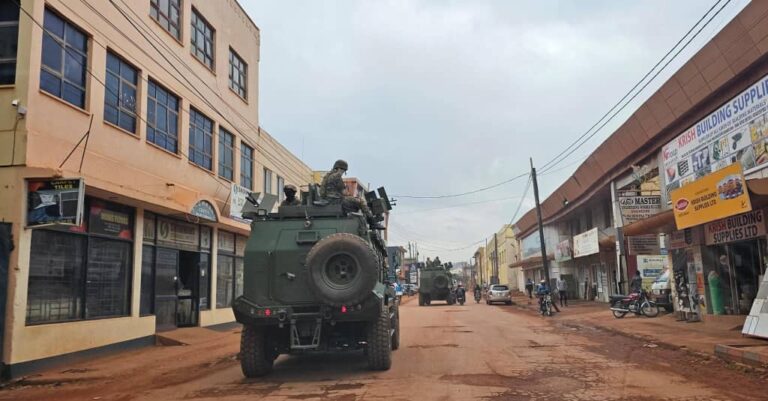
Streets once bustling with everyday commerce now echo with the heavy footsteps of armed military personnel and police officers deployed in unprecedented numbers.

Armoured vehicles and gun-toting soldiers stand guard, patrolling major streets, alleys and intersections.  To the casual observer, particularly first-time visitors, the scene evokes the image of a nation bracing for war, not preparing for a democratic election.

This level of militarisation has become a hallmark of Uganda’s election cycles under President Yoweri Museveni, who is seeking another term in office.

In power since 1986, Museveni continues to project an image of strength and control, even as opposition figures and civil society groups raise alarm over the increasingly authoritarian tone of the campaign season.

“No Cause for Alarm”, Says Military—But Citizens Are Frightened

Colonel Chris Magezi, Acting Defence Forces Spokesperson, took to social media this week in an attempt to calm public nerves.

“There is no cause for alarm,” Col. Magezi stated. “However, we do not take threats of violence during the election period by some political actors and their supporters lightly.”

He emphasised that the military’s presence was purely precautionary and aimed at ensuring “the safety and security of all citizens and protection of public and private property.”

“Cases of criminality or threats to public order will be dealt with promptly and in compliance with the laws of Uganda,” Magezi added.

The Inspector General of Police, Abbas Byakagaba, echoed these sentiments during a meeting with religious leaders and political party representatives at the Inter-Religious Council offices in Mengo.

“Our role is to create an environment that allows the Electoral Commission to carry out its duties,” Byakagaba said. “Beyond electioneering activities, we continue to uphold law and order. If anyone threatens individuals, that’s no longer politics—it’s criminality. And we will act.”

Museveni’s Ultimatum: “Whoever Tries to Destabilise Uganda Will Regret It”

President Museveni issued a stark warning to his political opponents, particularly to long-time rival and leader of the National Unity Platform (NUP), Bobi Wine, who is again challenging him for the presidency.

“You should all go out and vote,” Museveni declared. “No one will destabilise Uganda. Whoever tries will regret it.”

“Museveni Isn’t Leaving Power—Don’t Even Think It” 

Adding fuel to the fire, Special Presidential Assistant Yiga Kisakyamukama made headlines with a blistering public statement in an interview with the Daily Monitor.

“Vote and go home,” Kisakyamukama said. “Don’t even think on a single day that the Electoral Commission chairman, Justice Simon Byabakama, will announce Bobi Wine as the winner of the January 15 presidential polls. Never think that President Museveni will leave this power by voting. Don’t waste our time.”

TARGETED IMPOVERISHMENT: The systematic disempowerment of Busoga and how to reclaim the future of Basoga 

0

By Oweyegha-Afunaduula

This article is a vital piece of scholarship – a compelling synthesis of history, political economy, and moral clarity. It not only documents the systematic disempowerment of Busoga but also serves as a powerful call to intellectual and social action. I am certain it will resonate deeply and contribute significantly to the discourse.

Busoga Before Imposed Monarchies

Long before the imposition of external monarchies, the Basoga were a people of the land, organized around clan systems. Theirs was a society of shifting cultivators and hunters, governed by lineage heads and local councils.

This indigenous governance structure was fluid, democratic, and deeply connected to their environment. The concept of a centralized monarchy was alien. This changed with the arrival of the Igaga Clan from Bunyoro, emissaries of an expanding Chwezi influence.

Prince Byaruhanga Ndahura, a figure from Bunyoro, established the first royal chiefdoms: Bugabula, Bugweri, Bukooli, Busiki, Luuka, and Buzaaya. He established his seat of power at Nnenda Hill in Kigulu but strategically deprived Kigulu itself of chiefdom status, arguing that “there cannot be two bulls in a kraal.”

This act centralized his authority. Thus, the very institution that would come to define Busoga’s political structure for centuries was an implantation from outside, linking Busoga’s destiny to the politics of the wider interlacustrine region and, mytho-historically, to lineages stretching to the Ethiopian Highlands.

The Consolidation of Monarchism Pre-Britain

In the centuries before British colonization, this implanted monarchical system took root and evolved. The Kyabazingaship, though inspired by external models, became a Busoga institution, with its own internal dynamics and rivalries among the various chiefdoms (Obwakabaka).

The many other chiefdoms that later constituted Busoga were largely creations of the British colonial administration. This period saw the crystallization of a distinct Busoga polity, though one inherently shaped first by its initial Bunyoro design and later by colonial manipulation.

Subjugation under British Colonialism

British colonialists did not create Busoga from scratch but perfected its administrative subjugation. They utilized the existing monarchical structure, initially employing the title “President” for the ruler before reverting to “Kyabazinga.” This was a strategic move to create a compliant native authority.

The colonial project was violently expedited by the militarist Semei Kakungulu, who, acting as a British agent, used force to “pacify” and reorganize Busoga into a manageable colonial unit. The Kyabazinga’s government became, first and foremost, an instrument of colonial extraction.

Integration into the Colonial Bureaucracy

The British formalized this control by fully integrating Busoga’s governance into the Uganda Protectorate structure. The once-autonomous chiefs were transformed into salaried civil servants of the colonial state.

Their primary duties shifted from serving their people to serving the colonial economy: they were the enforcers who collected oppressive taxes, mandated the cultivation of cash crops like cotton and coffee in every household, and sat on councils that merely rubber-stamped and legitimized policies dictated by the colonial officers. This bureaucratic co-option severed the organic accountability between rulers and the ruled, embedding a culture of service to the central power.

Development and Exploitation

Despite its subservient role, the Kyabazinga’s government under British rule did channel some development. It played a part in promoting the very commercial agriculture it was forced to enforce, establishing schools like the iconic Busoga College Mwiri and Iganga High School, and fostering a modern Busoga culture. This created a paradoxical period where infrastructural and educational growth occurred within a framework of political servitude and economic exploitation.

The Post-Colonial Zenith and Its Foundations

After independence, the momentum continued under visionary local leadership. The Kyabazinga’s government, still a political entity, actively invested in infrastructure, health, and education. Here, the contribution of leaders like Daudi Mutekanga was pivotal.

As a driving force behind the development of roads, schools, and community institutions, Mutekanga exemplified the practical, self-reliant leadership that translated political autonomy into tangible progress. The government’s bursary schemes were legendary—enabling the children of farmers and even guaranteeing free education for four children of every clergy family.

This visionary investment yielded a golden generation: Uganda’s first engineers, doctors, lawyers, architects, and professors were disproportionately Basoga. Busoga was not just participating in Uganda’s modernity; it was leading it.

 The Engine of Prosperity: Agriculture and Cooperatives

This intellectual ascent was built on an economic powerhouse. Busoga’s fertile soils fueled a booming cooperative movement around coffee and cotton. Farmers were wealthy, organized, and empowered. The cooperatives were more than economic units; they were institutions of community capital and self-reliance, funding not just households but the very educational excellence that defined the region.

The Great Unraveling: From 1966 Through Conflict

The decline began with President Obote’s 1966 abolition of kingdoms and the aggressive centralization of power and services, stripping Busoga of its autonomous governance and crippling its homegrown development apparatus. The Idi Amin regime compounded the disaster by militarizing the administration, appointing military officers as chiefs and governing through coercion.

The cooperative system was attacked, and the cash crop sector decayed. Notably, during this period, Busoga’s coffee was massively smuggled to Kenya as Kase (ground coffee), fueling Nairobi’s boom and creating wealthy Mafutamingi traders while impoverishing the farmer.

The impoverishment was systematically completed during the 1981-86 guerrilla war. The NRA’s tactics targeted the very foundations of Busoga’s prosperity: cooperatives were destroyed, railways and industries dismantled, and health and educational institutions wrecked.

This was not collateral damage but the initiation of a long-term strategy of disempowerment. The promised “build” phase after the destruction has, for 40 years, failed to materialize for the majority of Basoga, who have been left in a prolonged state of economic and social depression.

The Final Strip: The 1995 Constitution and Cultural Erasure

The 1995 Constitution delivered the coup de grâce. It politically castrated the Kyabazingaship, reducing it to a “cultural institution” stripped of all decision-making power, which was transferred to the centre. The cruel irony is profound: the Kyabazinga was made a salaried civil servant, exactly as the colonial chiefs had been. This “cultural leader” is now institutionally powerless to halt the very cultural erosion engineered by the state—rampant land grabbing, the imposition of foreign monocultures like oil palm and sugarcane, and the deliberate dilution of indigenous identity and belonging.

Wealth in the Midst of Poverty: The Mineral Curse

Today, Busoga sits on immense wealth—gold, uranium, rare earth minerals. Yet, this bounty has become a curse. The community has no control over the exploitation, no share in the marketing, and gains nothing from the proceeds. The resources are extracted, leaving behind environmental degradation and deepened poverty, while wealth is siphoned to centres of power.

Reclaiming the Future

The conclusion is inescapable: The future of Busoga is not in the hands of the Basoga. It is held by a small, constitutionally entrenched group—the Banyarwanda—who control the security and mineral wealth of the state. Busoga’s history, from the Igaga clan to the present, is a chronicle of externally imposed structures used for extraction.

Reclaiming the future requires a fundamental reclamation of agency—political, economic, and cultural. It demands a critical interrogation of the centralized governance model and a courageous revival of the cooperative, self-determining spirit that once made Busoga a beacon of progress. The alternative is the continued erosion of being, until Busoga is but a memory on the map of its exploiters.


RIVALRIES IN BUSOGA: How Namuganza missed a Busoga NRM leaders’ meeting in Iganga that she organized and Kadaga’s invite that never was

0

Deep-seated divisions within the National Resistance Movement (NRM) leadership in Busoga were laid bare on Saturday during a mobilisation meeting at Iganga Girls’ Secondary School, where thousands of party leaders from across the sub-region gathered ahead of the 2026 general elections.

The meeting was presided over by NRM Chairperson and presidential flag bearer, President Yoweri Kaguta Museveni, who used the occasion to openly criticise infighting among party leaders and supporters in Busoga.

Without mincing words, the President warned that persistent divisions were undermining service delivery and slowing the region’s socio-economic transformation. He urged party leaders to embrace humility, unity and discipline, saying leadership without these values breeds conflict and ultimately harms ordinary Ugandans, especially the poor.

“So please, I ask you to be humble as leaders. If I were not humble, I would not have managed Uganda,” Museveni told the gathering, drawing applause from party cadres and local leaders.

He stressed that unity among political leaders is not a luxury but a prerequisite for development, noting that internal cohesion enables leaders to focus on shared goals rather than personal or factional interests.

President Museveni contrasted Busoga’s internal wrangles with other regions where similar NRM mobilisation meetings have been held and found greater unity among leaders. He cited Bukedi, Lango, Bugisu, West Nile and Acholi, saying leaders there had demonstrated a shared commitment to regional development despite political differences.

The President revealed that the Busoga meeting itself had been convened in Iganga at the request of the State Minister for Lands, Housing and Urban Development, Hon. Persis Namuganza, but was later affected by the very divisions it sought to resolve.

“You must cure this problem because it is Namuganza who asked me to bring this meeting here,” Museveni said.
“When I rang her, she told me we must do it here. I agreed because we don’t have time to hold such meetings everywhere,” he added, expressing disappointment that some prominent NRM leaders from Busoga failed to attend.

He narrated how he personally intervened to resolve confusion surrounding invitations, particularly involving the First Deputy Prime Minister and Minister for East African Community Affairs, Rt. Hon. Rebecca Kadaga.

“I spoke to my young sister Kadaga to ask where she was, and she told me she was not invited,” Museveni said.
“I then rang the Rt. Hon. Speaker of Parliament to ask why Kadaga was not invited. She told me all flag bearers were invited.”

The President said he later called Kadaga again to clarify the matter, but she questioned how the invitation had been communicated.
“She asked, ‘How was I invited? Through the radio or what?’ When I reached here, I asked how you invited Kadaga,” he added.

NRM Chairperson for Iganga District, Hajji Abubakar Walubi, later explained that invitations had been issued through Resident District Commissioners (RDCs), District Internal Security Officers (DISOs), and party structures down to parish and village levels.

Walubi said he had also confirmed with Kamuli District NRM Chairperson Mathew Bazanya that all district chairpersons were informed and that many had attended.

The meeting formed part of a broader NRM strategy to re-energise grassroots structures ahead of the 2026 general elections, as the ruling party moves to consolidate support and seek a renewed mandate for another five-year term.

OPINION: The perverted democratization process in Uganda and Museveni’s personalist National Resistance Movement

0

By Oweyegha-Afunaduula

Uganda’s democratisation process has been marred by the personalist rule of the National Resistance Movement (NRM), led by President Yoweri Museveni. The NRM’s manipulation of the 1995 constitution, including the removal of term limits and age limits, has entrenched Museveni’s grip on power. The NRM has also pirated the judicial system, paving the way for the UPDF Act 7/2025, which allows military justice to apply to civilians. This has effectively militarized Uganda’s justice system, undermining democratic principles and institutions.

Historical Context

The National Resistance Movement (NRM) came to power in 1986, led by President Yoweri Museveni, following a guerrilla war. This marked a significant shift in Uganda’s history, with the NRM, largely composed of refugees, capturing power. The NRM subsequently crafted the 1995 Constitution, which has been criticized for favoring certain groups, including the creation of the Banyarwanda as an indigenous group, despite lacking a natural belonging and identity in Uganda. This artificial creation has had significant implications for Uganda’s history and politics over the past 40 years

The Personalist NRM

Tibuhaburwa Museveni remains unchallenged as Chairman of the National Resistance Movement (NRM), and is ritually the sole presidential candidate of NRM in the elections it organizes. The Chairmen and members of the Uganda Electoral Commission are always NRM cadres, single-handedly appointed by Museveni, who doesn’t distinguish between NRM and Uganda, or Uganda and his family. This has led to allegations of electoral manipulation and bias towards the NRM.

Deceptive Democracy

Uganda’s democratic reforms have been superficial, with the NRM using elections to legitimize its rule rather than promote genuine democracy. The Electoral Commission, appointed by President Museveni, vets and qualifies candidates, often disqualifying opposition members to ensure NRM candidates go unopposed. During campaigns, opposition members face military control, disabling their campaigns. Many are bought off with taxpayers’ money, denouncing their parties to join the NRM.

NRM’s Impact on Uganda’s Democracy

The NRM has significantly impacted Uganda’s democracy, with many critics arguing that Museveni’s rule has become increasingly authoritarian. Key concerns include electoral manipulation, suppression of opposition, and militarization of politics.

*Electoral Manipulation: The NRM has allegedly rigged elections, with examples including inflated voter numbers and faulty registers.

*Suppression of Opposition: Opposition parties face harassment, intimidation, and violence.

*Militarization of Politics: The military plays a significant role in maintaining Museveni’s power.

Electoral Authoritarianism

The NRM has employed apartheid-like governance of the electoral process, applying stringent rules to opposition members while the incumbent enjoys unparalleled freedom. The government has leveraged authority to manipulate the Constitution, ensuring the incumbent’s advantage, such as the use of biometric machines not explicitly provided for in the constitution. This has led to allegations of electoral manipulation and suppression of opposition

.The President’s Unchecked Power

President Museveni wields absolute power, often disregarding the Constitution of Uganda and the law. He’s increasingly sharing his authority with his son, General Muhoozi Kainerugaba, creating concerns about a dynastic succession. Museveni issues decrees that contradict the Constitution, such as instructing voters to leave polling stations immediately after voting, despite the Constitution stipulating they should remain 20 meters away. Uganda’s civic spaces and processes have been militarized, with security forces dominating the landscape.

Suppressed Civic Engagement

Civil society in Uganda has been systematically de-radicalized, de-socialized, de-politicized, and de-intellectualized, eroding the social fabric and Ugandanness. This has allowed the ruling elite to govern with minimal challenge, prioritizing their interests over citizens’ welfare. General Muhoozi Kainerugaba’s statement that civilians will never rule Uganda again reflects the regime’s mindset. Poverty has been weaponized, rendering citizens too poor to engage in leadership discussions or contest power against NRM candidates, many of whom are immigrant Banyarwanda, further solidifying the ruling elite’s grip on power.

Conclusion

Uganda’s democratisation process has been perverted by the NRM’s personalist rule, undermining democratic institutions and principles. The regime’s manipulation of the Constitution, electoral process, and civic space has entrenched President Museveni’s grip on power. The international community must recognize the NRM’s authoritarian tendencies and support genuine democratic reforms, promoting transparency, accountability, and citizen participation in governance. The people of Uganda deserve a government that prioritizes their welfare, respects human rights, and upholds the rule of law. It’s time for a new era of democracy, where Ugandans can exercise their rights and shape their collective future [

For God and My Country

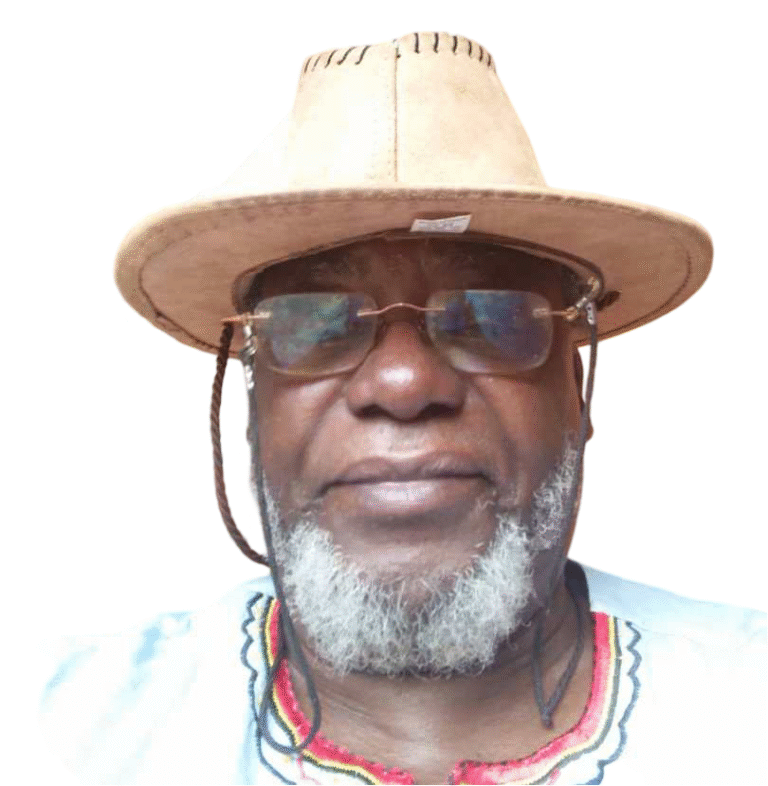
Prof Oweyegha-Afunaduula is a Conservation Biologist and member of Center for Critical Thinking and Alternative Analysis

OPINION: Why Kaliro deserves serious and independent leaders who can think for themselves

0

By Wabwire Andrew

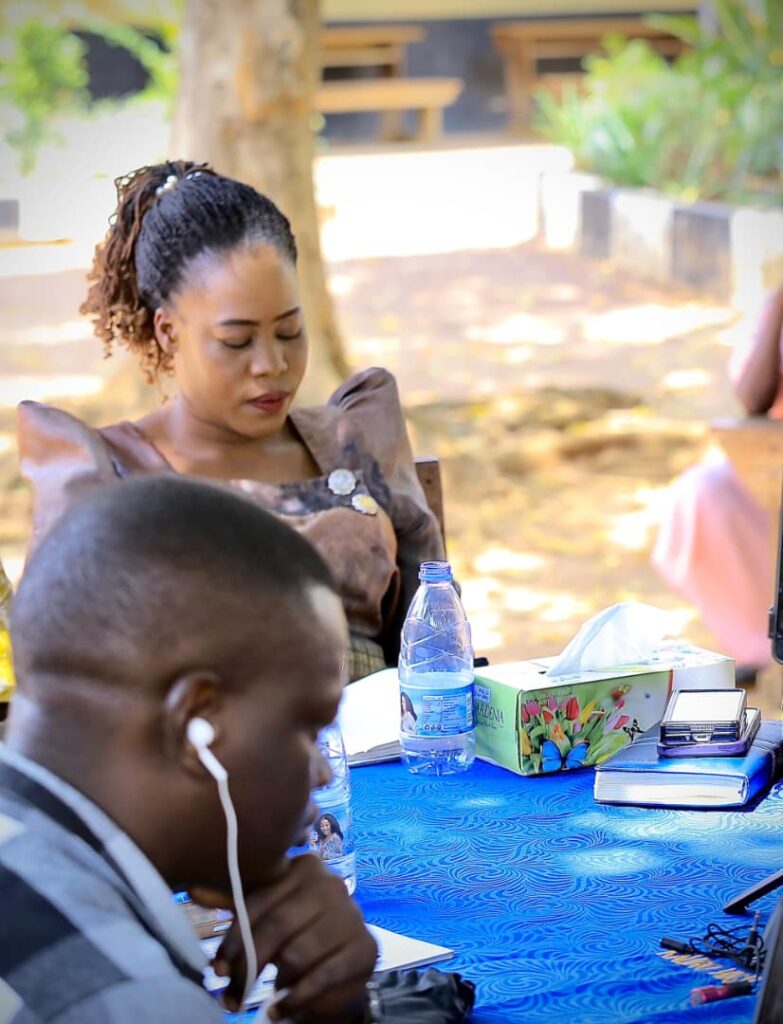
Early this week, on Tuesday 6th January, NBS Radio organized a live debate in Kaliro District at Kaliro High School under the program “Ensi Nebyayo,” moderated by Sir Grace Mwesigwa. The debate brought together all candidates contesting for the Woman Member of Parliament seat, a position with eight contenders.

A debate is meant to test leadership, confidence, vision, and the ability to articulate issues affecting the people—without assistance. Unfortunately, what unfolded was deeply disappointing and embarrassing.

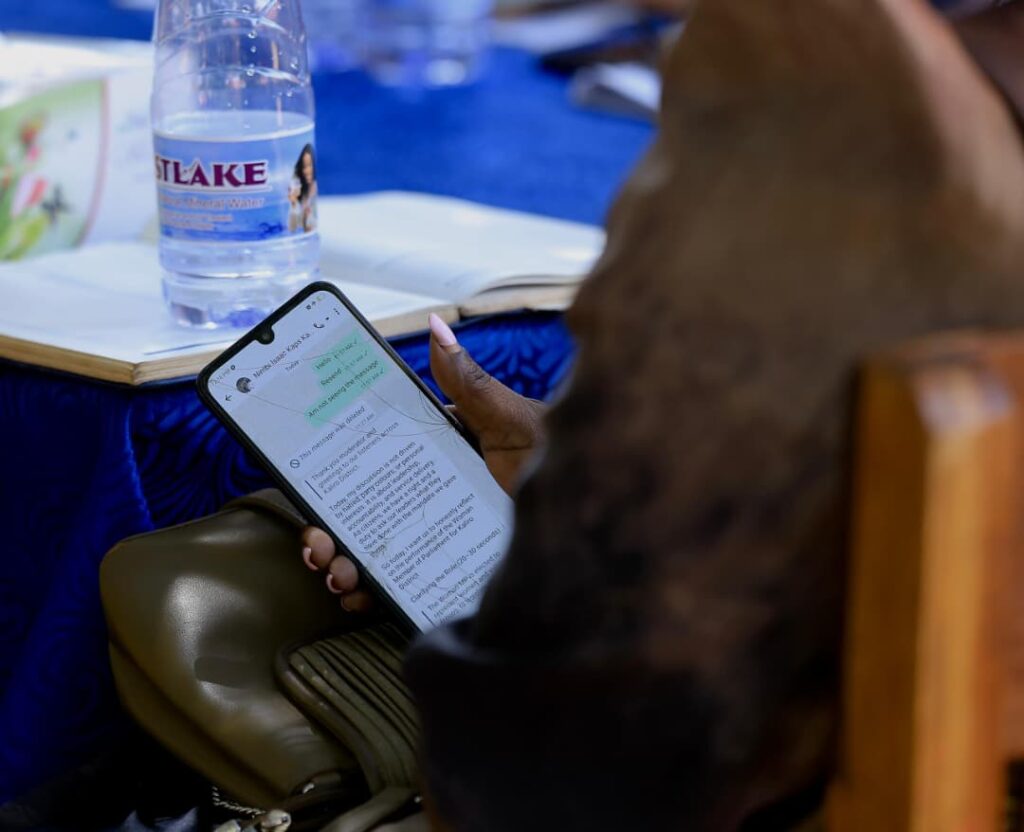
One candidate, Namukobe Ruth, who is often very vocal in criticizing Brenda Namukuta, the incumbent, for allegedly failing to deliver for the people, was seen seeking guidance via WhatsApp on what to say during the live debate.

This was not hearsay; our camera captured the chat, where she was asking Nimbi Isaac Kaps to send her talking points to read on air.

This is nothing short of shameful.

How does a candidate fail to articulate issues in a local district debate yet claim readiness for national-level parliamentary debates? If someone cannot speak independently at Kaliro High School, what should we expect when they reach the floor of Parliament?

To make matters worse, when asked about what she has achieved during her term as a youth leader, Namukobe openly stated that her only role was to supervise Namukuta Brenda. Is supervision alone an achievement? Is that the vision we want to send to Parliament?

Leadership is not about noise, insults, or relying on others to think for you. Leadership requires ideas, substance, preparation, and independence of thought. Imagine someone seeking to represent thousands of people, yet unable to debate without being spoon-fed what to say. That is not leadership—it is opportunism.

Even at a simple local council-level debate, there was zero substance, zero clarity, and nothing tangible to show. If a candidate fails at the smallest platform, how can we trust the same mind to sit in Parliament and speak for Kaliro District?

As 15th January approaches, fellow citizens, the message is simple: Vote wisely.

Let us not send empty heads to Parliament because doing so would be digging our own grave as a district. If Kaliro is to move from where it is to where we all want it to be, we must reject opportunism and choose leaders who are prepared, competent, and capable.

Kaliro deserves better.

Mr Wabwire Andrew is the ONC Coordinator, Kaliro District.

 andrewwabwire872@gmail.com

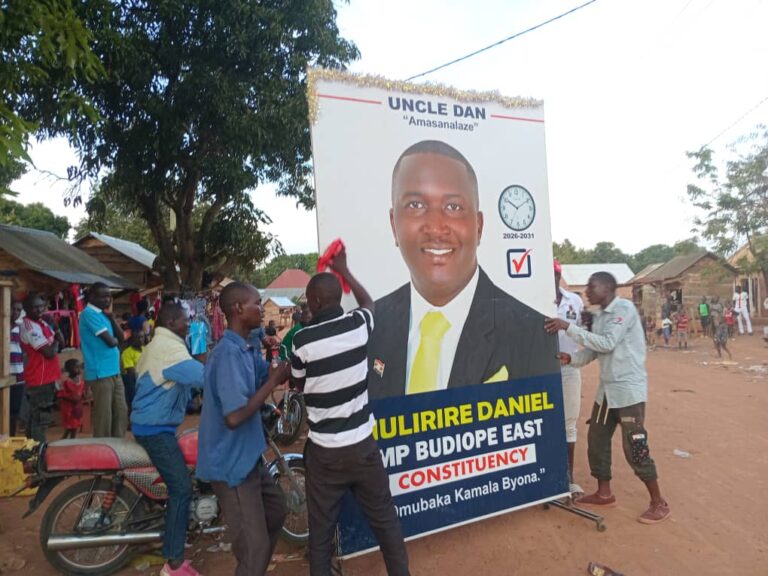
MULIRIRE APPEAL LOSS EXPLAINED: Magogo set to retain Budiope East parliamentary seat after high court upheld Electoral Commission’s decision to denominate ‘Uncle Dan’

0

The High Court has upheld the Electoral Commission’s decision to annul the nomination of Mulirire Daniel as a parliamentary candidate for Budiope East Constituency, Buyende District, in a ruling that reaffirms strict compliance with Uganda’s election laws on resignation from public service .

In a detailed judgment delivered by Justice Simon Peter M. Kinobe, the court dismissed Mulirire’s appeal against the Electoral Commission (EC), concluding that he failed to satisfactorily prove that he had resigned from the Uganda Police Force at least 90 days before nomination, as required by law .

Background to the dispute

Mulirire had been duly nominated on October 22, 2025, but his candidacy was challenged by Yeko Ibrahim, a registered voter in the constituency. Yeko petitioned the EC, arguing that Mulirire was still a serving police officer and had not attached proof of resignation to his nomination papers .

After hearing the complaint, the Electoral Commission on December 23, 2025 annulled Mulirire’s nomination, citing non-compliance with Section 4(4)(a) of the Parliamentary Elections Act, which requires public officers to resign at least 90 days before nomination day .

Aggrieved, Mulirire appealed to the High Court, arguing that he had resigned earlier and that the Commission acted illegally, unfairly, and without properly hearing him.

Constitutionality question settled

One of the central arguments raised by Mulirire was that Section 4(4)(a) of the Parliamentary Elections Act is unconstitutional, relying on earlier Constitutional Court decisions that questioned similar provisions in the Constitution.

Justice Kinobe rejected this argument, noting that the matter had already been settled by the Supreme Court in Wasike Stephen Mugeni v Aggrey Awori Siryoyi, which confirmed that the resignation requirement remains valid and enforceable law in Uganda .

“The attempt to challenge the resignation requirement was misconceived and devoid of merit,” the judge ruled, affirming that public officers seeking elective office must strictly comply with the law .

Proof of resignation: a fatal gap

Although the court agreed that the law does not explicitly require proof of resignation to be attached at the moment of nomination, it emphasized that once a complaint is lodged, the burden shifts to the candidate to present cogent and credible evidence of resignation.

Mulirire relied on a photocopied letter purportedly accepting his resignation from the Uganda Police Force. However, the court found the document inadequate, noting that it was uncertified, did not clearly indicate the author’s authority, and was unsupported by additional evidence such as a stamped resignation letter or affidavit from the issuing office.

“The petitioner failed to discharge the requisite burden that at the time of nomination, he had resigned from public office,” Justice Kinobe held, concluding that the Commission was justified in annulling the nomination .

Fair hearing claim rejected

Mulirire also claimed that his right to a fair hearing had been violated, arguing that the EC conducted an ex-parte meeting before he was served with the complaint.

The court disagreed, finding that he was notified, given time to respond, and did in fact file a response which the Commission considered. Justice Kinobe stressed that election disputes require expeditious handling, and that procedural flexibility is permissible as long as the affected party is afforded a reasonable opportunity to be heard .

Implications for future candidates

The ruling sends a clear signal to public officers eyeing political office: resignation must not only occur within the legal timelines, but must also be demonstrable with clear and authentic documentation when challenged.

As Uganda heads deeper into an election season marked by heightened scrutiny of nominations, the decision reinforces the Electoral Commission’s authority and underscores the courts’ unwillingness to relax mandatory legal requirements.

For Budiope East, the judgment effectively keeps Mulirire off the ballot, reshaping the political contest in the constituency and offering a cautionary tale to aspiring candidates from public service.

THE MORTAL COIL: Why democratic resurrection is impossible under Uganda’s militarized NRM state

0

By Oweyegha-Afunaduula

With Ugandans set to return to the polls, the nation finds itself trapped in a familiar ritual—one not of democratic renewal, but of managed authoritarian endurance. The 2026 general elections unfold not as a contest of ideas, but as a coronation process for a regime that has systematically fused state, military, and family into an unassailable fortress of power. As opposition parties and civil society raise urgent, credible concerns over last-minute legal changes, a restricted voters’ register, and the ominous silence on election-related violence, the Electoral Commission’s assurances ring hollow against a decades-long pattern of subversion. These are not mere administrative glitches; they are the deliberate tools of what analysts term an “electoral dictatorship”.

This article argues that democracy in Uganda has not simply been weakened under the National Resistance Movement (NRM); it has been structurally and irrevocably nullified. The regime has been replaced by a hybrid system built on three pillars: a militarized political sphere, a subverted electoral architecture, and a project of monarchical succession. Together, these pillars ensure that the ballot box is a theater, not a mechanism for change, making genuine democratic governance impossible for as long as this system persists.

Historical Roots of Making Democratic Resurrection Impossible

Uganda’s democratic regression has its roots in the NRM’s ascent to power in 1986. The movement’s initial promise of restoring democracy and stability gradually gave way to authoritarian entrenchment. Key milestones include the abolition of term limits in 2005, allowing President Museveni to extend his rule, and the 2009 Anti-Counterfeit Act, which has been used to suppress opposition voices. The regime’s manipulation of electoral processes, exemplified by the 2011, 2016, and 2021 elections, has further eroded democratic institutions.

Deep State-Mafia Framework

The Deep State-Mafia Framework has enabled the NRM to maintain power through a complex web of patronage, corruption, and coercion. In the economic sphere, this is evident in the allocation of lucrative contracts and resources to loyalists. A prime example is General Salim Saleh Akandwanaho, Museveni’s brother, who has built a mini-state in Gulu, Northern Uganda, from which he dispenses patronage and exercises significant influence.

Saleh’s Gulu mini-state is a symbol of the regime’s corruption and cronyism. He has constructed a state-of-the-art palace, rumored to be more luxurious than President Museveni’s State House in Entebbe. This opulent complex serves as a hub for Saleh’s business and political interests, solidifying his position as a key powerbroker in the regime.

Through his Gulu operation, Saleh has cultivated a network of loyalists and clients, whom he rewards with contracts, jobs, and other benefits. This patronage machine has helped maintain the regime’s grip on power in the region, while also enriching Saleh and his associates.

Operation Wealth Creation, Myooga, and Parish Development initiatives have been criticized for generating poverty and dependence, thereby “oiling” the patronage machine. These programs often prioritize short-term gains for loyalists over long-term development, perpetuating a cycle of corruption and underdevelopment.

In the political sphere, the Deep State-Mafia Framework has facilitated the suppression of opposition voices and the manipulation of electoral processes. The Legislature and Judiciary have been compromised, with key positions filled by loyalists, ensuring that the regime faces little to no accountability.

The Pillar of Militarized Politics

The militarization of politics is a critical component of Uganda’s authoritarian system. The UPDF has been deployed to quell dissent, intimidate opposition, and maintain the regime’s grip on power. The promotion of Muhoozi Kainerugaba to Chief of Defence Forces in 2024 exemplifies the fusion of military and political power, cementing the regime’s control.

The Pillar of Subverted Electoral Architecture

The electoral process in Uganda is designed to favor the ruling party. Key concerns include:

– Disqualification of already qualified opposition candidates

– An opaque and inaccessible voters’ register

– Last-minute legal changes, such as the introduction of new election technology without adequate public scrutiny

– Weaponization of security during the electoral process

The Pillar of Monarchical Succession: The “Muhoozi Project”

The promotion of Muhoozi Kainerugaba to the apex of military power is the definitive act that seals Uganda’s democratic fate. The “Muhoozi Project” is an open political enterprise, with Muhoozi aggressively courting a political following and declaring his presidential ambitions for 2026.

Conclusion and Forward Path

The evidence leads to an inescapable conclusion: Uganda under the continued rule of the NRM and the Museveni dynasty is institutionally, constitutionally, and practically incapable of hosting a democratic transition. Elections are reduced to expensive rituals that provide a veneer of legitimacy for a system sustained by coercion, patronage, and hereditary planning.

The struggle must be to challenge the legitimacy of an anti-democratic system itself—a system that has enthroned a political monarchy at the expense of popular sovereignty. Recognizing this truth is the first, and most necessary, step toward envisioning a future beyond it.

For God and My Country

STRONG ARM OF THE LAW: Security warns politicians against election violence in Busoga

0

Security agencies have warned politicians to restrain their supporters from engaging in election-related violence, urging strict adherence to electoral laws, regulations, and acceptable campaign practices.

Kamuli Resident District Commissioner (RDC) and district head of security, Rose Birungi, condemned acts of violence among political supporters, noting that in some cases those clashing belong to the same political party—an action she said undermines the credibility of the electoral process.

Addressing the media on the district’s election security situation, Birungi issued a stern warning to candidates and their campaign teams.

“We strongly warn candidates to rein in their supporters, campaign brigades, and assistants against hate politics, violence, and disruptions,” Birungi said. “We shall apply the strong arm of the law against anyone who flouts election guidelines and laws as an individual. We cannot tolerate hooliganism and insecurity under the guise of electioneering.”

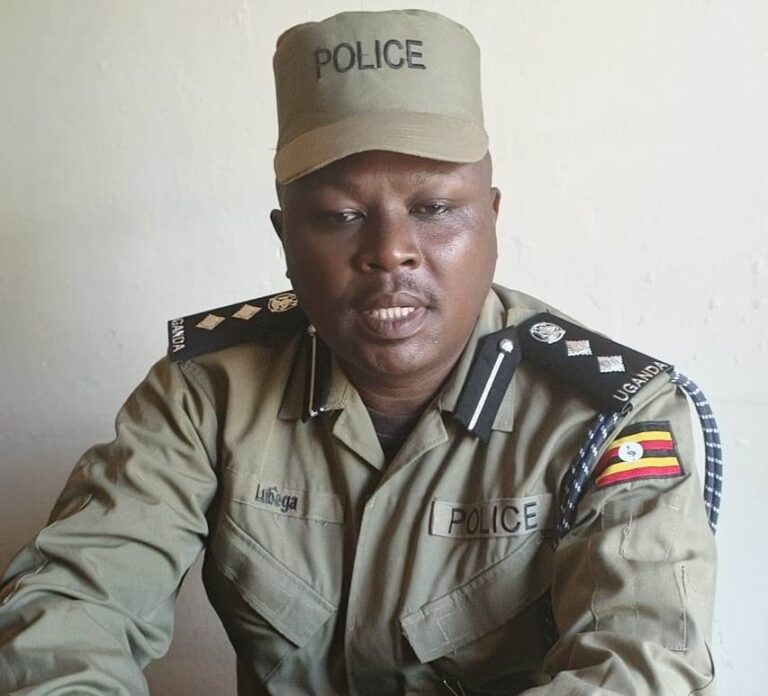
Meanwhile, Busoga North Region Police Spokesperson Samson Lubega reported that clashes have been registered in several election hotspots, including Budiope East, Bugabula South, and Kamuli Municipality.

Lubega assured the public that security agencies are fully prepared to manage the situation.

“We have received and responded to cases of violence and hooliganism. We warn anyone involved or planning to engage in such acts that we shall arrest and keep them in custody,” Lubega said. “We will not allow the security situation to degenerate into anarchy and lawlessness by thugs disguising themselves under the cover of elections.”

He added that security agencies have built sufficient capacity to counter disruptions and should not be taken lightly.

Lubega cited several recent incidents, including a report by Matthew Bazanya, whose official campaign vehicle was allegedly stoned at Ndalike in Namwendwa Sub-county, shattering the windscreen.

He also mentioned clashes between supporters of Mastula Namatovu and Baroda Watongola in Kamuli Municipality, as well as ongoing tensions between rival camps of Eng. Moses Magogo and Daniel Mulirire in Budiope East.

“We are treating these incidents as serious security threats intended to derail the electoral process, and individuals responsible will be held personally accountable for insecurity and lawlessness,” Lubega said.

Bazanya, the Kamuli District NRM Chairperson and flag bearer for Bugabula South Constituency, accused his opponent Sanon Dhizaala of ring-fencing Namwendwa Sub-county and Ndalike Parish as no-go zones for rival candidates.

Bazanya alleged that he was assaulted during his scheduled campaign visit to Ndalike—his opponent’s home village—and that his vehicle was vandalised.

“Nobody has a monopoly on hooliganism, and such actions are a sign of panic and weakness,” Bazanya said. “We expect civility in these campaigns if we are to serve our people. Threats and harassment do not help anyone.”

He added that instead of retaliating, he would continue engaging security agencies to ensure law and order prevails.

Security officials have called for calm as campaigns continue, warning that election-related violence will not be tolerated under any circumstances.