
Thursday, May 21, 2026
Home Blog Page 18

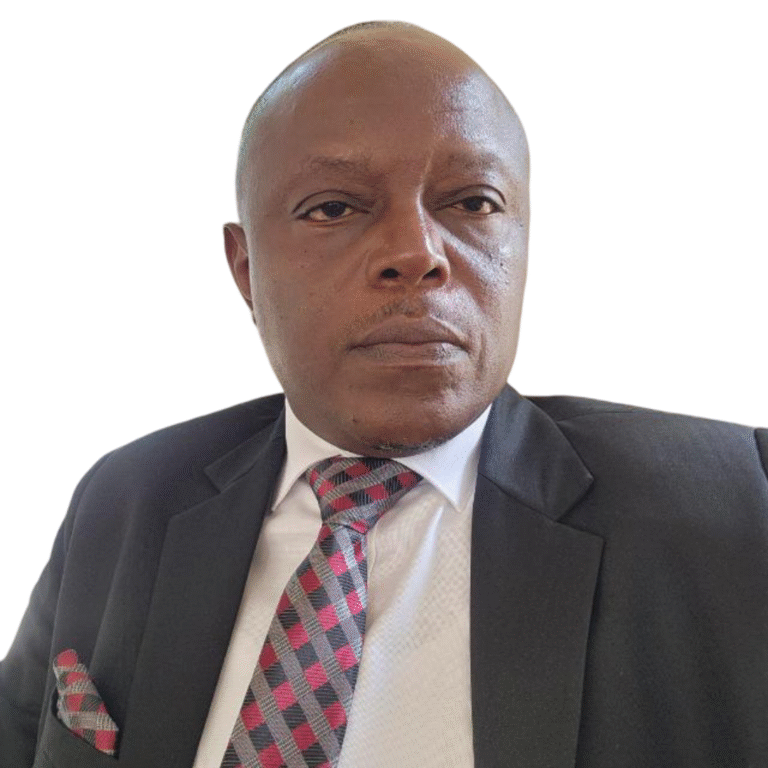
PERSONAL AMBITIONS: The price of choosing in desperation and of leaders in Budiope desperate to be chosen  

0

By David Takozekibi

Budiope stands today in a fragile political moment, one shaped not by the steady rhythm of democratic choice but by the turbulence that arises when both the people and their leaders act out of desperation. Our biggest danger is no longer simply voters struggling within difficult circumstances; it is leaders who will do anything to be chosen, leaders whose pursuit of office overwhelms the responsibilities that come with it. In such an environment, politics ceases to be a contest of ideas. It becomes a contest of survival, and the cost of that shift is far greater than most people realise.

Political researchers have long explained what happens when leadership begins from a place of desperation. Institutions weaken. Rules bend. The weight of public service collapses under the pressure of personal ambition. As political scientist Francis Fukuyama once observed, “When political systems become captured by powerful individuals or small groups, institutions cease to serve the public good and begin to serve private interests.” In Budiope, the consequences of such capture now sit in plain sight.

In anticipation of the compromised environment that has become characteristic of Budiope’s elections, the campaign team I headed on behalf of candidate Geoffrey Dhamuzungu [Budiope East] introduced internal safeguards, instructing agents to sign in green ink and use uniquely numbered stamps when confirming DR forms at their stations, in the NRM primaries. These were protective innovations, never claimed to be part of official NRM procedure, but adopted to deter tampering and establish authenticity in a terrain where malpractice was anticipated. Though later disregarded by the tribunal on technical grounds, their very necessity revealed the climate in which we were operating: one where candidates without bags of money, influence, or institutional protection had to defend the integrity of their votes against a growing obsession among the powerful to go unopposed.

Such evidence was submitted to the party’s Electoral Commission, but it was all disregarded, which paints a picture far removed from the principles that a democratic society rests upon. Out of 269 polling stations, only 45 produced verifiable Declaration of Results forms, those signed in green ink and stamped by trained agents. Another 45 came back without the required stamps, raising questions about their authenticity. But the most striking figure is this: 157 polling stations had no DR forms at all. No records. No signatures. No verifiable declaration of what happened there. Yet results were somehow manufactured and announced for them.

The numbers tell a clear story. Nearly 70 percent of all registered voters, 88,531 people, effectively did not participate in the process that supposedly represented their will. No matter where one stands politically, such figures do not speak of competition. They speak of a process stretched beyond its limits, a process unable to capture the voice of those it claims to represent.

Additional sworn testimony revealed that in many villages, exercise books were used in place of official DR forms, even as the proper forms were available for other elective positions. It documented tallying that took place outside authorised centres, including at private residences where forms were intercepted and altered before being transmitted to the legitimate tally centre.

The district registrar responsible for overseeing the process was later arrested on allegations of forgery while simultaneously occupying roles in institutions directly linked to one of the candidates, a conflict of interest that should trouble anyone who values democracy.

But beyond documents and data lies the lived experience of the people. On the ground, where elections are supposed to reflect community choice, fear became the dominant language. Testimonies describe hired groups and security personnel dispersing crowds, beating supervisors, whipping drivers, and chasing supporters away from polling stations. Tear gas was released in rural villages that had never seen such scenes before.

Roadblocks appeared not to guide voters but to turn them back. In some sub-counties, especially Gumpi, Bugaya, and Ngandho, intimidation replaced civic participation.

On that day, democracy felt distant, and the ballot lost its meaning. Kenyan writer Ngũgĩ wa Thiong’o captured this reality with precision: “The biggest weapon wielded by corrupt leadership is the weapon of fear.” In Budiope, fear has increasingly replaced persuasion, turning political participation into an act of personal risk rather than civic duty.

Political researcher Larry Diamond warns that “democracy fails not when people stop voting, but when they no longer believe that voting can change anything.” In Budiope, this belief is fading, not because people are apathetic, but because the system itself has taught them that their voice can be overridden, ignored, or violently suppressed.

This is what desperation politics looks like. It is not just the loud confrontations at tally centres or the arrests splashed across headlines. It is the quiet collapse of trust between leaders and the led. It is the steady normalisation of intimidation. It is the slow erosion of the citizen’s voice until voting becomes a ritual rather than a right.

As Prof. PLO Lumumba sharply put it, “When politics becomes a matter of life and death, then ethics die first.” In Budiope, the erosion of ethics is no longer a theoretical warning; it is a lived reality that has reshaped the meaning of elections. The tragedy is that Budiope has lived in this rhythm for too long. The signs are everywhere: schools that remain underfunded, health centres without essential supplies, roads that never improve, and a youth population that grows more frustrated with each passing year. In such conditions, politics shifts from a platform of ideas to a marketplace of survival. Here, Budiope mirrors what African political theorist Jean-François Bayart famously described: “Politics in many African states becomes an economy of the belly—a struggle to control resources rather than to serve citizens.”

A bar of soap becomes an argument. A 10,000-shilling note becomes a manifesto. A threat becomes a strategy. And voters, trapped between economic hardship and political uncertainty, begin to choose not out of belief but out of resignation.

Yet even in this despair, the people of Budiope have not lost their sense of right and wrong. The very act of collecting evidence, submitting petitions, reporting irregularities, publishing testimonies, and demanding accountability shows that this community still recognises what a genuine election should look like.

Beneath the fear that marked recent events lies a population that understands that leadership can, and should, be different. Nigerian writer Chinua Achebe once wrote, “The trouble with Nigeria is simply and squarely a failure of leadership.” Replace “Nigeria” with “Budiope,” and the truth remains. Choosing leaders out of desperation will only deepen the cracks. Choosing out of preparation, looking at competence, integrity, vision, and a track record of service, offers a path back to dignity. Desperation creates debts that the future must pay. Prepared leadership creates opportunities that the future can build upon.

Budiope’s story is not yet finished. It can still reclaim its voice. It can still redefine its politics. It can still decide that the desperation of yesterday will not dictate the destiny of tomorrow. But to do so, it must first recognise that democracy cannot grow in an environment where fear overshadows the ballot, where institutions bend under pressure, and where leaders fight to be chosen instead of fighting to serve.

The price of choosing in desperation is always high. And the price of leaders desperate to be chosen is even higher. But the moment Budiope decides to rebuild its political foundation, not on fear, not on manipulation, but on dignity and preparation, it will begin a new chapter. One written not in intimidation, but in hope.

David Takozekibi is a Former NRM Parliamentary Aspirant (2021), Petitioner in the 2021 Budiope East Primaries and Head of the 2025 Dhamuzungu Campaign Team.
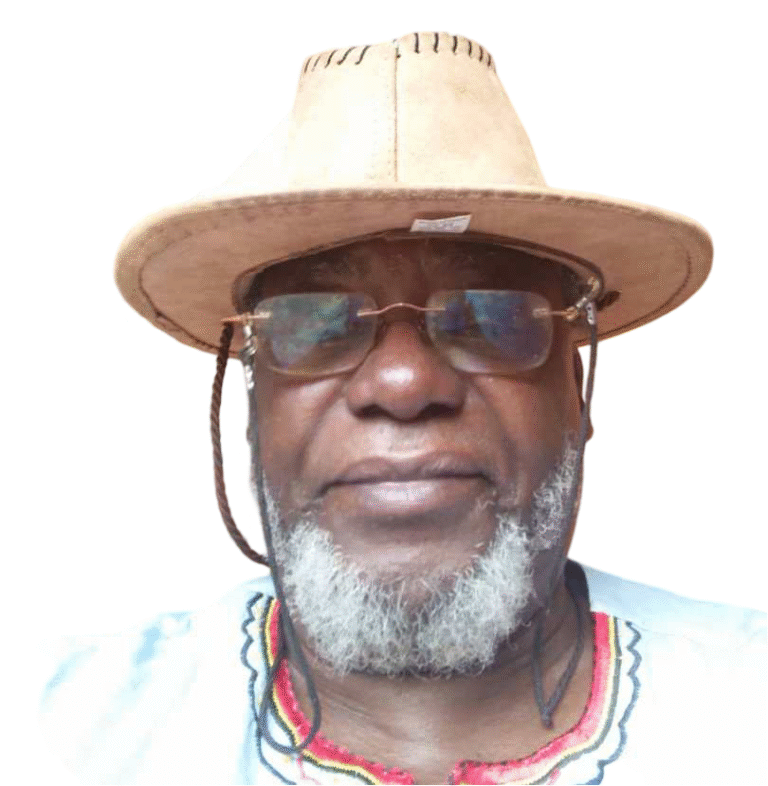
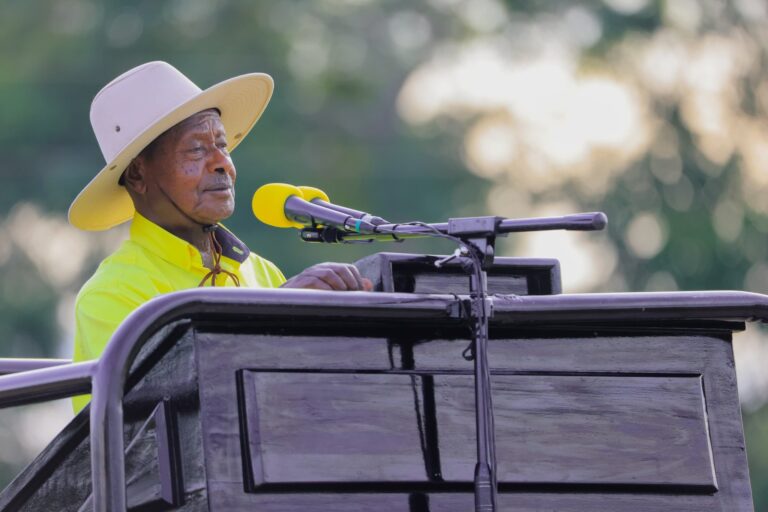
POLITICS OF CROWDS:   Political forces in NRM and NUP are working hard to outsmart each other in support appeal and crowd dynamics ahead of the 2026 elections, but will it deliver desired results? A cautionary article

0

By Oweyegha-Afunaduula

Uganda is going to the next Presidential, Parliamentary and Council elections, which the Uganda Electoral Commission has arranged to be held on 25 January 2026.  These will be the 7th elections since 1996 when the President of Uganda, Tibuhaburwa Museveni, offered himself to electoral politics after resisting the transition from single-party politics for 10 years since he captured the instruments of power in 1986.

The  next elections will supposedly be multiparty elections, which has been the case since 2006 when President Tibuhaburwa Museveni opened up to multiparty politics. However, he has not hidden his distaste for multiparty politics because it gives the impression that he is challengeable. Indeed during his swearing in for his 6th term as President of Uganda, he committed the next 5 years (2016-2021) to erasing political parties from the political landscape of Uganda, leaving only his own personalized party – the National Resistance Movement (NRM).

Nevertheless, political parties continue to persist on the political landscape of the country, with the replacements rate of active parties being high while  NRM spends a lot of time, energy and money to cast the parties as useless and unlikely to contribute significantly to the social, economic and political development, transformation and progress of Uganda. The persistent narrative is that only President Tibuhaburwa Museveni and NRM can rule Uganda to progress.

Currently, the narrative is that only President Tibuhaburwa Museveni can ensure peace and security of the country and ensure further development, transformation and progress of the country. Accordingly many political parties seem to have agreed to the narrative and struck alliances with the NRM, not realizing that President Tibuhaburwa Museveni has never abandoned his determination to erase political parties from the sociopolitical landscape of the country.

There are claims that many parties are being sponsored for the 2026 elections by President Tibuhaburwa Museveni and/or his party, whose money is not easy to distinguish from the public funds. The claim is that President Tibuhaburwa Museveni has been able to align most of the alternative political parties against the National Political Platform (NUP), the largest opposition party, led by Kyagulanyi Ssentamu, alias Bobi Wine, to ensure his continued reign beyond 40 years..

It is clear that the main political forces heading toward 2026 are NRM and NUP.  These are working hard to outsmart each other in support appeal and crowd dynamics in order to prove to the electorate that they are the ones that deserve leading Uganda beyond 2025.

The following practices have tended to distort and reduce the value of crowds in electoral politics;

1. The practice of including school children in crowds to swell crowd size has distorted and reduced the value of crowds in electoral politics.

2. The practice of transporting people from one area to another has also reduced the value of crowds in electoral politics.

3. The practice of paying people to attend political rallies has distorted and reduced the value of crowds in electoral politics.

4. The use of the military and police to constrain people from attending particular political rallies distorts the truth about popularity of a party.

5. Members of one party putting on the inform of one party and attending the political rally of another party distorts and reduced the value of crowds in electoral politics.

6.  The practice of using Artificial Intelligence to swell numbers of people in crowds distorts and reduced the value of crowds in electoral politics

Therefore, as we head towards the 2026, we should not take crowds as an automatic indication of the support or popularity of a particular party. In any case, some people may attend a political party because they expect money, food or ti-Shirts to wear when they go home while their minds endorse another Party. Besides, many may not have registered themselves as voters, or voter registers have been corrupted to render some or many voters unable to vote

Let me end this cautionary article with explaining how you can distinguish an AI created crowd from a human constituted crowd. I had written this elsewhere but it fits here very well too. It is absolutely important that we can tell an AI created crowd from a human constituted crowd so that we can reject the corruption of the electoral process and demand our genuine right to vote and decide our leaders.

AI-created Crowds

AI-created crowds are distinguished by their lack of organic interactions (i.e., they lack nuances such as body language and tone ofvoice); they show uniform behavior and responses, which can be a giveaway; they are inconsistent, meaning they contain inconsistencies; and they depict contradictions; thry depict overly promotional language or buzzwords.

Human-constituted crowds

Human crowds exhibit diverse opinions and perspectives; respond emotionally, with varying levels of engagement and enthusiasm; understand context, idioms and sarcasm, which AI struggles to replicate; and human crowds exhibit natural, spontaneous interactions, which AI struggles to replicate.

Therefore, to detect AI-created crowds, look for unnatural language patterns; repetitive behavior; Lack of personal touches or human error; and inconsistencies in messaging or behavior. However, keep in mind that AI technology is rapidly evolving, and distinguishing between AI-created and human-constituted crowds may become increasingly challenging. When we reach this stage, unscrupulous politicians will do anything to give the impression that they are more popular than others yet the opposite is true. One may even say AI is Satan’s tool of deception in modern times.

For God and My Country.             

Prof. Oweyegha-Afunaduula is a Conservation Biologist and member of Center for Critical Thinking and Alternative Analysis

PROGRESS AT WHAT COST? Environmental and community concerns in Uganda’s infrastructure boom

0

By Oweyegha-Afunaduula

 During the bushwar in the 1980s and soon after, the combatants destroyed a lot of the infrastructure that the British colonialist and the post-colonial governments erected as they pursued social and economic development for Uganda. Many cooperative unions and associations did not stand the test of time as they were completely destroyed. The challenge of the combatants was how to reconstitute the infrastructure. They sold a lot of it to themselves, those connected to them and select foreigners at peanut prices. Many infrastructure developments were rehabitated and reconstructed and new ones were rerected over the last 40 years.

Today no one in Uganda doubts anymore the reality that there has been an infrastructure boom ever since President Tibuhaburwa Museveni decided that infrastructure development should come before environment, nature and people. This was a hidden articulation that social development is inferior to infrastructure development, and that if the environment and nature collided with infrastructure development, infrastructure would be priotized as superior and, therefore, as worthy of being valued higher than the people and their communities. This is despite the fact that the people are the ones who elect governments into power, pay taxes and must demand, not ask, for  quality services ( i.e., education, health, agriculture, energy, transport).

Accordingly, the President of Uganda’s philosophy of development is that development can best be pursued best in the country this century if infrastructure is put ahead of the environment, nature, the people and their communities, in that order”.

Virtually all infrastructure developmentin Uganda has been concentrated in the towns and cities, thereby creating a more pronounced dual economy (rural s urban) than was the case before President Tibuhaburwa captured the instruments of power on 25 January 1986. The vision of the President is simply to have as many factories, hotels, supermarkets, petrol stations et cetera at the expense of human development. Roads and railways still leave a lot to be desired nearly 40 years into the President’s rule of Uganda.

The President believes that development that puts infrastructure first and people and their communities last will automacally have a trickle-down effect in building prosperity, which will then permeate whole communities in the country. Therefore, according to the development philosophy of the President, social development must wait and come slowly on the heels of infrastructure development. Unfortunately, there is virtually no questioning of the thinking and reasoning of the President regarding development and other issues because he has been successful in dosing the seeds of fear and silence and public intellectualism is almost dead in the country.

Since the highly touted, expensive, entirely politically-impregnated economic schemes of Myooga, Operation Wealth Creation and Parish Development Model target partisan individuals within the communities exclude the absolute majority of the members of the communities untargeted for development, the schemes manifest more as tools of community impoverishment than prosperity-imparting tools.

The official falsehood is that if the targeted individuals become properous, their prosperity will trickle down and permeate whole communities, thereby making other individuals  prosperous. The schemes do not value families or extended family systems greater than the individuals that constitute them. This is an onslaught on the structure and organization of our cultural groups, which have stood the test of time.

Therefore, the intent and purpose of the schemes is suspect. However, the power of ignorance, money and imposed poverty have combined to wreck havoc on the communities, families and extended families. The future of our belonging, identity and cultural survival is now in jeopardy.  Besides, no timescale is attached to the prosperity transfer mechanism of the schemes in the communities.  So it is easy for the owners of the schemes are working by evoking a few individual any time they choose  Meanwhile, however, poverty driven by the schemes is oppressing the communities supersonically rather than meteorically. But this does not matter. It is the poverty of targeted individuals that is the focus. If the targeted individuals are more prosperous than yesterday because of the schemes then whole communities have become rich!  This is deceptive development.

Let me now look at the Buyende Nuclear Plant infrastructure, which the government of Uganda considers as critical tool of energy development in the country without due consideration of the environmental, social, ecological, health and cultural implications. The project is so married with business confidentiality that I am not aware of it’s environmental impact impact assessment, including community engagement of the people in the project.

In January 2025 I wrote about the Buyende Nuclear Plant under the topic “Is Buyende Nuclear Plant, Busoga, a disaster waiting to happen? What I write in this present article may mirror what I wrote in the previous article. But don’t worry. This might mean that the project is a critical phenomenon in our environment. It might also mean that  I want consistency regarding the project.

The Buyende nuclear plant is easy to accept as as progressive and likely to resolve the energy deficit of Uganda. However, it is likely to disrupt the  bioecological landscape of Buyende district, its environment, animal and population dynamics,  its bioclimatology, its relation to Lake Kyoga, River Nile, and the socioecology, socioculture, socioeconomy and sociopolitics and environmental and community health of the area.

In the absence of an environmental impact assessment (EIA) report for the Buyende Nuclear Plant it is difficult to refer to what precautionary measures the government inbuilt into the nuclear plant in the short-, medium-term and short-term and be able to predict correctly what the impacts of the plant will be in the diverse dimensions.

With the Bujagali dam project, the environmentalists were able to ensure that the government as the project promoter and the project developer produced an EIA for the project, although it was highly corrupted by political and corporate considerations. The potential risks and mitigation strategies could be decerned.

This is not the case with the Buyende Nuclear Plant. With no involvement of environmentalists, the people, and other development actors, this is an entirely politically-driven project. It is, therefore, a case in exclusive development, not inclusive development.When environmentalists, the public and other development actors are excluded from a development project, the project is a truly exclusive. Its development can be characterized as an exercise in people’s development. It is an exercise in power intended to advance the money economy, conquest and occupation of a people,  and the power and glory of a ruler. It has nothing to do with sustainable development of a country.

In such development, issues of democracy, freedom, justice, human rights, transparency and accountability do not matter. What matters is implementation of the wishes and desires of the ruler. The wishes and desires of the ruler are projected as the wishes and desires of the country and it’s people. Unfortunately the development may emerge as yet another white elephant in a series of costly white elephants.

The risks of a politicized nuclear plant, which the Buyende Nuclear Plant is, sempre many and diverse. If the plant does not involve high quality safety strategies, a 1986 Chernobyl type explosion is possible, with medium-term and long-term impacts that may be difficult to mitigate.

In conclusion, Uganda’s infrastructure development has been a cornerstone of President Yoweri Tibuhaburwa Museveni’s vision, with projects like the Buyende nuclear plant hyped to boost energy production. A nuclear plant driven primarily by political interests can pose significant risks to the environment, public health, and safety. The Buyende nuclear plant, if not managed with transparency and technical expertise, which is likely, could become a liability as a white elephant project. Political influence in the Bujagali Nuclear Plant means that there is no meaningful accountability, transparency, justice, democracy or respect for human rights in the project. Besides, environmental and community concerns are ignored in favour of political expediency. Environmental and community health risks are likely to incrementally rise with the passage of time, leading to environmental and and community decay and collapse well in the future. That is the price of not taking the people and their communities seriously when conceiving so-called development project which are done for the people, not with the people.

For God and My Country.

Prof. Oweyegha-Afunaduula is a Conservation Biologist and member of Center for Critical Thinking and Alternative Analysis

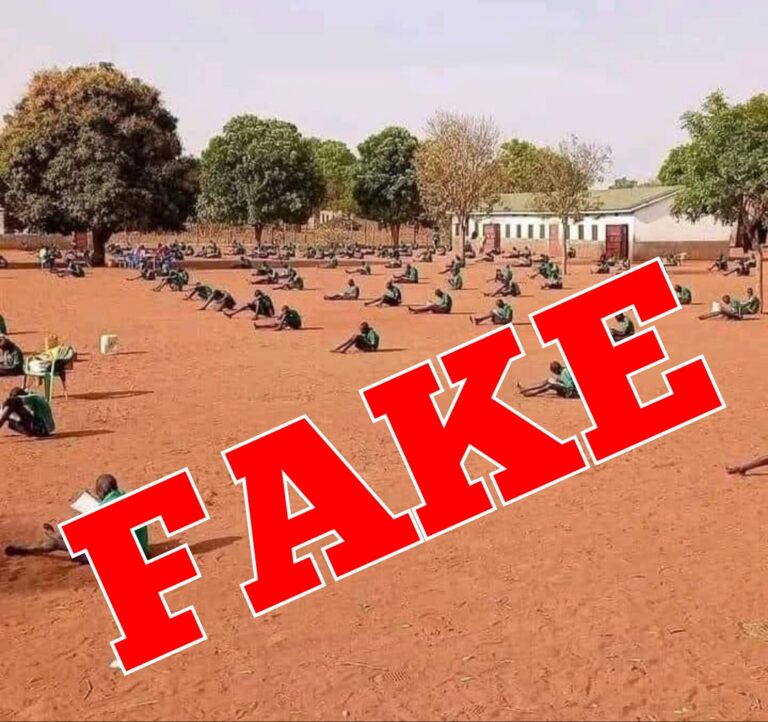
NOT OUR SCHOOL: ONC Coordinator clarifies Gala primary school not located in Buyende

0

NOT OUR SCHOOL: ONC Coordinator clarifies Gala Primary School not located in Buyende

The Office of the National Chairman (ONC) Coordinator for Buyende District, Baluye Waiswa Michael, has refuted circulating claims alleging that Gala Primary School is located in Buyende District.

In a statement issued on Tuesday, Baluye described the information as incorrect and misleading, urging the public and media houses to rely only on verified and official information when referencing such matters.

“It has come to my attention that there are circulating claims suggesting that Gala Primary School is located in Buyende District. I wish to categorically clarify that this information is incorrect and misleading,” Baluye stated.

He further emphasized that Gala Primary School is not situated in Buyende District, calling on all concerned parties to desist from spreading misinformation that could cause confusion among the public.

Baluye appealed to journalists and community leaders to uphold accuracy and professionalism in disseminating information, especially on issues concerning administrative boundaries and government programs.

The clarification comes amid a growing need for credible communication and fact-based reporting to support the ONC’s efforts in strengthening community trust and promoting development initiatives across the country.

KNOW WHEN YOU ARE VOTING: Electoral Commission releases full schedule for Uganda’s 2026 general elections

0

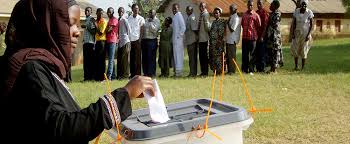
The Electoral Commission of Uganda has officially announced the comprehensive polling dates for the 2026 General Elections, setting the stage for a staggered electoral process that will determine the country’s leadership from the presidency down to local government councils.

According to a detailed schedule released by Justice Byabakama Mugenyi Simon, Chairperson of the Electoral Commission, the pivotal elections for President and Members of Parliament — including directly-elected Members and District Woman Representatives — are slated for Thursday, January 15, 2026.

The announcement, made in line with Article 61(2) of the Constitution of the Republic of Uganda, kicks off a busy electoral calendar extending into February 2026, encompassing a wide range of elective positions and Special Interest Groups (SIGs).

The staggered timetable is designed to ensure a smooth and organized process of electing leaders across all levels of government. Key polling dates include:

•             January 15, 2026: Presidential and Parliamentary elections (Directly-elected MPs and District Woman Representatives).

•             January 19, 2026: National Conference for Persons With Disabilities (PWDs) Representatives to Parliament; and election of Councillors representing SIGs (Youths, Older Persons, and PWDs) at Sub County/Town/Municipal Division.

•             January 20, 2026: Election of Councillors representing SIGs at Municipality/City Division level.

•             January 21, 2026: National Conference for Workers Representatives to Parliament.

•             January 22, 2026: Elections for District/City Chairpersons, Lord Mayor, Mayors, and Councillors.

•             January 27, 2026: Municipality/City Division Chairpersons and Councillors.

•             January 28, 2026: National Conferences for National Female Youth Representative, National Female Older Persons Representative, and the Army Council meeting for UPDF Representatives to Parliament.

•             January 29, 2026: Councillors representing SIGs at District/City level.

•             February 2, 2026: Regional Conference for Older Persons Representatives to Parliament.

•             February 4, 2026: Sub County/Town/Municipal Division Chairpersons and Councillors.

•             February 6, 2026: Regional Conferences for Youth Representatives to Parliament.

In his official communication, Justice Byabakama called upon “all candidates, their agents and supporters, election observers and the general public to observe the respective dates and participate in accordance with the guidelines for polling for the respective elective position.”

The release of the polling timetable underscores the magnitude of the task ahead for the Electoral Commission and all stakeholders in ensuring a free, fair, and transparent electoral process. Political parties are expected to intensify their preparations, while civil society organizations and election observers gear up to monitor the exercise closely.

The 2026 General Elections will mark a crucial moment in Uganda’s democratic journey, setting the tone for leadership renewal across national and local structures.

HEALTHY WOMAN, WEALTHY NATION: Communities urged to see women as partners, not just housewives

0

By Ali Lukomo

The air at Kingdom Kampala was charged with excitement and ambition as hundreds of women entrepreneurs gathered for the Women Entrepreneurs Interface Day – Market Baraza & Garage Sale, a two-day event dedicated to empowering women to dream bigger, live healthier, and build stronger businesses.

At the heart of the gathering was one powerful message: women are partners in progress, not just housewives.

Opening the event on November 1, 2025, Elizabeth Kasenene, Chairperson of the Uganda Women Entrepreneurs Association Limited (UWEAL), set the tone with a heartfelt call to action. She urged both communities and women themselves to redefine their roles in society — not by abandoning family, but by embracing health and self-care as the foundation for success.

“A healthy woman builds a healthy nation,” Kasenene said passionately. “We cannot pour from an empty cup. Before we build our businesses, we must build ourselves.”

The event marks the official launch of the Month of the Woman Entrepreneur, a celebration of women’s resilience and innovation, organized by UWEAL to promote entrepreneurship, wellness, and leadership among women across Uganda.

Balancing Ambition and Well-Being

One of the highlights of the day was an engaging session led by Dr. Raymond Mugume, a renowned mental health specialist, who reminded participants that mental wellness is just as critical as financial literacy in entrepreneurship.

“A healthy mind builds a strong enterprise,” Dr. Mugume told the attentive audience. “Women must be given space to thrive, to enjoy the fruits of their labor, and to exercise their potential without apology.”

His talk resonated deeply with the audience — many of whom juggle the demands of business, family, and social expectations.

A Celebration of Innovation and Sisterhood

Throughout the day, Kingdom Kampala buzzed with activity. The Market Baraza and Garage Sale featured colorful stalls showcasing locally made products, from organic skincare to crafts, textiles, and innovative household items — all produced by women entrepreneurs.

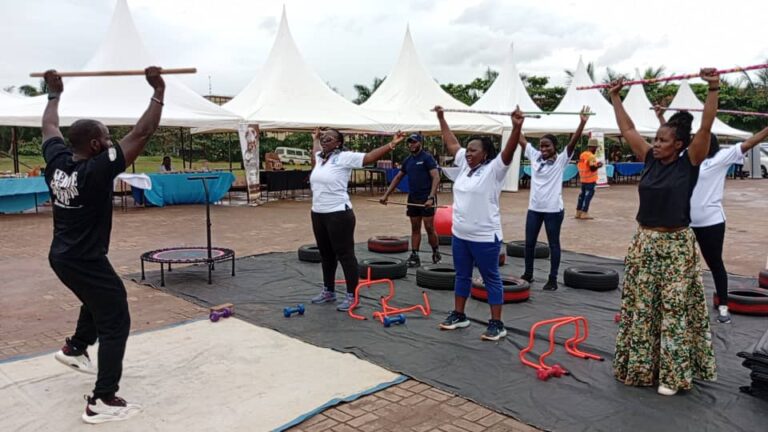
Over 500 women joined the event, networking, learning, and celebrating one another’s successes. Fitness sessions, car wash drives, and interactive health talks brought a refreshing blend of wellness and fun. The theme — “Healthy Woman, Wealthy Nation” — echoed through every activity, reminding participants that economic empowerment begins with personal well-being.

Building the Future: A Resource Centre for Women

UWEAL’s Executive Director, Connie Kekihembo, used the occasion to announce bold plans for the future. The association, she revealed, is working to establish a Women’s Resource Centre — a hub where women can access training, mentorship, and digital tools to enhance their businesses.

“We want to take this initiative all the way to Parliament,” Kekihembo said. “Women deserve a space where they can learn, innovate, and access technology to grow their enterprises.”

The event also featured sensitization sessions on the GROW Project, capacity-building programs, and onboarding of entrepreneurs onto the Women Entrepreneurs Platform (WEPS) — all aimed at strengthening the ecosystem for women-led businesses in Uganda.

Empowering the Next Generation

Beyond the speeches and sales, the event carried a deeper spirit — one of sisterhood, inspiration, and transformation. It reminded everyone that when women are supported, communities thrive.

As the two-day event continues through November 2, the message remains clear: when women take care of their health, pursue their ambitions, and are recognized as equal partners, the ripple effect touches families, businesses, and the nation at large.

Suudiman charged with criminal defamation over TikTok video attacking Museveni, Muhoozi, Mike Mukula

0

A Ugandan national residing in Boston, USA, is facing a charge of criminal defamation in the Nakawa Chief Magistrate’s Court following a private prosecution initiated over a controversial TikTok video. The video allegedly targeted President Yoweri Kaguta Museveni, General Muhoozi Kainerugaba, and Capt. Mike Mukula.

The accused, identified as Suudiman Lukwago, an adult male Ugandan resident of Boston City, has been formally charged with Criminal Defamation, contrary to Section 179 of the Uganda Penal Code Act.

The private prosecution, filed by Okello Joshua, alleges that Lukwago used the social media platform TikTok to propagate highly inflammatory and damaging falsehoods.

Allegations of High-Stakes Defamation

According to the charge sheet, Criminal Case No. NAK-00-CR-CO-0574-OF 2025, Lukwago allegedly committed the offense “on different dates in the month of October 2025 at Boston City.”

The particulars of the offense state that Lukwago “wilfully and unlawfully acted with a reckless disregard for the truth by recording a video on Tik-Tok referring His Excellency Yoweri Kaguta Museveni, General Muhoozi Kainerugaba and Capt. Mike Mukula as killers of the late Kenyan prominent politician Raila Amollo Odinga.”

The prosecution argues that this content was “defamatory in nature and lowered the image of the person of the president in the estimation of right thinking members of society.”

The inclusion of General Muhoozi Kainerugaba, Commander of the Uganda People’s Defence Forces (UPDF) Land Forces, and Capt. Mike Mukula, a prominent National Resistance Movement (NRM) leader, underscores the high political stakes of the alleged defamation.

The Role of Social Media

The use of TikTok as the medium for the alleged offense also emphasizes the ongoing struggles authorities face in controlling online speech and misinformation originating outside national borders.

The charge sheet was formally signed by the private prosecutor, Okello Joshua, on October 28, 2025, and is now awaiting official endorsement by the Chief Magistrate or Magistrate Grade One at Nakawa.

While the court process is only beginning, legal experts anticipate that the case will trigger complex cross-border legal maneuvering as the judiciary attempts to enforce Ugandan defamation law against a US-based commentator.

Criminal Defamation in Uganda carries penalties that can include imprisonment, although the Supreme Court is currently reviewing the constitutionality of certain aspects of the defamation laws in light of freedom of speech concerns.

No immediate comment was available from Suudiman Lukwago in Boston regarding the charge.

TECH VOTING: Electoral Commission receives first batch of Biometric Voter Verification Kits ahead of 2026 elections

0

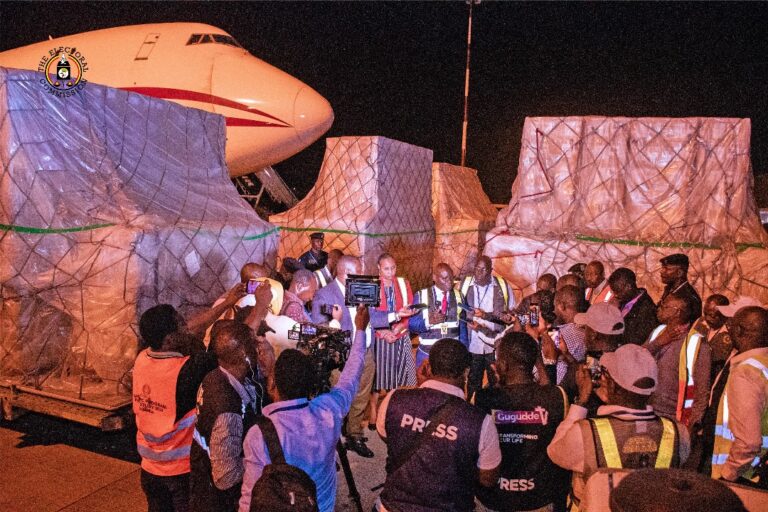
The Electoral Commission (EC), led by Chairperson Justice Byabakama Mugenyi Simon, has received the first batch of 60,000 Biometric Voter Verification Kits (BVVKs), marking a key milestone in preparations for the 2026 General Elections.

The kits, which arrived in the country last night through Entebbe International Airport, will be used to biometrically verify every voter before polling—a measure aimed at strengthening transparency, accuracy, and trust in Uganda’s electoral process.

Speaking at the handover, Julius Mucunguzi, the Head of Public Relations and Spokesperson at the Electoral Commission, said the kits represent a major step toward enhancing the integrity and credibility of the upcoming elections.

“Each voter will be biometrically verified before being issued a ballot paper. This will ensure the 100 percent application of the principle of ‘one man/woman, one vote’,” Mucunguzi said.

He added that the Commission remains committed to deploying technology that upholds fairness and transparency at every stage of the electoral process.

Justice Byabakama was accompanied by other Commissioners during the reception of the equipment. The EC is expected to continue receiving additional consignments of the BVVKs in the coming weeks as the country gears up for the 2026 polls.

Faras Uganda wins East Africa quality excellence award for most reliable ride-hailing service

0

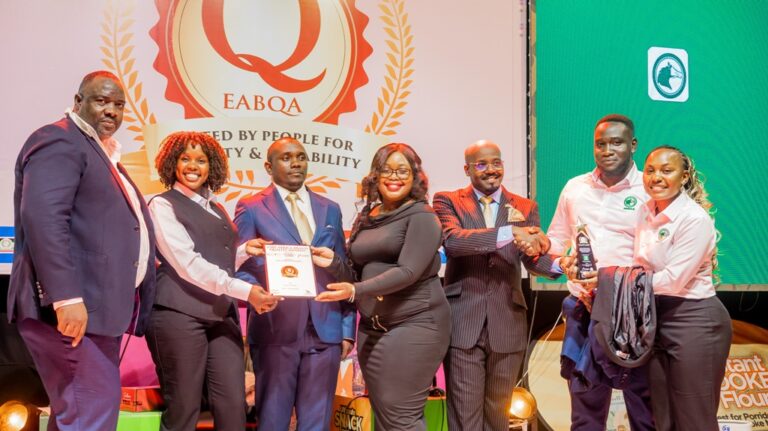
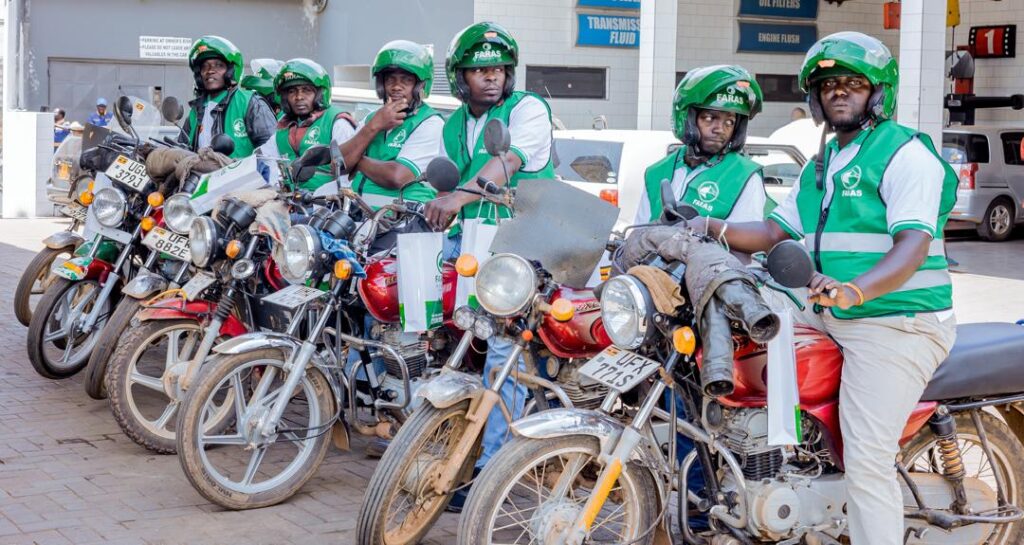
Faras Uganda, a leading ride-hailing services provider, has been honored with the Quality Excellence Award for the Most Reliable Ride-Hailing Service Provider in East Africa at the prestigious East Africa Brand Quality Awards (EABQA).

The recognition underscores Faras Uganda’s growing reputation for reliability, innovation, and customer satisfaction in Uganda’s fast-evolving transport and mobility sector.

Speaking after receiving the award, Mudhafar Hamad Kasaija, General Manager of Faras Uganda, said the accolade affirms the company’s commitment to delivering quality and dependable services.

“We promised our customers the best, and we are delivering just that,” Hamad said. “It is a good feeling to know that our efforts are recognized and that the people who use our services and technology are happy. This award is a testament to our promise and our continued commitment to innovation.”

Kasaija added that Faras Uganda is focused on enhancing user experience through technology-driven improvements.

“We further promise to innovate and improve our services and move with the times. At Faras Uganda, we are developing improved technology to give users of our ride-hailing app a new and better experience,” he noted.

The 5th East Africa Quality Brands Awards ceremony was held at the Golf Course Hotel in Kampala, bringing together leading companies, entrepreneurs, and innovators from across the region. The event celebrated organizations making outstanding contributions to economic growth, innovation, and quality standards in East Africa and beyond.

This year’s edition ran under the theme “Global Visionaries and Pioneers — Revolutionizing Quality Through Sustainable Innovation.” Winners were granted a Quality Mark, a regional badge of excellence that enhances competitiveness in African and international markets.

Patrick Nsubuga, Brand Ambassador of the East Africa Quality Brands Awards, emphasized that the initiative highlights the importance of sustainability and innovation in driving regional growth.

“At the heart of this celebration is trade — more than just the exchange of goods and services,” he said. “It’s a powerful tool for achieving the United Nations Sustainable Development Goals, ending poverty, protecting the planet, and ensuring peace and prosperity for all.”

The East Africa Brand Quality Awards recognize companies and individuals that consistently demonstrate leadership, integrity, and excellence in service delivery. The winners are selected through a comprehensive, independent market research survey assessing brand reputation, customer satisfaction, professionalism, and impact on job creation and regional development.

With this award, Faras Uganda joins a distinguished list of regional brands setting the benchmark for reliability and innovation in service delivery — a recognition that further cements its position as one of East Africa’s most trusted ride-hailing providers.

Faras Uganda marks Independence Day with a heart of giving at Sanyu Babies’ Home

0

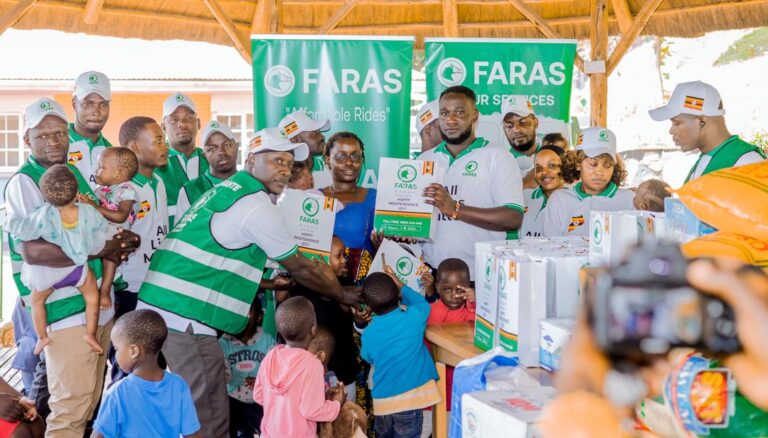
On Independence Day, 9th October 2025, Faras Uganda chose to celebrate freedom through compassion and community service with a heartwarming visit to Sanyu Babies’ Home, one of Uganda’s oldest child orphanages, established in 1929.

In the spirit of unity and giving back, the Faras Uganda team spent the day sharing love, smiles, and hope with the children and caretakers at Sanyu. The visit marked the launch of the company’s month-long “All Lives Matter” campaign, aimed at supporting vulnerable communities across Uganda.

“We have decided to come over here at Sanyu Babies’ Home to recognize the lives that are here,” said Mudhafar Hamad Kasaija, General Manager of Faras Uganda. “This is our way of giving. We are going to be giving back to the community, helping those in need, whether or not they are connected to our business. As long as someone needs help, we are here to lend a hand.”

The Faras Uganda team donated essential supplies, including food items and medicines, responding to the home’s most pressing needs. The contribution comes at a time when Sanyu Babies’ Home continues to face challenges in meeting daily operational costs such as medical care, food, and utilities.

Jessica Namilinde, a social worker at Sanyu Babies’ Home, expressed heartfelt gratitude for the gesture: “We are very happy that people from Faras Uganda decided to come and donate to our children. You have not only stopped at transporting people but also extended kindness to support these little ones. When you give to us, we can continue to serve the children better,” she said.

Namilinde noted that the home struggles to meet medical and nutritional needs for the babies and toddlers under its care. “Even if you cannot visit Sanyu physically, you can still support us from anywhere,” she added, encouraging the public to visit the organization’s website for donation details.

Through this Independence Day initiative, Faras Uganda reaffirmed its commitment to social responsibility, compassion, and national unity — values that reflect the true meaning of freedom: caring for one another and building a brighter future for all Ugandans.