Friday, May 22, 2026
Home Blog Page 19

ON FORM: She Corporate Top FUFA Women Super League Table After Four Games

0

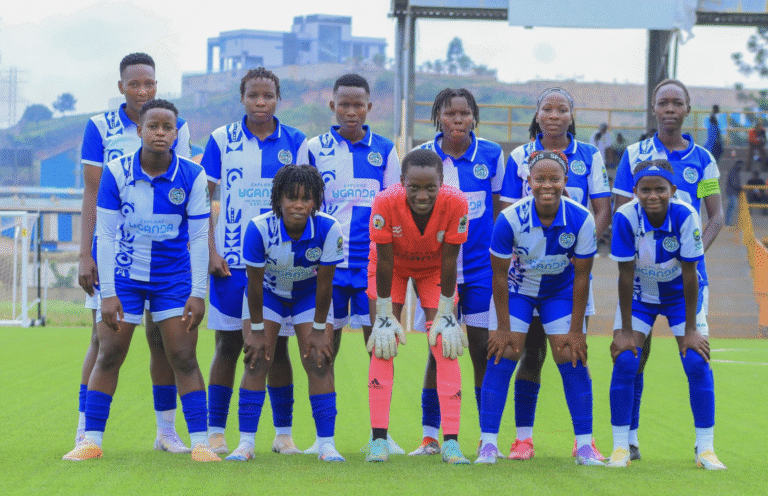
She Corporate FC, fondly known as The Sharks, are back to familiar territory at the summit of the FUFA Women Super League after Matchday Four. The 2022 champions currently lead the log with 10 points, tied with Kawempe Muslims Ladies FC, but separated by a superior goal difference of +7.

Under the stewardship of Burundian tactician Ininahazwe Belyse, She Corporate have been in impressive form—winning three matches and drawing once. The Nakawa-based side has so far scored eight goals and conceded only once, showcasing one of the league’s strongest defensive records this season.

In their most recent outing, the Sharks edged Amus College WFC 2-0 at the FUFA Technical Centre in Njeru on Sunday, a result that cemented their place at the top. Speaking after the match via the club’s official YouTube channel, one of their standout forward performers Kisakye Sandra expressed the team’s growing confidence and motivation.

“We feel happy and we are motivated,” Kisakye said, emphasizing the positive atmosphere within the camp

Elsewhere on Matchday Four, Olila HS WFC played out a goalless draw with Rines SS WFC, while St Noa Girls Zana FC shared spoils 2–2 with Makerere University WFC. Uganda Martyrs Lubaga WFC fell 0–1 to Kawempe Muslims, Asubo Ladies FC held Kampala Queens FC to a 2–2 stalemate, and She Maroons FC settled for a 0–0 draw against Lady Doves WFC.

Upcoming Fixtures – Matchday 5

Saturday, 1st November 2025

  • Amus College WFC vs Asubo Ladies FC – 10:00am, Amus Stadium Bukedea
  • Lady Doves WFC vs She Corporate FC – 10:00am, Katusabe Stadium
  • Kawempe Muslims LFC vs She Maroons FC – 10:00am, Kawempe Muslim SS Playground

Sunday, 2nd November 2025

  • Makerere University WFC vs Uganda Martyrs Lubaga WFC – 10:00am, Makerere University Grounds
  • Rines SS WFC vs St Noa Girls Zana FC – 10:00am, Kabaka Kyabaggu Stadium
  • Kampala Queens FC vs Olila HS WFC – 10:00am, MTN Omondi Stadium, Lugogo

With momentum on their side and confidence growing in camp, She Corporate will now turn focus to their next challenge away to Lady Doves WFC, as they aim to stretch their unbeaten run and maintain their top spot in the league.

BOXING GLORY: Bombers Call for Presidential Recognition After Zone 3 Glory

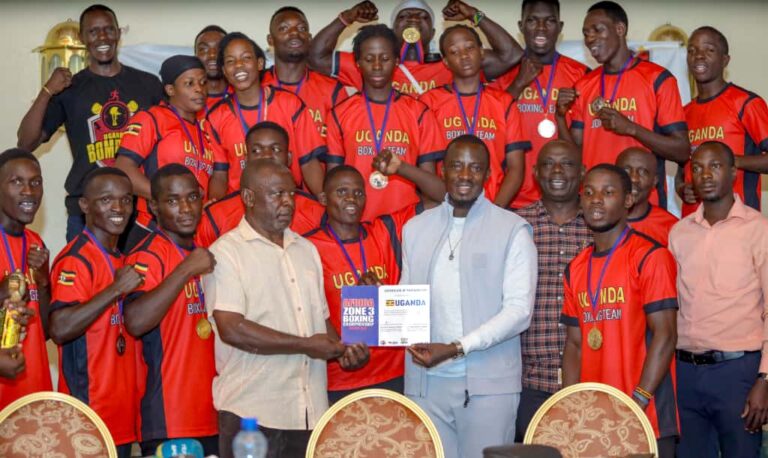
Uganda’s national boxing team, the Bombers, returned home on Sunday, October 26, 2025, to a heroic welcome after an outstanding display at the Africa Zone 3 Boxing Championship held in Kenya. The team collected an impressive 15 medals, finishing second overall behind Congo in the continental contest.

Out of 16 boxers who represented the country, 15 secured medals — a remarkable record that underlines Uganda’s growing influence in African boxing. The medal tally included 5 gold, 4 silver, and 6 bronze.

Gold medals were won by Fatima Nabikolo, Emilly Nakalema, Aziz Rigo, Kasimu Murungi, and Farhat Manirola. Brenda Muduuwa, Alfred Ojok, Edward Mukwaya, and Samuel Ochen took home silver, while Erina Namutebi, Livingstone Matovu, Alex Kanaabi, Emmanuel Tabule, Angel Katushabe, Jimmy Adriko, and Kato Kazibwe earned bronze.

To honor their stellar performance, Uganda Boxing Federation (UBF) president Moses Muhangi, who was recently nominated for the Kampala Central parliamentary seat, hosted the team at Grand Imperial Hotel. The event was graced by UBF executives, legendary boxing figure Don Lukanga, and other invited guests who commended the boxers for flying the national flag high.

Despite their joy, the boxers voiced a heartfelt request — they wish to present their medals personally to President Yoweri Museveni. They believe such recognition from the Head of State would not only honor their effort but also highlight the need for greater government support and improved training conditions.

The team is scheduled to officially hand over the medals to the National Council of Sports (NCS) early next week, but they hope a State House invitation can be arranged before then.

Focus now shifts to the 6th Islamic Solidarity Games in Riyadh, Saudi Arabia, where Uganda will be represented by Angel Katushabe, Fatuma Namakula, Jimmy Adriko, and Alfred Ojok.

The Bombers’ triumph in Kenya has once again reaffirmed Uganda’s position among the leading boxing nations in Africa, with the sport continuing to flourish under the stewardship of UBF president Moses Muhangi.

How Busoga College, Mwiri inculcated the values of discipline, time management and sociality

0

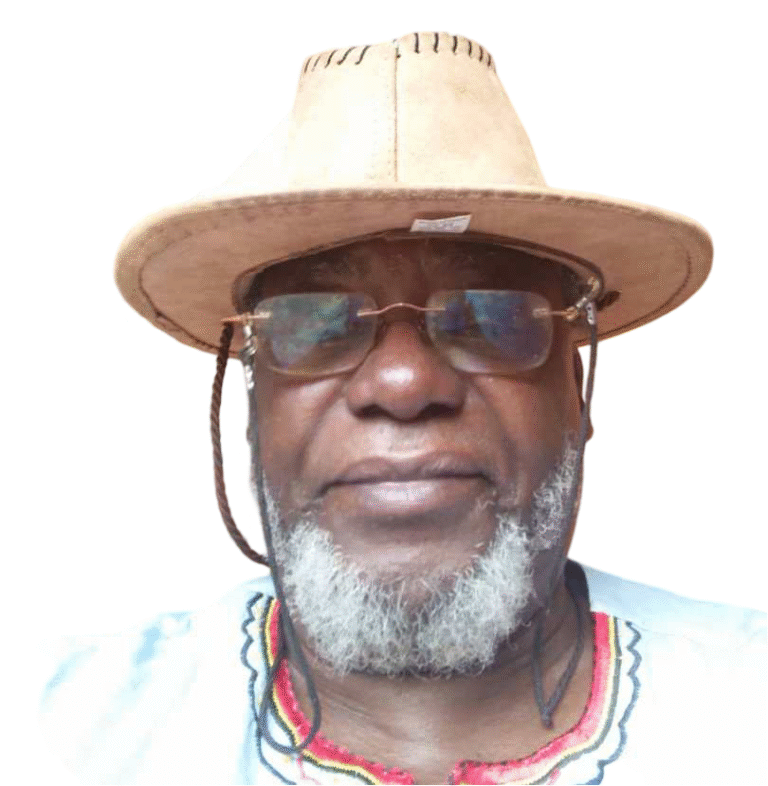
By Oweyegha-Afunaduula

Three years ago I wrote an article on Busoga College, Mwiri titled “Why Busoga College, Mwiri was always a unique school”. This time round I want to write about “How Busoga College, Mwiri Inculcated the values of Discipline, Time Management and Sociality”.

Having been founded in 1911, Busoga College Mwiri is 11 years older than Uganda’s oldest University, Makerere University founded in 1922. While Busoga College, Mwiri was founded to cater for the education of the children of chiefs, Makerere University was founded to endow those eho were lucky enough to be admitted to it with technical skills.

Therefore, while the two institutions were likely to value time and discipline they were bound to value sociality differently. Makerere University valued technical education while Busoga College Mwiri valued social development of individuals more.

Makerere University thus started off as a technomechanistic institution producing technomechanistic graduates. Indeed, with the passage of time, Makerere University has preserved its technomechanistic nature while hyping academicism and scholasticism at the expense of social and intellectual development of individual students and the academic staff. If you wanted to come face to face with an institution in Uganda, which has devalued social development and sociality in Uganda, Makerere University is there for you to critically assess.

As I stated in my opening paragraph, the focus of this article is on “How Busoga College, Mwiri Inculcated the values of Discipline, Time Management and Sociality” in its students. I spent 6 years at Busoga College, Mwiri (1966-1971) pursuing my O-Level and A-level education, having completed my primary education at Ikumbya Primary School in present-day Luuka District (1957-1963) and junior secondary education at Mwiri Primary School (1964-1965).

It was not all academic orientation at Busoga College, Mwiri. Academics was important, but there was a lot of emphasis on producing all-round graduates of the college that valued discipline, time management and growing up as socially-developed individuals with high levels of sociality. This could explain why the products of Busoga, College Mwiri since colonial times tended to dominate leadership all aspects of human endeavour wherever they ended up. They served humanity well in the past as much as they still do today. It was this exposure, for example, that enabled me to rise and become the first Ugandan to serve as Chair of a regional civic organization for 11 countries in the Nile Basin (i.e., Burundi, Democratic Republic of Congo, Egypt, Eritrea, Ethiopia, Kenya, Rwanda, South Sudan, Sudan, Tanzania, Uganda) – the Nile Basin Discourse (NBD).

Discipline

Discipline is critical because without it we cannot set and achieve goals, development good habits, overcome challenges, improve time management, enhance family and community growth and development, In one sentence we cannot be successful.

Time Management

The value of effective time management cannot be overemphasized. Time is the most important resource available to humanity but also the .ost abused resource.  If we know how to manage time we are able to priotise activities and tasks, accomplish more in less time, reduce stress, improve the balance of life and work and enhance the achievement of goals. Indeed if we cannot manage time we cannot manage anything else.

Sociality

Humans are essentially social beings. Therefore, sociality is critical to humans. Sociality is the ability to interact and connect with others. It creates opportunity for emotional support, emotional support, networking, broadening interactions among people from different backgrounds and cultures, improving mental health and preserving a sense of identity and belonging. Indeed we can see this among the former students of Busoga College, Mwiri far more in these days of internet and social media than was the case in the past. Beyond our Mwiri Old Boys Association (MOBA) there are many cyber based platforms enhancing interactions of Old boys beyond the physicality of Busoga College, Mwiri. They are supporting each other emotionally in times of crises across periods they were at the College.

My Role in Incalcating Discipline, Time Management and Sociality

I was lucky to play a critical role in incalcating discipline, time management and sociality within the college community during my time at Busoga, College, Mwiri as a school perfect, head of Hannibgton House, Perfect in a charge of the cafeteria, President of Cultural and Social Society, President of Dramatic Society and President of Debating Society. In all these roles I was a critical socialising agent. Indeed I continued to be a socializing agent beyond Busoga College Mwiri, even through my talents of leading, debating, teaching, and writing, all of which were shaped in the college.

How Discipline was Inculcated

Incalcating discipline in Busoga College, Mwiri was multifaceted. The college had a governance system that laid emphasis on leadership development at the level of Houses, whereof each House had a Head of House, with assistant Prefects and leaders called sub-lumpers who constituted the first line of leadership in the Houses. Besides, each House had a House Master and an Assistant House Master.

During my time at Busoga College, Mwiri the Houses were Coates, Hanninston, Nabikamba, Nadiope, Wako, Willis and Wilson. The leaderships in the Houses had to shape harmonious interactions, and develop the students into people who loved work – both academic and non-academic. The students were to be disciplined enough to do physical work such as cleaning the Houses,  washing their bedsheets and clothes, and to slash their house compounds  without being coerced to do so by the leaders. They had also to be disciplined enough to go to the cafeteria early and attend classes early without staying behind in their Houses. They had to participate in college quizzes, games and sports and represent their houses in debates and other extracurricula activities. Every morning all members from different Houses had to attend an Assembly at which the Head Perfect and Headmaster specifically would address students on different issues and matters. All academic staff had to attend the assembly and those with particular responsibilities addressed the Assembly. School uniform was mandatory at the Assembly and during all the time in the college and outside the college. Capital punishment was not part of the discipline system. Those who committed serious offenses would be suspended. Expulsion was extremely rare.

I do not remember if there were visiting days for the parents. All I remember is that parents would have to wait for end of time to pick their children. Most times the big ones would take themselves home. In 1966 a college lorry carried students to Jinja at the end of term from where they would get buses or taxis to their parents homes. Later the college acquired a bus that could take the students out. 

How Time Management was Incalcated

While what I have so far written about incalcation of discipline involved incalcating time management, what particularly was used to Incalcated time management was the school callender and the different time tables of the different classes to signify when particular lessons started and ended. Both teachers and students would strictly follow the time tables. What was integral to time table was a bugle – a small trumpet like instrument that produced a high pitched noise every end of lesson. Those days each lesson took 40 minutes. I think there was also a drum. When Dr John Balirwa, Dr. Charles Kawagga , Prof Fred Tusubira and I, among others, joined Busoga College Mwiri in 1966, the person who would sound the drum and bugle to announce the end of lessons and begining of others was called Odong. He was a Senior Two student. He went on to finish Senior Six at Busoga College, Mwiri in 1970, a year before we did.

How Sociality was Inculcated

In a way the governance structure of Busoga College, Mwiri was designed to maximize academic excellence in the school but also the sociality of students. When I and others joined Busoga College, Mwiri in 1966 the absolute majority of staff were white. However, there was really no apartheid in the college. There was a lot of interaction between the academic staff and student even extracurriculally. Each academic staff was responsible for a particular extracurricular activity. If a particular group of students went for an activity outside the college, the responsible member of staff would accompany them. Sports, games, quizzes, music and social and cultural activities were avenues for socilizing. The College allowed students to pursue their religious faith without hindrance and develop their sociality thereof.  It also allowed students to invite students from other schools to visit and socialize. There was a privately owned band, which became integral to the sociality of the school. It was owned and ran by two brothers, Martin Muyimbo and James Egulwa and many students of different educational levels were part of the band. Some have passed on while some are still alive and scattered all over the country and the world.

Punishment in Busoga College Mwiri was unique and intended to produce and shape students that valued time, belonging and sociality.  On the whole, punishment involved withdrawing the culprits from the rest of the college student community and confining him to the Main Hall for a presctibed amount of time depending on the severity of their offences. The offenders would be required to sit for one, two, three or more hours doing nothing, including movement. A perfect would sit in front of them, reading but keenly looking at the culprits to ensure they were sitting doing nothing. Usually the culprits became good social beings. Many would never want to be punished that way again. This way sociality was built and put on a firm foundation in the college.

Prof. Oweyegha-Afunaduula is a Conservation Biologist and member of Center for Critical Thinking and Alternative active Analysis


MAGOGO’S ADVANTAGE: Dhamuzungu withdraws from Budiope East race following family bereavement

0

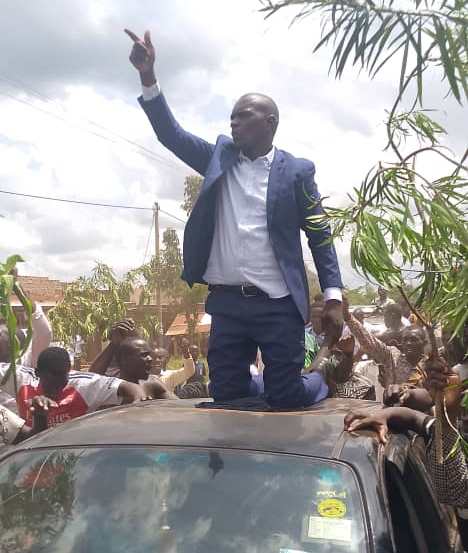
Former Member of Parliament for Budiope East, Dhamuzungu Geoffrey, will not participate in the upcoming Budiope East Constituency elections (2025–2031), his camp, Team Tweyembe Bene officially announced on Thursday 23rd October 2025.

The announcement comes amid the family’s ongoing preparations to lay Dhamuzungu’s father to rest. Geoffrey’s father, Dhamuzungu George Emmanuel, a former teacher, died early this week and scheduled for burying on Sunday, 26th October 2025, in Ngandho, Buyende district.

According to a statement released by Pangole Moses, the Chief Administrator of Team Tweyembe Bene, the decision for Dhamuzungu to quit the race was reached following a family meeting held in Kampala on Wednesday.

“Following our family meeting yesterday in Kampala and the current situation of bringing back our dad’s remains today, I hereby confirm that our candidate, Hon. Dhamuzungu Geoffrey, will not participate in the upcoming elections,” the statement read in part.

Pangole added that further details regarding the decision would be communicated on Sunday, after the burial of their father. He also appealed to supporters to remain calm and united as the team outlines its next course of action.

“We encourage all our supporters to remain calm and united as we prepare to share our next steps. Thank you all for your continued support and solidarity,” he stated.

The family and supporters continue to mourn the loss of their patriarch, whose remains were repatriated today. The burial is scheduled for the weekend.

Dhamuzungu, a prominent figure in Budiope East politics, was widely expected to contest against the incumbent and nemesis Eng. Moses Magogo in the forthcoming parliamentary elections.  His withdrawal marks a significant shift in the constituency’s political landscape.

Dhamuzungu’s withdraw from the race puts Magogo in a pole position to win the race. Nominations for the parliamentary seats are ongoing across the country. Magogo and Dhamuzungu were expected to nominate today at the district headquarters.  

Jinja Diocese mourns passing of Bishop Charles Martin Wamika at 72

0

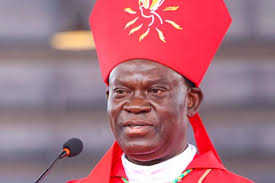
The Roman Catholic Diocese of Jinja is steeped in sorrow following the announcement of the passing of its beloved shepherd, Rt. Rev. Charles Martin Wamika, the Bishop Ordinary of the Diocese. Bishop Wamika passed, Wednesday, October 22, 2025, at approximately 4:00 PM (16:00hrs), at the age of 72.

The somber news was conveyed through an official announcement from the Bishop’s Office, signed by Fr. Gerald Muto, the Diocesan Chancellor. The announcement, addressed to the clergy, religious men and women, and the lay faithful in and outside the Diocese of Jinja, expressed “deep sorrow and Christian hope in the resurrection.”

“It is with deep sorrow and Christian hope in the resurrection that the Diocese of Jinja announces the passing on of our beloved shepherd, Rt. Rev. Charles Martin Wamika, Bishop of Jinja,” the statement read.

Bishop Wamika, born on August 12, 1953, dedicated his life to the service of the Church, leaving a significant legacy across two dioceses in Uganda. His episcopal journey began on October 18, 1993, when he was appointed Auxiliary Bishop of the Roman Catholic Archdiocese of Tororo by Pope John Paul II. He was consecrated a bishop in Tororo on February 19, 1994, concurrently serving as the Titular Bishop of Tacapae during his time as auxiliary.

His leadership in the Diocese of Jinja commenced on March 2, 2010, following his transfer by Pope Benedict XVI. He succeeded Bishop Joseph Bernard Louis Willigers as the local ordinary, a role he fulfilled with unwavering dedication for over 15 years until his passing.

The Diocese has called upon all clergy, religious, and the faithful to keep Bishop Wamika in their prayers. Details regarding the funeral program will be communicated at a later date.

Bishop Wamika’s passing marks a profound loss for the Catholic Church in Uganda, particularly for the faithful of the Jinja Diocese whom he served with profound commitment and spiritual guidance.

FRESH CALL: Uganda urged to ban lead paint as children remain at risk

0

As the world commemorates International Lead Poisoning Prevention Week (19–25 October), a Ugandan environmental organisation has raised alarm over the continued use of highly toxic lead-based paints in homes, schools, and playgrounds across the country.

According to WEMECO (Water and Environment Media and Communication Organisation), Uganda is still allowing the sale and use of paints containing dangerous levels of lead—despite international evidence linking the substance to serious and irreversible health problems in children.

“Lead exposure is robbing our children of their future,” said Peter Akugizibwe Araali, Executive Director of WEMECO. “Some paints sold on the Ugandan market contain up to 150,000 parts per million (ppm) of lead. That is 1,600 times higher than the internationally accepted safety limit of 90 ppm.”

A 2017 study of decorative paints available in Kampala revealed that 67% of tested brands exceeded the 90 ppm threshold, with many samples containing hazardous concentrations. Despite this, Uganda has yet to enforce regulations mandating lead-free paint production and sales, putting thousands of children at risk of lead poisoning.

“Uganda successfully eliminated lead from petrol. We have the capacity to do the same for paint,” Akugizibwe emphasized. “We cannot continue to allow our children to be exposed to something we know is toxic and entirely preventable.”

Lead poisoning in children is known to cause brain damage, learning disabilities, behavioural issues, stunted growth, kidney damage, and hearing loss. Health experts warn that even very low levels of lead in a child’s blood can significantly impair development.

“One two-year-old was recently hospitalised with severe abdominal pain caused by flaking lead paint in their home,” Akugizibwe revealed. “This is not just a statistic—it’s a child’s life permanently affected.”

WEMECO is calling on the National Environment Management Authority (NEMA) to adopt and enforce mandatory national standards for paint manufacturers, in line with the 90 ppm limit already implemented in neighbouring Kenya and being advanced by the East African Community.

“Safer alternatives already exist in Uganda. Some manufacturers are already producing non-toxic paints. What we need is clear regulation, enforcement, and accountability,” Akugizibwe said.

In a statement released for Lead Poisoning Prevention Week, WEMECO urged:

  • Parents to avoid cheap or peeling paints, regularly clean surfaces with wet methods, and repaint with certified lead-free products.
  • Manufacturers to cease production of lead-based paints immediately.
  • Regulators to establish a legally binding lead limit for all decorative paints sold and used in Uganda.

“Every wall in every school and every home should protect—not poison—our children,” said Akugizibwe.

The global theme for this year’s Lead Poisoning Prevention Week is “No Safe Level: Act Now to End Lead Exposure,” echoing what WEMECO calls a moral and public health imperative for Uganda.

WEMECO is being supported by the Lead exposure Elimination project [LEEP) to create awareness that aspire to bring to end the use of Lead.

HISTORICAL BATTLE: Two-Time Winners Kigulu to Face First-Time Finalists Luuka

2025 Final: Kigulu vs Luuka

Third play off: Bugabula vs Bukooli Namayingo

The 8th edition of the Busoga Masaza Cup has its finalists — Kigulu and Luuka — after a dramatic semifinal weekend at the Kyabazinga Stadium, Bugembe.

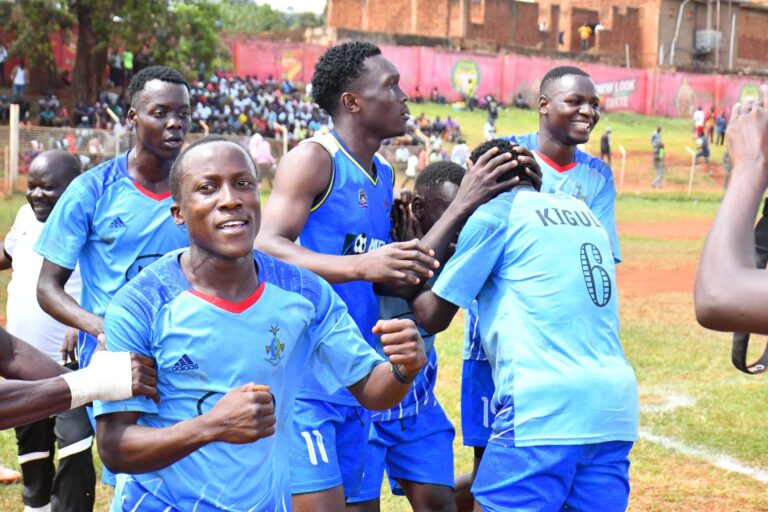
On Saturday, Luuka made history by reaching their first-ever final since the tournament’s inception in 2016, following an emphatic 3-1 victory over Bugabula. The result capped off a fairy-tale run for the underdogs, who had never gone beyond group stages before this year.

In the day’s earlier fixture, two-time champions Kigulu confirmed their dominance in the competition with a 2-0 win over 2022 champions Bukooli Namayingo. This will be Kigulu’s fourth appearance in a Busoga Masaza Cup final after featuring in 2018, 2019, and 2022. They lifted the title back-to-back in 2018 and 2019, becoming the only side in history to achieve that feat, before losing narrowly to Bukooli Namayingo in the 2022 final (1–0).

The upcoming final — whose date is yet to be confirmed — will be hosted at the Kyabazinga Stadium in Jinja City, where Kigulu will be seeking a third crown, while Luuka chase a maiden championship in what promises to be a classic battle between experience and ambition.

Recent editions of the tournament have consistently produced surprises, with underdog stories lighting up the competition. Bukooli Namayingo shocked the region in 2022, Busiki followed suit by winning in 2023, and Bukono reached last year’s final before falling to Butembe. This year, Luuka have carried the same spirit, defying odds to reach the final for the first time ever.

Meanwhile, the third-place playoff will see Bukooli Namayingo face Bugabula, as both sides battle for pride and prize money. The winner of the playoff will walk away with UGX 6 million, while the fourth-placed team earns UGX 4 million. The runners-up will take home UGX 8 million, and the champions will pocket a grand prize of UGX 13 million.

LUUKA VS BUGABULA: Both sides target first ever final spot

Kick-off: 4:00 PM
Venue: Kyabazinga Stadium, Bugembe – Jinja City

Luuka vs Bugabula

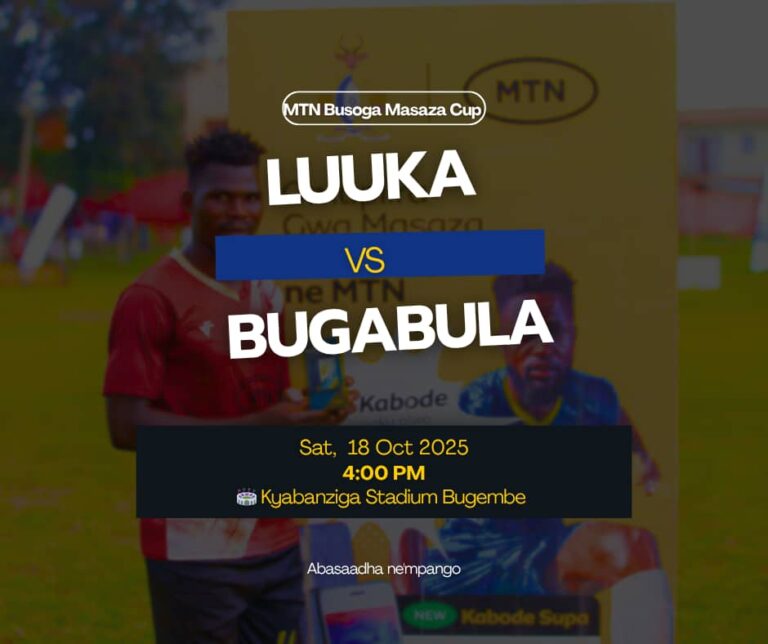
The much-anticipated Busoga Masaza Cup semi-final clash between Bugabula and Luuka is set for Saturday, 18th October 2025, at 4:00 PM in the Kyabazinga Stadium, Bugembe, Jinja City. This encounter promises intensity, history, and revenge, as the two sides meet for the third time this season after sharing the same Bukowe group earlier in the competition.

Both teams finished level on nine points from four games in the group stages, each winning three and losing one — interestingly, both defeats came against each other, with identical 1-0 away wins. Luuka, however, topped the group on goal difference, while Bugabula followed closely behind.

Bugabula: The Nearly Men Chasing History

For Bugabula, this semi-final marks their fourth consecutive appearance since 2022 — a record of consistency yet tainted by heartbreak. Despite their regular presence in the last four, they have never reached a final since the tournament’s inception in 2016. This year, they are determined to rewrite history and finally step onto the big stage.

Under coach Ronald Lukungu, the Kamuli-based side advanced to the semis after a tense 1-1 draw with Bunha, winning on penalties. Ibrahim “Kazindula” Musisi, last year’s top scorer, proved vital again, netting a late equalizer in the 84th minute. His return adds firepower to a squad built on defensive solidity.

The center-back pairing of David Balondemu and Yiga Keith has been outstanding throughout the tournament, providing stability behind a dynamic midfield anchored by Kimuli Michael, whose box-to-box energy has kept Bugabula balanced and resilient.
Attacker Edgar Madombe (09), a bright spark in the group stages, will be eager to rediscover his form and make an impact in the knockouts as Bugabula aim to end years of semi-final frustration.

Luuka: Newcomers with a Point to Prove

On the other hand, Luuka are writing a new chapter in their history. This is their first-ever semi-final appearance in the Masaza Cup, and their fairytale run has captured fans’ imagination. Guided by experienced coach Warishe Abdullah, assisted by Coach Saleh God, and managed by Mr. Bwire Osodo Godfrey, Luuka have combined tactical discipline with attacking flair.

Their emphatic 3-0 quarter-final victory over Bulamogi sent a clear message to their rivals. Star forward Kasakya Ibra (14) was the hero of the night, scoring a hat-trick — his first goals of the tournament — proving his big-match temperament.
Playmaker Kiiza Emmanuel (10) remains the creative heartbeat of the team, orchestrating attacks and creating scoring chances, while Umaru Baluzire (7) adds pace, long-range threat, and unpredictability up front.

Defensively, the trio of Karogo Farouk, Bakitwale Ronald, and Mwesigwa Kenneth has been the foundation of Luuka’s success, combining composure with excellent game reading to shut down opposition attacks.

As the sun sets over Kyabazinga Stadium, one thing is certain — history will be made. Either Bugabula finally break their semi-final curse, or Luuka’s dream run continues into their maiden final.

CRITICAL HOPE FOR BUYENDE: Parliament to consider Sh8.2 trillion in loans for infrastructure development, including the long awaited Jinja – Mbulamuti – Bukungu road  

0

Uganda’s Parliament is set to convene next Monday, October 20th, 2025, with a packed agenda that includes the crucial consideration of five loan requests totaling a staggering UGX 8.287 trillion. These substantial funds are earmarked for critical road construction projects and energy infrastructure development across the nation.

According to the official Order Paper released by Parliament today, the Minister of Finance, Planning, and Economic Development will present these borrowing proposals for parliamentary approval. The loans are primarily sourced from international financial institutions including the World Bank, Standard Chartered Bank, and Citi Bank.

Among the key proposals, the Ministry of Finance seeks to borrow up to €230,454,687.23 from Citi Bank. This facility is intended to finance the “design and build” of the vital Jinja-Mbulamuti-Kamuli-Bukungu Road, spanning 127 kilometers, and an additional 10 kilometers of roads within Jinja City.

Furthermore, a significant portion of the funds, up to €115,876,831 from Standard Chartered Bank, is allocated to the “critical oil roads” package, specifically Package 6B. This includes the design and build for the upgrading of the Karugutu-Ntoroko Road (56.5 km), a crucial link to Rwebisengo (8.2 km), and 3.3 kilometers of town roads in Ntoroko district, totaling approximately 68 kilometers.

In addition to road infrastructure, Parliament will also consider a loan of up to €342,592,806.25 from Standard Chartered Bank. This significant sum is designated for the construction of the 400kV Karuma-Tororo Double Circuit Transmission Line and associated substations, as well as the 132/33kV Ntinda Substation Project. This investment highlights the government’s commitment to bolstering the national power grid and ensuring reliable electricity supply.

The Ministry is also looking to secure a loan of up to €192,959,605.47 from Citi Bank to finance Phase I of the “Enhancing Agricultural Production, Quality and Standards for Market Access Project.” This initiative aims to boost the agricultural sector, a cornerstone of Uganda’s economy.

The impending parliamentary session follows a proactive move last week by the Parliament’s Committee on National Economy. Under the chairmanship of Bosco Ikojo, the committee held a meeting to consider several loan proposals after receiving a directive from Speaker Anita Among.

“I received a communication from the office of the Speaker that Cabinet had considered a number of loan proposals and were referred to Parliament,” explained Mr. Ikojo.

“But now that Parliament is still on recess, she administratively decided to write to the chairperson of the committee for us to consider this loan request pending resumption of the House. We shall have to present to them. That is why I had to request the Minister of Finance to appear before this committee to make sure that at least we officially receive all these loans and then we move on to scrutinize them, pending the resumption of the House and honour reporting by the committee.”

The upcoming plenary sitting is expected to see rigorous debate and scrutiny of these substantial loan requests as Parliament deliberates on their necessity and impact on the nation’s debt profile and future development. The projects funded by these loans are anticipated to have a transformative effect on Uganda’s infrastructure, connectivity, and economic potential.

Kamuli NRM aspirant revives bulungibwansi spirit with community roadwork initiative

0

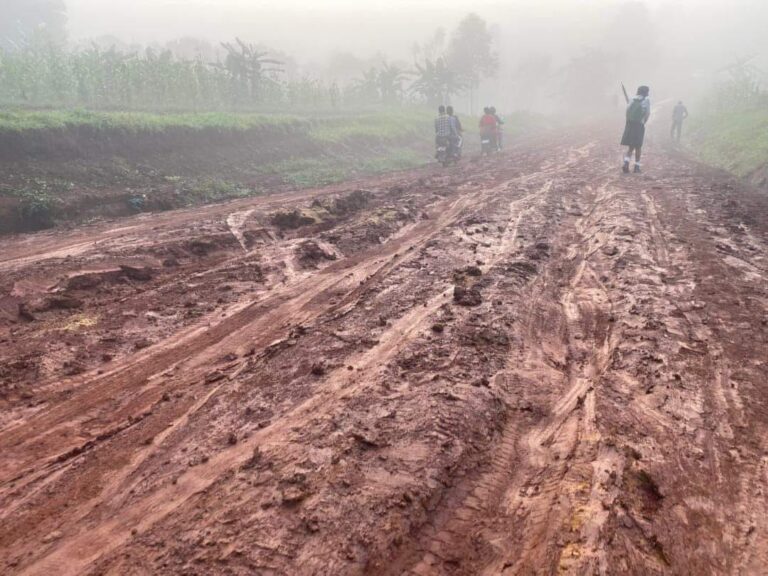
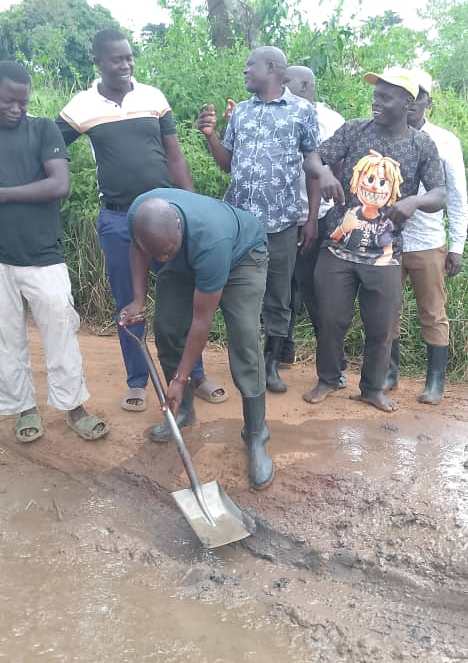
In a move reminiscent of bygone days when communities rallied together through collective effort, Kalori Dhizaala, the NRM flag bearer for Kamuli District Chairperson, has embarked on a “bulungibwansi” (community work) initiative, focusing on rehabilitating impassable local roads.

The initiative, which began in Kagumba Sub-county, aims to bridge the gap left by delayed government intervention and foster a renewed sense of community responsibility.

Historically, “bulungibwansi” was a cornerstone of community development, with residents actively participating in tasks like road maintenance, building communal structures, and other vital projects.

However, in recent times, the responsibility for infrastructure development has largely shifted to the government. Dhizaala’s campaign seeks to reawaken this spirit of self-reliance and cooperation, emphasizing that community involvement is crucial, especially when official resources are stretched.

“We are opening a new chapter,” stated Dhizaala during an engagement with residents and local leaders in Kagumba Sub-county, an area plagued by numerous roads that have become virtually impassable.

“This initiative is a gesture of ‘bulungibwansi’ to demonstrate that the community and its leaders can work hand-in-hand. After all, it is we, the community members, who use these roads daily.”

Kagumba Sub-county, in particular, faces significant challenges. Many of its roads have not seen grading or maintenance for extended periods. Even those that have received some attention are riddled with potholes, a consequence of heavy transportation of goods such as milk, sugarcane, and cattle, which are vital to the local economy.

Dhizaala urged the community to embrace patriotism, equating community work to love for one’s country and locality. “Loving your country means supporting each other and cherishing the place you live in,” he remarked.

As Dhizaala gears up for the district chairperson elections, this hands-on approach appears to be a strategic effort to connect with and win the trust of the electorate. He is not solely focusing on roads, however.

His vision extends to other vital social services, including access to clean water and improved healthcare, promising to champion these areas should he be entrusted with the leadership seat.

To kickstart the roadwork in Kagumba, Dhizaala provided essential support, including fuel for a tipper truck and resources for murram digging, mobilizing local participation to address the immediate road concerns.

The initiative signifies a call to the Kamuli community to embrace this ideology of collective action, demonstrating that even in an era of centralized governance, the power of “bulungibwansi” can still pave the way for progress.