Friday, May 22, 2026
Home Blog Page 22

IDENTITY CORRECTION: Bugiri’s Mulumba formalizes name consistency via deed poll

0

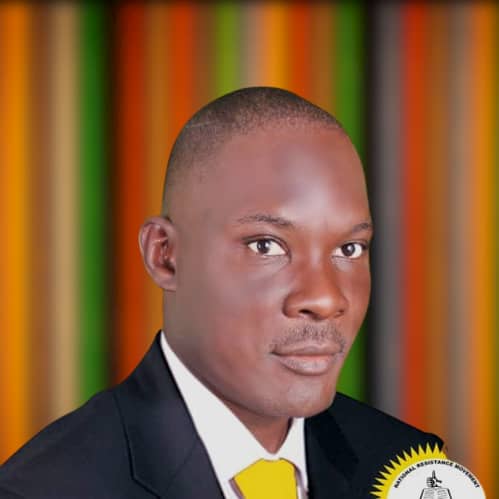
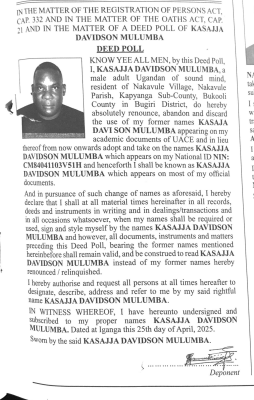
Kasajja Davidson Mulumba, residing in Bugiri District, has formally adopted a consistent version of his name through a Deed Poll.

The legal instrument aims to reconcile slight variations in his name across different official documents, particularly those from his academic past and his current national identification.

According to the Deed Poll, executed in Iganga and sworn by Mulumba, his name previously appeared as “KASAJA DAVI SON MULUMBA” on his UACE academic documents.

He has now absolutely renounced and abandoned this former variant, formally adopting “KASAJJA DAVIDSON MULUMBA,” which is consistent with his National ID and most of his other official documents.

The Deed Poll, enacted under the provisions of The Registration of Persons Act, Cap. 332, and The Oaths Act, Cap. 21, serves to eliminate any potential discrepancies or confusion arising from these variations.

Mulumba declared that from now onwards, he shall be known and sign himself exclusively as Kasajja Davidson Mulumba in all records, deeds, instruments in writing, dealings, transactions, and all occasions requiring his name.

Importantly, the Deed Poll clarifies that all documents, instruments, and matters preceding this formal declaration, which bear the former name, shall remain valid.

They are to be construed as referring to Kasajja Davidson Mulumba, thereby ensuring the continuity and legality of his past records without requiring their physical alteration.

Mulumba, a resident of Nakavule Village, Nakavule Parish, Kapyanga Sub-County, Bukooli County in Bugiri District, has authorized and requested all persons to henceforth designate, describe, address, and refer to him by his rightful and now standardized name, Kasajja Davidson Mulumba.

Mulumba, who is the chairperson Bugiri District, and is seeking re-election has had his academic qualification questioned with his opponents saying he lacks academic credentials.

In June this year, a one Kyotaite Muhussein, through his legal representatives, Bumpenje & Co. Advocates, formally petitioned the NRM Electoral Commission chairperson, seeking to prevent Mulumba’s nomination. The petition revolved around alleged discrepancies in Mulumba’s academic qualifications, specifically his fulfillment of the minimum educational requirements stipulated by Ugandan law for the position of District Chairperson.

Bumpenje & Co. Advocates, representing Kyotaite Muhussein, formally notified Mulumba of their intention to file a lawsuit, asserting that he fails to meet the minimum educational prerequisites as outlined in Section 123(d) of the Local Government Act Cap 243.

The notice, dated June 17th, 2025, alleges that Mulumba presents academic qualifications that belong to another individual named “Kasaja Davi Son Mulumba,” and that he lacks the necessary Uganda Advanced Certificate of Education (UACE) or its equivalent, a mandatory requirement for the position of district chairperson. And with this Deed Poll, Mulumba rectifies this anomaly.

Kizige urges Kamuli to endorse Kadaga unopposed, citing NRM unity and Museveni campaign mobilization

0

Uganda’s Ambassador to Moscow and former State Minister for Karamoja Affairs, Moses Kizige, has made an impassioned plea to the people of Kamuli to allow First Deputy Prime Minister Rebecca Kadaga to run unopposed for Woman Member of Parliament.

Kizige’s call aims to create a strategic advantage for the ruling National Resistance Movement (NRM), enabling Kadaga to dedicate her time to mobilizing widespread support for presidential candidate Yoweri Museveni.

Addressing the public, Kizige, who has previously been noted for his strained relationship with Kadaga, emphasized the critical need for party unity over individual differences, especially as the nation approaches general elections.

“This is the time for us to protect our gains and walk the talk of it,” Kizige stated. “Yes, we’ve had differences but the gains from Mama Kadaga and Mzee Museveni must be well protected, respected, and honored.”

He specifically urged women and youth leaders in Kamuli to endorse Kadaga unopposed. “My sisters and daughters should let Mama Kadaga be nominated unopposed, both as gratitude to her legacy but above all, to give her ample time to supervise, coordinate, and actively mobilize for the party president in Busoga,” Kizige advocated passionately.

Dismissing reports of contention against Kadaga as “malicious propaganda and hate politics by enemies of Busoga that keep digging holes to separate political leaders,” Kizige asserted that any challenge to Kadaga would be futile.

“Even if some stood against Kadaga, they won’t defeat her and only political schemers will push for this,” he added, vowing to foster reconciliation.

“I have consulted widely including the family, party and elders and will talk to the other camps to ceasefire, bridge gap and push for harmony in the best interest of the party and Mzee and in honor of Fr Grimes soul our mentor.”

The move has garnered praise from political observers. Michael Munaaba, a social and political analyst, described Kizige’s advocacy as “bold” and emanating from “a free thinker and Christian who wishes Busoga and NRM the best.” Munaaba noted that despite any personal grievances, Kizige had offered “the best reconciliation message, not pretending.”

Similarly, youth leader Violet Promise Aliyinzaa commended Kizige for what she termed a “bold nature statement geared towards harmony and sustainability.” Aliyinzaa added, “He has made an unprecedented disarming statement because belligerence has no space amongst people who have a cause of propelling a resounding win for NRM party presidential candidate and all its flag bearers.”

Responding to the developments, Ms. Kadaga affirmed her unwavering commitment to Busoga and the NRM party. “I have always meant well for Busoga and NRM party in thick and thin,” she stated.

“I am a brand and they know it and sometimes they are forced by public judgment to behave. I know the conviction but they have forces who hold counter meetings against public will and they will pay heavily for it.”

Kizige’s unexpected call for unity and strategic political maneuvering highlights the NRM’s focus on consolidating support and minimizing internal rifts ahead of the upcoming elections.

RACE TO STATE HOUSE: Presidential nominations for 2026 elections officially closed with eight candidates cleared

0

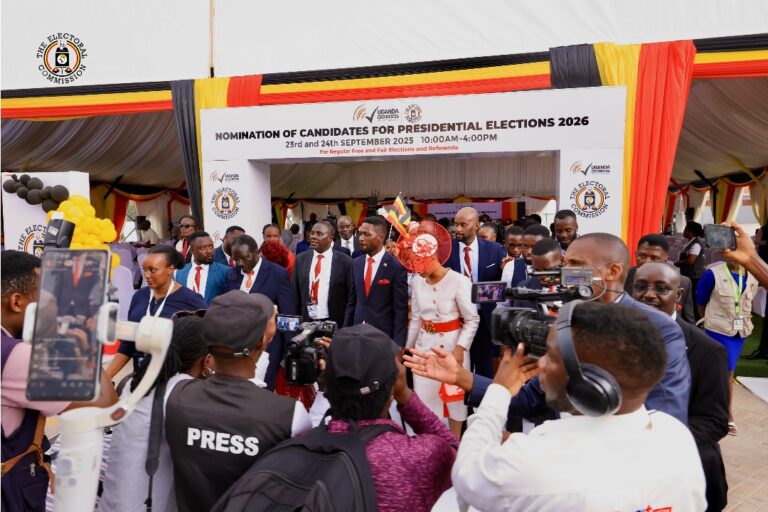
The Electoral Commission has officially closed the nomination exercise for the 2025/2026 General Elections, confirming eight candidates for the presidential race.

The final aspirant to be duly nominated was Bulira Frank Kabinga of the Revolutionary Peoples Party (RPP), who successfully fulfilled all requirements under the Presidential Elections Act, Cap 179. His nomination brought the total number of contenders to eight.

On Day Two of the exercise, four aspirants were cleared. The day opened with Nandala Mafabi James Nathan of the Forum for Democratic Change (FDC), followed by Mugisha Gregory Muntu Oyera of the Alliance for National Transformation (ANT), Kyagulanyi Robert Ssentamu (Bobi Wine) of the National Unity Platform (NUP), and later Munyagwa Mubarak Sserunga of the Common Man’s Party (CMP).

These joined the three candidates nominated on Day One: incumbent President Yoweri Kaguta Museveni of the National Resistance Movement (NRM), Kasibante Robert of the National Prosperity Party (NPP), and Mabirizi Joseph.

The exercise was presided over by Justice Byabakama Mugenyi Simon, Chairperson of the Electoral Commission and Returning Officer for Presidential Nominations.

With nominations now complete, the Presidential Campaign Period is scheduled to officially commence on 29th September 2025, following the harmonisation of candidates’ campaign programmes with the Commission.

SERVANT LEADER: Nandala Mafabi nominated as FDC presidential candidate for 2026 elections

0

The second day of presidential nominations for the 2026 General Elections opened with the Forum for Democratic Change (FDC) presenting its flag bearer, Nandala Mafabi James Nathan. The Budadiri West legislator and party leader was duly nominated after fulfilling all requirements under the Presidential Elections Act, Cap 179.

Speaking shortly after receiving his nomination, Mafabi projected himself as a servant leader committed to restoring hope for Ugandans through economic revival.

“For all of you who have seen me during this period, believe and know that I am a worker, a servant you can rely on. I do not come with hatred or anger; I come to rebuild the bridges that have been broken,” he told supporters.

Mafabi criticized the National Resistance Movement (NRM) government for presiding over what he termed “alarming levels of poverty,” noting that only 26 percent of Ugandans are sustaining the rest of the population. He described the 2026 polls as a critical opportunity to change the country’s economic direction.

Assuring the youth of his commitment to addressing unemployment, Mafabi pledged that every graduate under his government would receive UGX 1 million as startup capital. “The reason we want to fix the economy is because, in 1986, our current President said the problem was security, and that has since been fixed. What remains is insecurity in our homes and in our pockets,” he said.

The FDC candidate unveiled his campaign slogan—Fixing the Economy, Money in Our Pockets—promising policies centered on job creation, strengthening cooperative societies, and removing the influence of money from politics. “We often end up voting for money instead of leaders. I come with experience in the cooperative world, and I will ensure that societies function effectively to enable Ugandans to earn a decent living,” he added.

Mafabi also emphasized unity and reconciliation as central to his vision. “You say you want to protect our gains. You want to protect gains of poverty, gains of people suffering, or what? I am in this election to serve the people of Uganda and ensure you have better lives than you do now.”

Following his nomination, the Electoral Commission Chairperson, Justice Simon Byabakama, together with other commissioners, handed over an official vehicle and security detail to the FDC candidate in line with election procedures.

REFRESHED PROMISES: Museveni sets 7 priorities as he seeks new term to extend his four decades rule over Uganda

0

Museveni Outlines Seven Priorities for Extended Term, Cites Economic Growth and Unveils Graduate Funding Initiative

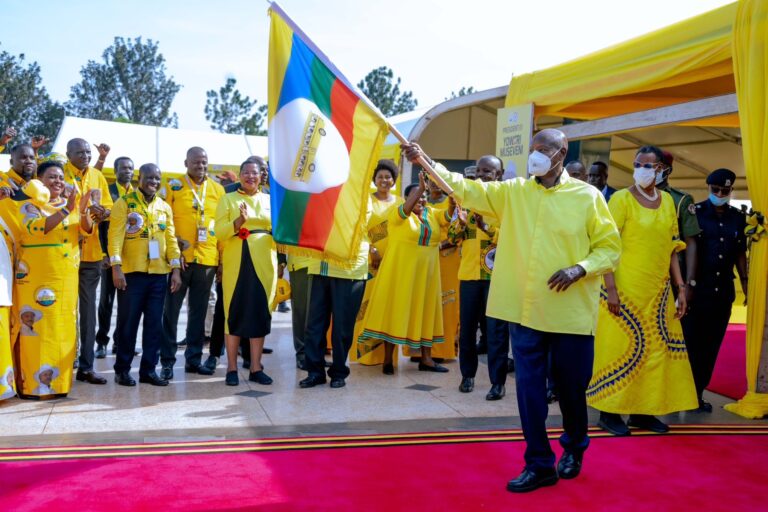
President Yoweri Museveni, fresh off his endorsement as the NRM Presidential flag bearer for the 2026-2031 term, has laid out seven key priorities he intends to pursue during his continued leadership of Uganda.

Speaking to party members at a fete in Kampala, the President highlighted significant economic progress, emphasizing a doubling of the nation’s GDP and increased investor confidence as testament to the prevailing peace and stability under his administration.

“I want to thank the NRM members for entrusting and electing me as the NRM Presidential flag bearer for the 2026-2031 term,” President Museveni stated.

He proudly declared that Uganda’s Gross Domestic Product (GDP) has surged from $34 billion to $66 billion during the recent “Kisanja” (term).

He further asserted that the country now possesses essential resources like electricity, developed road networks, widespread telephone connectivity, a skilled workforce, and a peace dividend, all of which are attracting a growing influx of foreign investors seeking secure and profitable ventures.

A key area of focus for the President is wealth creation, with a stated goal of bringing all Ugandans into the “money economy.”

He noted a positive shift, with the percentage of the population engaged in wealth creation increasing, though he acknowledged that a significant portion remains outside this economic sphere.

“Twelve years ago, only 32% of the people were engaged in wealth creation, 68% were outside and not engaged in the creation of wealth creation. I am glad that with the efforts we have done, that figure has now gone down. By the last census only 33% were outside the money economy,” he reported.

In a move aimed at addressing youth unemployment, President Museveni announced his intention to reintroduce a proposal for providing funding to university graduates who have been unemployed for two years post-graduation.

“I would also like to revisit an idea I proposed many years ago: university graduates who have been unemployed for two years after graduation should have access to funding. We are going to create a fund specifically for these graduates,” he declared.

The fight against corruption was also a prominent theme, with the President urging greater citizen participation.

He called upon the public to actively monitor and question the utilization of public funds, citing the Parish Development Model (PDM) as an example.

“Fighting corruption should involve you, the people, because you are witnesses to the crime. Therefore, you should ask, for example, ‘Where is the PDM money that was sent to the parish?’ You can wait for the president to intervene, but since you are nearby, why not take the initiative to help trace this money yourself?” he urged.

The seven core priorities for the upcoming term are:

Wealth Creation: Ensuring universal participation in the money economy.
Education: Guaranteeing free education for all children in government primary and secondary schools.
Infrastructure: Timely tarmacing of roads and maintenance of existing murram roads.
Crime: Combating petty crime and impunity through the mobilization of NRM structures.
Corruption: Eradicating corruption from all levels of governance.
Health: Building upon successful immunisation programs and ensuring the availability of drugs by preventing theft.
Water: Providing safe and clean drinking water to all villages.

The President’s announcement signals his intention to build upon his decades-long tenure by addressing perceived economic progress while also tackling persistent challenges like corruption and unemployment, with a clear roadmap for the next five years.

CONTESTING: Museveni, two others nominated as presidential race for 2026 elections kicks off

0

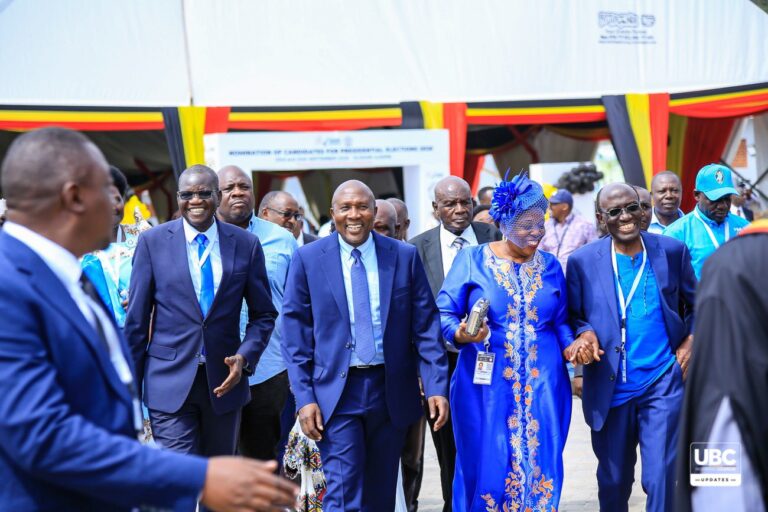
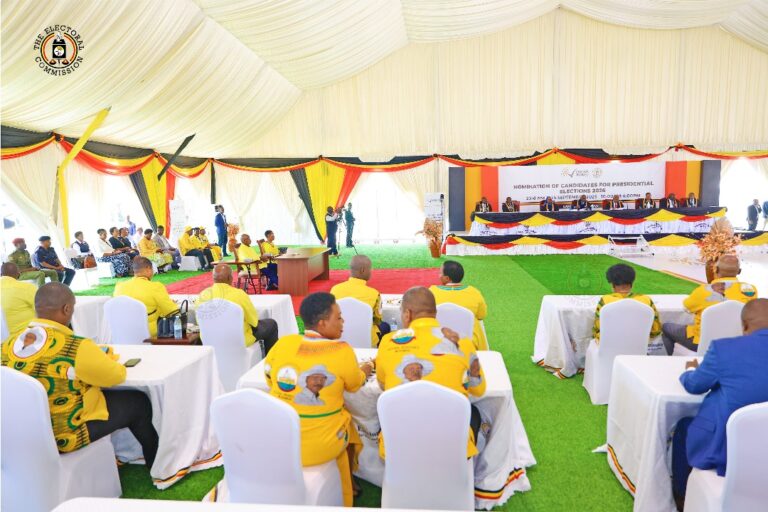
The electoral landscape for Uganda’s 2026 General Elections began to take shape today as the Electoral Commission officially concluded the first day of presidential nominations, confirming three key candidates. Incumbent President Yoweri Kaguta Museveni, representing the National Resistance Movement (NRM), along with Kasibante Robert of the National People’s Party (NPP) and Mabirizi Joseph of the Conservative Party (CP), have all successfully met the nomination criteria.

The nominations, held at the Electoral Commission headquarters, mark the formal commencement of the long-anticipated presidential contest. President Museveni, seeking a further term, presented his credentials amidst a significant show of support from his party faithful. Kasibante Robert and Mabirizi Joseph also completed their respective nominations, signaling their intentions to challenge for the highest office in the land.

Tomorrow, Day 2, will be the final opportunity for aspiring presidential candidates to submit their nominations. The Electoral Commission anticipates a further influx of aspirants eager to throw their hats into the ring. The commission has stressed the importance of adhering to all nomination procedures and requirements to ensure a fair and transparent process.

Following the conclusion of nominations tomorrow, a period of crucial coordination will ensue. Candidates will be expected to engage with the Electoral Commission to harmonize their campaign programs. This process is vital to avoid scheduling conflicts and ensure that all contenders have equitable access to campaigning periods and resources.

Official campaigning for the 2026 General Elections is slated to officially kick off on September 29th, 2025. This date allows for post-nomination administrative processes and provides a clear timeline for the electorate to engage with the candidates and their manifestos. The upcoming campaign period is expected to be a critical phase, characterized by extensive rallies, debates, and public engagements as candidates vie for the votes of Ugandans.

As the election cycle gains momentum, the nation watches closely to see who will ultimately emerge as the final contenders and what the ensuing campaign season will bring. The successful nominations today have set the stage for what promises to be a closely watched and significant electoral contest.

SUPREMACY BATTLE: Luuka eye Bugabula revenge as Bulamogi and Buzaya face off in a Do-or-Die Clash

0

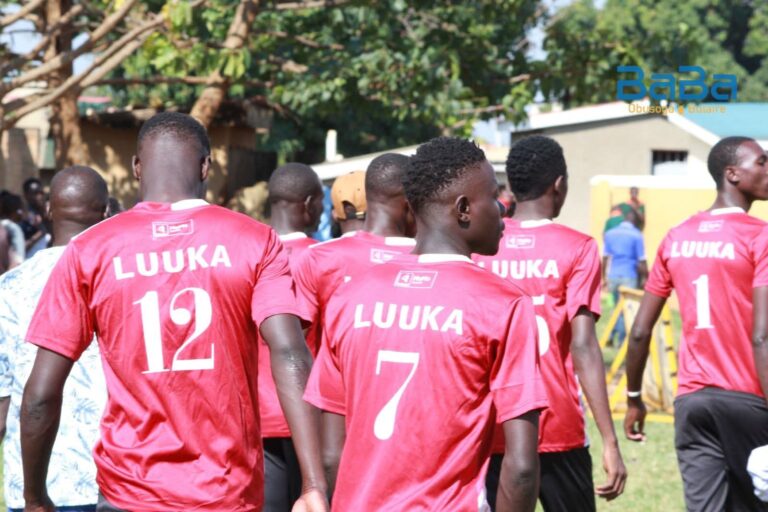
The Busoga Masaza Cup group stages climax this week with two high-stakes encounters that will seal the quarterfinal picture.

On Wednesday, Luuka host Bugabula at Busalaamu Primary School playground in a Bukowe group top-of-the-table clash. Both sides are already through to the last eight, but pride and supremacy remain on the line. Bugabula lead the standings with nine points, while Luuka trail on six. For the home side to finish top, they must win Bugabula , given that both teams are level on a +4 goal difference.

Bugabula, unbeaten so far, boast a perfect defensive record as the only team yet to concede a goal in the competition. They also edged Luuka 1–0 in the first-round meeting, giving them the upper hand. Luuka, however, are counting on home support and the desire for revenge to turn the tables. Bukooli Bugiri, the third team in the group, bowed out after losing all matches without collecting a single point.

The group winner will take on the runner-up of Kagulu group, while the second-placed side faces Kagulu’s leader in the quarterfinals.

The drama continues on Thursday at Bulumba Ginnery playground, where Bulamogi host Buzaya in a make-or-break Kagulu group decider. Bunha, who sit comfortably at the top with six points, have already qualified for the quarters. Buzaya, with three points, need at least a draw to progress, while Bulamogi, on two points, must win to sneak into the last eight. Their first meeting at Lwanyama Primary School ended in a draw, raising the stakes for this final showdown.

Two quarterfinal ties are already confirmed. Kigulu will face Bukono at midday, followed by Bugweri against Bukooli Namayingo at 4 pm, both scheduled for October 4, 2025, at a venue yet to be announced.

VISIONARY FATHER: Namasagali Alumni consecrate grand mausoleum for visionary Fr. Damien Grimes, announce college revival efforts

0

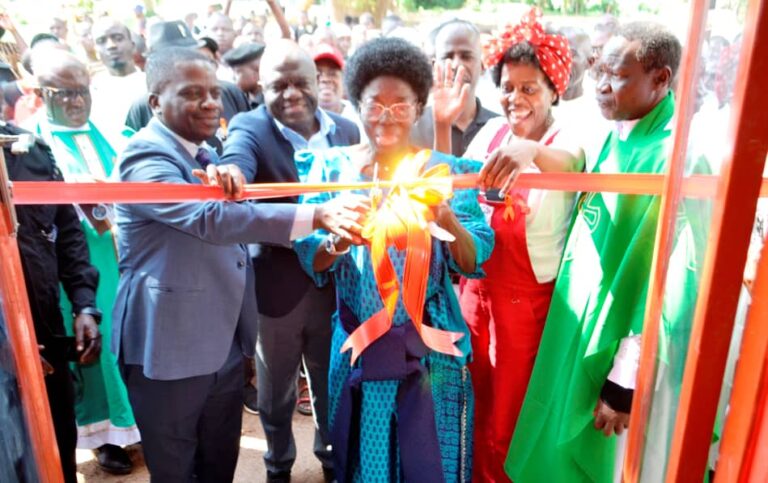
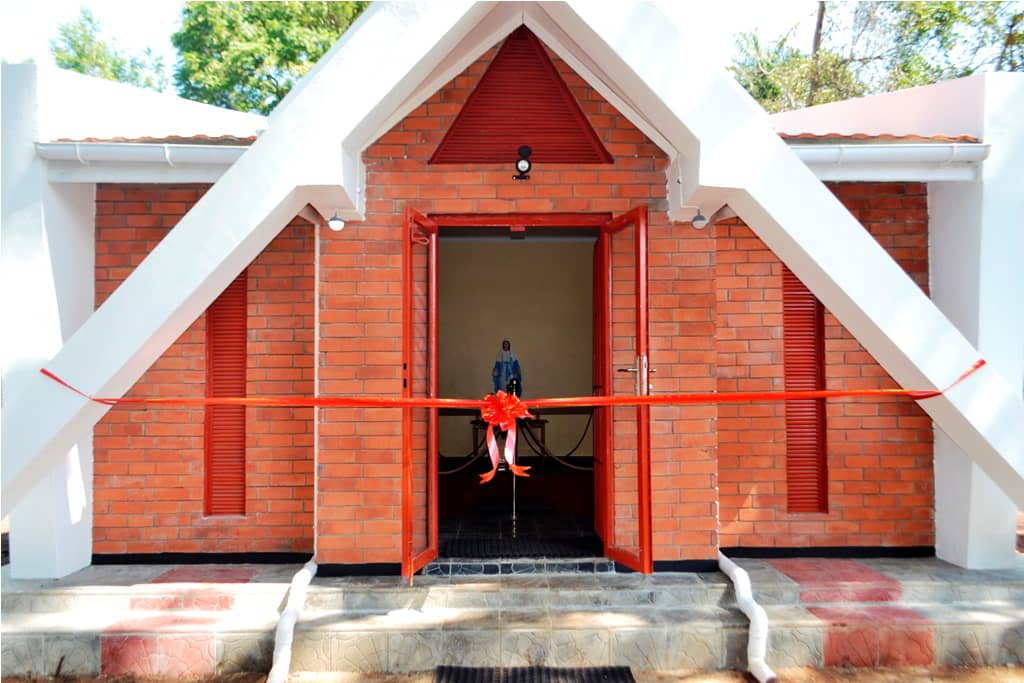
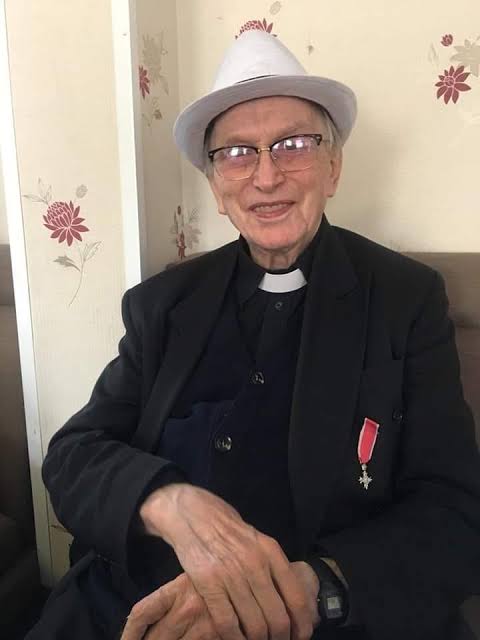
The Namasagali Old Students Association (NOSA) has immortalized the indelible legacy of their founding visionary, the Late Sir Rev Fr Damien Grimes MBE, with the consecration of a magnificent mausoleum at Namasagali Chapel grounds in Kamuli.

The solemn ceremony  served as a powerful call to Old Students to rally behind the revival of the college and build upon Fr. Grimes’ transformative dreams.

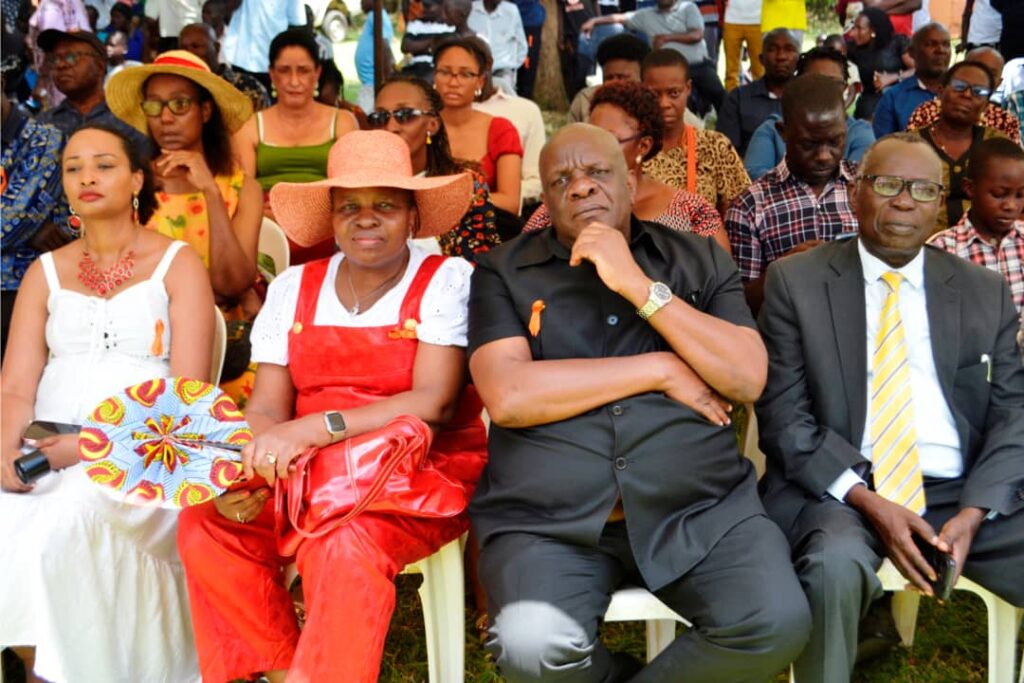
The event, which saw the gathering of prominent alumni and dignitaries, also witnessed the raising of UGX 20 million in cash and pledges towards the construction of a new Administration Block for Namasagali College, signaling a renewed commitment to the institution’s future.

The newly consecrated mausoleum is a splendid architectural marvel, adorned with expensive exterior and interior finishing tiles. Its tomb features sharp V designs in the rear and a distinctive slating roof at the entrance, all meticulously incorporating Sacred Catholic Church colors throughout the interior.

Described as full of divine inspiration, care, and reverence, the structure is envisioned to become both a religious and education tourism site, where current and future generations can visit to recall the immense works and countless lives Fr. Grimes touched.

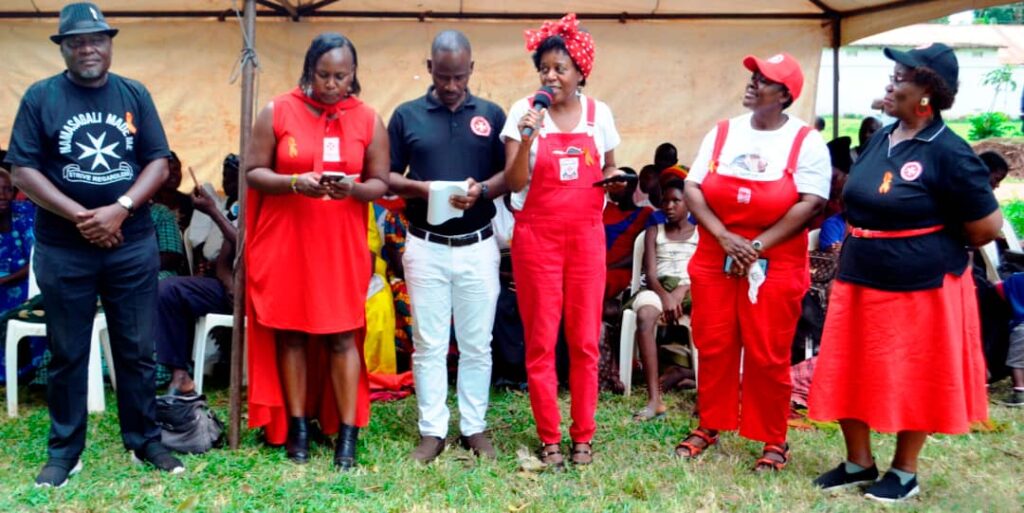
Maureen Mwagale, the chairperson of NOSA, spoke passionately about the genesis of the mausoleum’s design. “Knowing how controversial Fr. Grimes was and aware that the dead are not dead, NOSA sought a design befitting Fr. Grimes’ resting place in the land he loved, surrounded by people whose lives he touched,” Mwagale explained.

She revealed that three architectural designs were presented, and Fr. Grimes, through what old students believe was a spiritual affirmation, chose one “with a beaming smile, symbolism of victory, and river Nile symbolism added for his soul to be eternal and his legacy to live forever.”

“Today we gather not just to unveil a building but to consecrate a legacy – a testament to a life lived in service, love, and unwavering dedication to the people of Uganda,” Mwagale stated. “It is heartwarming that we have created such a magnificent eternal home for him, approved by himself.”

Mwagale emphasized that the mausoleum transcends mere stone and mortar; it is a “living legacy that will endure for generations to come,” from which Fr. Grimes’ teachings and boundless compassion will forever echo.

“It stands as an unshakable monument to his life’s time, regardless of what changes time will bring,” she added, charging the alumni to “guard this sacred sanctuary with the same devotion that Fr. Grimes showed to us all in this hallowed earth, and make it a place where love, service, and sacrifice converge in eternal remembrance.”

Adding to its profound significance, the repatriation of Fr. Grimes’ body to Namasagali is a historic first. It defies the directives of the Mill Hill Missionaries congregation, which typically stipulates that a priest be buried where death finds him. For his devoted students and fanbase, who find strength in the school motto, “Strive regardless,” the “Bloody Lion” is merely sleeping, his spirit ever-present.

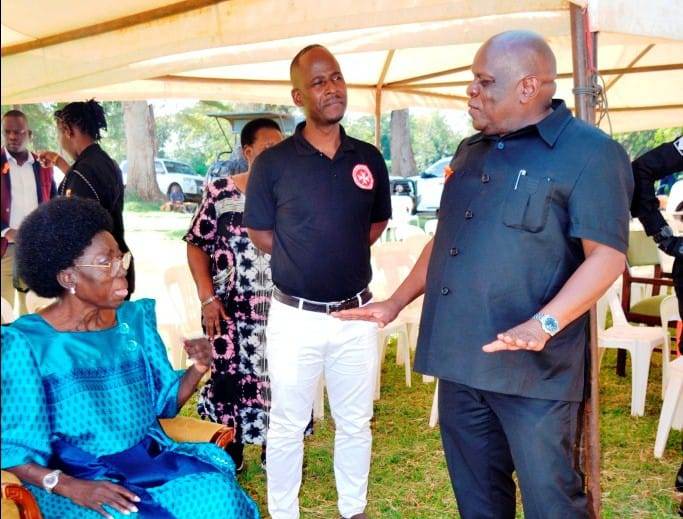
The consecration was graced by the First Deputy Prime Minister, Rebecca Kadaga, who lauded the Old Students for honoring their “founding Hero, Father, and Mentor” with such a lasting legacy. “He lives in peace, harmony, and smiles at his death wish home,” she remarked.

Uganda’s Ambassador to Moscow and former State Minister for Karamoja Affairs, Moses Kawaluuko Kizige, used the occasion to remind the alumni of their cardinal role to carry on the virtues, values, and principles of Fr. Grimes’ Sunday “Life Safety and Welfare Lecture.”

He stressed the importance of protecting one another, reconciliation, oneness, and living in harmony, warning that any deviation would invoke Fr. Grimes’ menacing warning: “a lion is a lion, even in its sleep.”

Ambassador Kizige, himself a distinguished alumnus who served as Deputy Lord High Reeve, House Captain, Athletics Captain, School Choir Leader, Master of Traditional Dance Drums, and Star Footballer, also took the touching moment to publicly reconcile with Kadaga, a former Lord High Reeve in her time.

He urged them to work together “regardless of differences to champion Namasagali revival and NRM Party protection of gains,” under Fr. Grimes’ protective spirit of family harmony.

The Late Sir Rev Fr Damien Grimes MBE

The legacy of the Late Sir Rev Fr Damien Grimes MBE, who brilliantly headed Namasagali College between 1967 and 2000, nurturing most of today’s prominent figures who contribute significantly in Uganda and the diaspora, has indeed been concretized with this powerful act of remembrance and commitment.

Namasagali Elevated to Parish Status

The unveiling of the mausoleum marked another significant milestone for the chapel where Fr. Grimes often prayed mass with his students. In a bid to uphold the religious legacy, the Bishop of Busoga Diocese, Rev Charles Martin Wamika, elevated Namasagali Catholic sub-center to Parish level earlier this year.

Rev John Fisher Nyiiro, the newly appointed Parish Priest, announced that following the decree, the Catholic congregation, the Mill Hill Missionaries Fathers in the UK, and well-wishers have already embarked on the construction of a new parish complex.

This expansive complex is set to feature a bigger chapel, as well as residences for the parish priest and a sisters’ convent, further solidifying Namasagali as a spiritual and educational beacon.

OWEYEGHA-AFUNADUULA: My prostate journey    

0

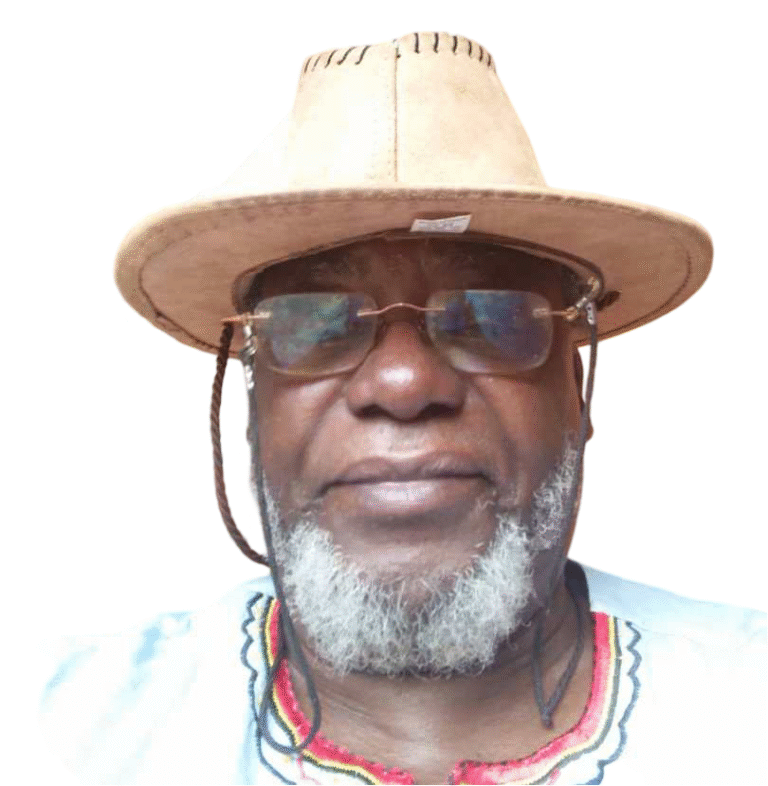
By Oweyegha-Afunaduula  

First, let me thank God who knew me long before I was formed in the womb of my mother in 1949; has preserved me for the last 76 years; is the only explanation of who I am and why I continue to live and persist on Earth despite all kinds of odds; and gave me the gift of writing and a photographic mind that enables me to remember even the smallest details along my life’s trajectory.

Second, I thank my parents, the late Charles Afunaduula Ovuma Ngobi Isabirye (1923-2007) and the late Stephanie Esteri Kyabwe Nawamwena Naigaga Wabiseatyo (1932-2016) who provided me with quality parental care and tirelessly worked together to ensure that I survived beyond  them despite my sickly nature since my birth on 27 July 1949.

Third, I thank my old boys of Mwiri Primary School, Busoga College Mwiri and the University of Dar-es-Salaam who stood by me in my old age and ensured that financial and social challenges do not adversely impact my health. Here I must mention Prof. Waswa Balunywa, Prof Davies Bagambiire, Dr. Charles Kawagga, Engineer Luke Kyobe and Mr. Sabasi Ngobi.

Fourth, I thank the members of the Great Afunaduula-Ovuma Family, and of my own family, that stood by me during my latest test of health by contributing money to meet the health bill.

Fifth, I thank all the medical doctors who, since 1949 have professionally handled my health issues. I have in mind the colonial doctors at Jinja Hospital and those at Busoga College Mwiri, University of Dar-es-Salaam, University of Nairobi, Nairobi Hospital, Voi Hospital Kenya, Makerere University, Mulago Hospital, Kampala Hospital, Mengo Hospital, Kampala International Hospital, Shalom Hospital in Iganga and lately Uro-Care Hospital Nansana.

This article is to the credit of the very highly professional staff from bottom to top at Uro-Care Hospital Nansana led by Dr Stephen Watya.

When I arrived at Uro-Care Hospital on 5th September 2025 to have my expanding prostate gland handled by professionals with proven success stories, I only knew about it from what Prof Davies Bagambiire told me about it. He spoke highly about it and had a lot of praise for Senior Consultant Dr Steven Watya.

During my long stay with the hospital many doctors interacted with my prostate problem. These included world class professional resident urologists, dedicated to providing exceptional healthcare with compassion, expertise and cutting edge medical knowledge, namely: Dr Steven Watya himself, Dr Rajab Idris, Dr. Colline Amanya, Dr. Mbaaga Kigongo, Dr. Ssembule Joseph, Dr. Merab Kadondi, Dr. Isaac Basude and Dr. Apollo Mugaiga. There are also a number of visiting doctors from other private and government hospitals that I interacted with. Combined with the very professional support staff the resulting internal environment of the hospital was what I needed to recover quickly once my prostate problem was dealt with. I never saw cockroaches, fleas, bedbugs, mosquitoes or even rats and frogs, which may be common in other hospitals in the country. The wards and operation theatres are of very high quality. As an environmentalist, I was highly impressed, hence this article. Actually I asked the innovator of Uro-Care Hospital to allow me to write an article on it once my experience with it came to an end, and he gave me the green light.

My prostate journey to Uro-Care Hospital was long and arduous. It began in May 2023 when I woke up to pass urine and I couldn’t. Even before, I had been passing urine several times at night, which was cumbersome. During the day urine would not go beyond my legs and sometimes came out uncontrollably. When I told my wife Jane about urine not coming out when I needed it to, she said I needed to see medical doctors. I rang my OB University of Dar-es-Salaam in the early 1970s, Prof Davies Bagambiire, who has lived in Canada since 1976. He told me not to delay seeking medical attention. He linked me with Engineer Fortune Ayo, who manages his interests in Uganda, to take me to a doctor at Shalom Consultative Hospital in Iganga. The doctor, whose name I have temporarily forgotten, subjected me to laboratory tests. On examination of lab results he said, “Fortunately your prostate is not cancerous. It is expanded and presses the urethra thereby preventing the smooth flow of urine from the urinary bladder. That is why you have difficulty urinating and that is why you urinate many times at night”. He went on, “I will put you on medicines for a month after which you will come for a review”.

And that is what he did. Prof Davies Bagambiire sent money to Engineer Ayo to pay for the medicines and professional fees.

Prostate Gland

The prostate gland is a component of what is called the endocrine system of the human body whose function is to secrete specific substances called hormones into the blood stream. However, the prostate has been classically considered an exocrine gland that depends on other hormones (i.e.steroids) to maintain its size and normal secretary function. It is located just at the base of the urinary bladder and surrounds the top part of the urethra into which it releases its contents called seminal fluid whose function is to act as grease to help sperms swim through the urethra once released. Otherwise, it lubricates the urethra.

I was under the care of Shalom Consultative Hospital for many months but did not experience much improvement. Shalom Consultative Hospital referred me to what are called specialist professional doctors in Jinja sometime in late 2024.  Here it was Dr Masereka Robert who handled my prostate case. He concluded that I needed surgery and told me, which hospital I would have to go to for laser guided surgery. However, the cost would be astronomical! 18m!

I turned to herbal medicines, including Chinese Medicines. But even these failed to give me a permanent solution.

In early August 2025, my situation was getting worse. Even the urine was giving off a bad smell, which was repulsive to my wife and others in my household. I suspected it was caused by infections subserved by urine retention.

I was getting more and more worried.  Many men in my clan at Bulawa, Nawaka, had died from prostatitis. They had kept quiet about it until their deaths. I knew my grandfather Wasedde Buganga, his elder brother Isaac Afunaduula, my uncles Constantine Wekiya Ngobi Isabirye, Rev Silas Wekiya, Martin Namansa and John Namansa, and my father Charles Afunaduula Ovuma Ngobi Isabirye and cousin Paul Gwaira Wekiya, had succumbed to prostate cancer. I felt both threatened and endangered. I began to feel I was the next victim. My pressure shot up.

“No!” I said to myself. At the beginning of August 2025 I got in touch with Professor Davies Bagambiire of Canada. He told me to ask one of my children to immediately take me to Dr Steven Watya’s Uro-Care Hospital. “Further delay will be dangerous”, he emphasized.

It was Isaac who came for me at Nawaka. And the prostate journey to Uro-Care Hospital neared its end. On 5th August, Isaac delivered me to Dr Steven Watya’s Office at Uro-Care Hospital. I knew I was in safe hands. Dr Watya is a highly experienced urologist at the centre of an increasingly professional team.

I was not the only one seeking professional treatment at Uro-Care Hospital. In fact, each day, tens of young, old and elderly men made Uro-Care Hospital their place of call on a daily basis. I concluded that there was a prostate crisis in the country. Uro-Care Hospital, however, did not depict failure to mediate the crisis to the best of its ability. Although everything about Uro-Care Hospital seemed to be expensive, patients were not deterred.

During the several weeks I was interacting with Uro-Care Hospital, Dr Watya never stopped telling me that my prostate problem would be no more. He said since my prostate had not become cancerous yet, his hospital would reduce the size of the expanded gland and usher me into new health freedom from the problem.

I had to wait until 10th September 2025 to experience the freedom Dr Watya was talking of. That is the day when Dr Rajab Idris operated on my prostate using laser technology. I asked Dr Rajab Idris not to remove the whole prostate and he assured me he would not remove the entire gland.

The operation was so successful that by 13th September 2025 all the doctors agreed that I was making good progress and that I could leave the hospital (of course If I met all the financial obligations to the hospital). Dr Ssembule Joseph said I had been compliant. He never really revealed in what aspects I was compliant. However, it was nice to hear from the doctor. It explained why I was emerging triumphant health wise after my operation.

As I stated earlier, Uro -Care hospital’s internal environment is of very high quality. The care it allows shows value for money. It is ahead of many private and public hospitals I have gone through in Uganda.

This explains why referrals have been made by people in China, Germany, USA, Britain, Belgium and Canada for patients in Uganda. The cutting edge technology of the hospital is unique, as good as in the Western and other developed world and integral to its internal health environment.

The negative, however, is that its external health environment is dominated by environmental noise pollution: mainly caused by a bar and moving vehicles. The bar is an especially environmental nuisance, which shows that environmental management in Uganda is only done if it is politically acceptable. The noise pollutes the internal environment of  Uro-Care Hospital, greatly perturbing the environmental peace of patients. Although increasingly young people are frequenting the hospital for prostate solutions, the majority of them are the old and elderly that may easily succumb to the noise.

When, as an environmentalist, I sought to find out what the hospital authorities had done to tackle noise pollution, I was told that since 2017 when the hospital was established, concerted effort, time and mental energy have been invested in eliciting the involvement and cooperation of the National Environmental Management Authority (NEMA), and the Nansana Municipality authorities to find a permanent solution. However, the hospital authorities have been frustrated by the Nansana municipal authorities and NEMA that have more or less ignored the menace and failed to implement the necessary environmental instruments against noise pollution.

This is surprising. Uganda has very clear laws to combat noise pollution. However, frequently the laws fail when the implementing agencies and authorities ignore to apply them. In the case of Uro-Care Hospital it seems the Nansana Municipality and NEMA seem to see little connection between health and the non-physical environment. Their focus seems to be more on swamps, floods and desertification, which, unfortunately, do not depict any success stories. At the centre of failure is politics and politicians who frequently see effective environmental management and conservation as a roadblock to the pursuit of narrow political, economic and social interests.

As far as human health is concerned it is most adversely affected by what happens in the non-physical environment (I e., in the sociocultural and socioeconomic environment). It is also most adversely affected by how effectively we value or do not value time in tackling them. Attaching wrong timescales to processes in the sociocultural and socioeconomic processes in the environment is not only a time waster but also the most adverse means of destroying the environment or making it less qualitative for human survival.

The bar in the external environment of Uro-Care Hospital has been generating unwanted environmental noise since 2017. Given the environmental stance of Nansana Municipality and NEMA, it is likely that some influential political forces are on the side of the owners of the bar. There is no evidence to suggest that any action is in the offing locally and at the centre to deal with noise towards improving the quality of the external environment in favour of the quality of human healthcare provided by Uro-Care Hospital.

What seems to be aviable alternative course of action available to Uro-Care Hospital against noise pollution is environmental litigation. Uro-Care Hospital is left with no choice but to link up with some environmental organizations and some health institutions locally, nationally as well as some of its patients to initiate environmental litigation against the local government of Nansana, the Central Government,  NEMA and the noise polluter for failing to observe and implement the available environmental law against noise pollution.

The hospital could also be at the centre of thriving environmental diplomacy and advocacy against noise pollution towards enhancing the quality of its healthcare enterprise.

The other alternative course of action Uro-Care Hospital could adopt is mobilising funds locally and externally to buy the noise polluter out of the hospital’s external environment.

Besides environmental consciousness should be integral to the human health enterprise. Unfortunately, the health enterprise in Uganda continues to be largely divorced from environmental consciousness. This negates the quality of the human health enterprise on a continuous basis. Uro-Care Hospital could publish environmental consciousness raising pamphlets and fliers to begin to influence the environmental behavior of people in its internal and external environment.

Last but not least, Uro-Care Hospital can include an Environmental Health Officer among its senior staff to be in charge of its environmental healthcare initiatives towards linking uro-healthcare to environmental healthcare this century and beyond.

For God and My Country

Prof. Oweyegha-Afunaduula is a Conservation Biologist and member of Center for Critical Thinking and Alternative Analysis


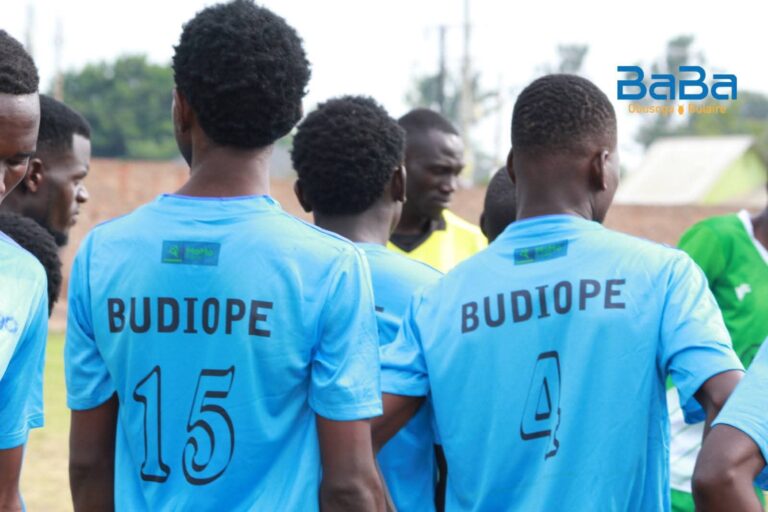
DISGRACED: Budiope FC fail to honour home game over Funds crisis

0

There was drama in Irundu on Sunday, September 21, 2025, when Budiope FC failed to turn up for their much-anticipated Busoga Masaza Cup group game against Bugweri.

According to Budiope FC media officer, Waiswa Baz, the team’s absence was not out of lost hope but rather financial constraints. He revealed that the club could not raise money to bring players back to camp, with many of their traditional supporters keeping away for political reasons. He added that divisions between Budiope East and Budiope West further weakened the team’s organization.

“Our funders abandoned us to the extent that we couldn’t even honour our last home game. As Budiope, we lack the spirit of sportmanship. We wouldn’t have avoided the game against Bugweri if it was not for the lack of resources,” Waiswa told Busoga times.

The development saw visitors Bugweri awarded three points and three goals, which pushed them to the top of Mawembe group with 13 points. Bukono, who were held to a goalless draw by Bunhole Bunhanumba in Bugadde, followed in second place with 11 points.

Busoga Masaza Cup spokesperson David Mwesigwa confirmed that Bugweri had indeed travelled to Irundu but found the hosts missing, describing the incident as a disciplinary matter.

“We shall investigate to establish exactly what happened. If we discover that Budiope acted unsportingly, there will be a punishment”, Mwesigwa said

He further revealed that only two group games remain before the tournament heads into the knockout stages. Luuka will face Bugabula on Wednesday, both already assured of quarterfinal slots, while Buzaya take on Bulamoogi on Thursday in a decider for the last available place.

The quarterfinals are set for October 4–5 at a venue yet to be confirmed. Bugweri will meet Bukooli Namayingo, Bukono will face Kigulu, while Bunha is expected to take on either Luuka or Bugabula. The final pairing will be determined after the Buzaya–Bulamoogi clash.

Interestingly, this is not the first time the Irundu ground has hosted such controversy. In last year’s edition, Bugweri also failed to honour a rematch ordered by the Tournament Organising Committee after an abandoned fixture against Budiope at the same venue.