Saturday, May 23, 2026
Home Blog Page 53

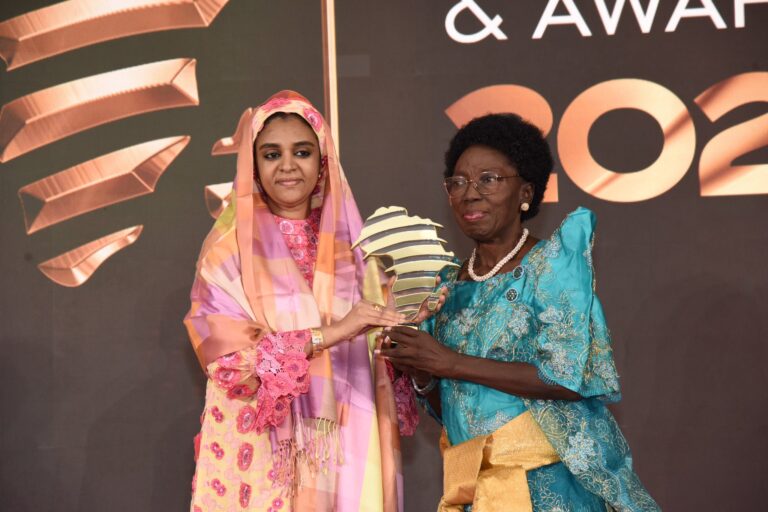
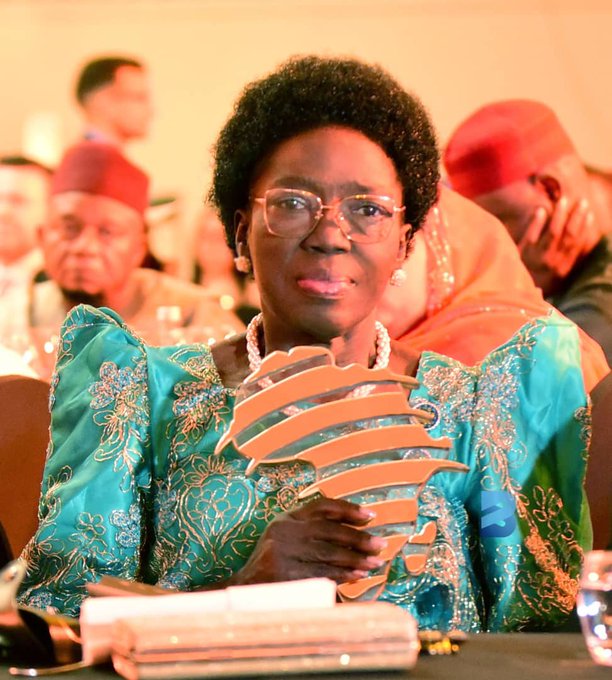
ANOTHER ONE: Kadaga wins Africa Good Governance award in Morocco

0

The First Deputy Prime Minister of Uganda and Minister for East African Community Affairs, Rebecca Alitwala Kadaga, has won an international award in Morocco for her efforts to empower women in Uganda, Africa, and the world.

“Proud recipient of the Africa Good Governance award for my work in women’s emancipation and parliamentary stewardship, transparency, integrity, and accountability,” Kadaga, also the Woman Member of Parliament for Kamuli district, shared the good news on X.

Kadaga said she was ‘humbled by the recognition accorded to me as recipient of the Africa award for Good Governance from the Heritage Times of London.’  She dedicated the award to her electorate in Kamuli, FIDA Uganda, and to members of parliament in the 7th, 8th, 9th, and 10th parliaments of Uganda.

Others on Kadaga’s dedication list are the CWP (Africa) and (International) and IPU, ‘where we broke barriers in Women’s Representation in decision making.’

The award ceremony was held at the Savoy Hotel, Marrakesh, Morocco, on April 12, 2025.  The AfriHeritage Awards celebrated visionary leaders whose commitment to people-centered governance continues to inspire.

IRON SHEETS SCANDAL: Anti-Corruption Court calls for independent examination of Nandutu’s health  

0

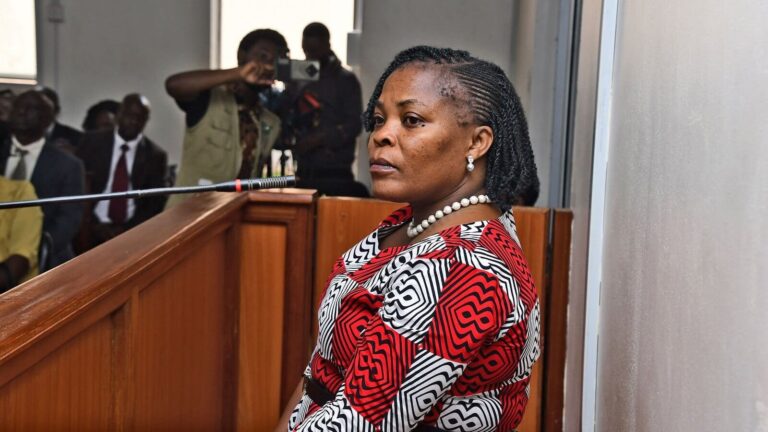
Former State Minister for Karamoja Affairs Agnes Nandutu should undergo an independent medical examination at Mulago National Referral Hospital, the Anti-Corruption Court has ordered.

The ruling was made by Justice Jane Okuo Kajuga after court received conflicting claims about Nandutu’s health.

Nandutu failed to take the stand to defend herself against allegations of being in possession of government-owned iron sheets meant for vulnerable youth (Karacunas) in the Karamoja sub-region.

Nandutu is among several high-profile figures implicated in the infamous Karamoja iron sheets scandal that rocked the government last year.

According to prosecution, dozens of iron sheets intended for humanitarian relief efforts in Karamoja were illegally diverted and later recovered from various government officials’ homes — including Nandutu’s.

In court, her legal team claimed the former minister was in poor health and unfit to proceed with her defense, citing severe breathing complications. However, the prosecution presented a contradicting medical report indicating that Nandutu was physically stable and capable of attending court proceedings.

Frustrated by the inconsistencies, Justice Kajuga criticized Nandutu’s lawyers for what she called “a lack of seriousness and professionalism,” and dismissed their request for a private audience to explain the minister’s medical condition.

“This court cannot proceed on speculation. We need verified, independent medical findings,” the judge ruled.

As a result, the court ordered Nandutu to be evaluated at Mulago National Referral Hospital and instructed both her and her legal team to return on May 5th, 2025, with the official report in hand. The case will proceed with the defense hearing based on the results of this examination.

UNETHICAL WEALTH: How immoral money is used to buy indigenes off their land

0

By Oweyegha-Afunaduula

The key issues in this article are indigenes, land, unethical money and immoral money. Le me say something about each of these right away.

Indigenes

Indigenes are people who have biologically, culturally, ecologically and historically belonged to and owned a particular piece of land and environment as a community for centuries. Their culture, emotions, psychology, ethics, ecospirituality, morality and philosophy of life are shaped in relation to their land.

By owning the land, they also own the natural aboveground and belowground resources, including water, fish, plants, energy resources, food resources and minerals thereof. They have sacred places on the land, including burial grounds, which may have existed for centuries.

They organise themselves in families, extended families and clans, which may interconnect with others of the same kind in other families, extended families and clans of the same king. They till the land for survival and sow characteristic crops and also use certain plants to ensure thei health security.  They are unlike people who belong to the nomadic-pastoral energy system, came from elsewhere and are not attached to the land but the cow.

Land

Land is many things in one. Land is the part of the earth’s surface that is not covered by water. It is a composite of soil, water, air, biodiversity and minerals, interacting to provide goods and services that benefit humans and sustain ecosystem functions.

Unethical money

Unethical money refers to money acquired or used in ways that respect moral principles or ethical standards often involving actions such as corruption, exploitation, fraud or unfair business practices. However, the boundary between unethical money and immoral money is thin.

Immoral money

Immoral money generally refers to money earned through illegal or unethical means suchas through prostitution, corruption or other activities, or money used to support such activities. In Uganda, public money is frequently allocated to projects and businesses that are evidently corrupt and anti-country or anti- Ugandans, which is immoral.

Unethical money and Immoral money may be jointly referred to as Black Money. Black money includes all funds earned through illegal activity and otherwise legal income that is not recorded for tax purposes.

Black money proceeds are usually received in cash from underground economic activity and, as such, are not taxed. Recipients of black money must hide it, spend it only in the underground economy, or attempt to give it the appearance of legitimacy through money laundering (Will Kenton, 2024).

In this article, I include, under black money, money extorted by the Executive from Parliament through the ruling party caucus in Parliament and used in deals that are unlikely to benefit the public but select individuals or firms, or which ends up being used in political schemes such as elections.

I also include, under Black Money, money earned from the immoralNyege Nyege music and arts festival in Uganda (Abaho, 2023) because there is no transparency and accountability for the money obtained, although it hotly defended by the Minister for East African Cooperation and the President of Uganda.

Unethical money and immoral money are earned by both unethical and immoral people who do not value ethics and morality of anything and are quick to employ unethical and immoral ways and means of accumulating the money. Often such people are unscrupulous and shameless and do not care what others say so long as they continue to accumulate money unethically and immorally at the expense of society.  Apparently, the unscrupulous and shameless people are very greedy people too.  Greed is the immediate love and desire for riches and earthly possessions. They are intertwined with the State and politics, and will do everything possible to exclude others from the leadership and governance of Uganda.

I have written about Mafias in Uganda, engaged in power struggles, business, money- sharking, money laundering, and other human activities such as racketeering, gambling, prostitution, fraud. drug-trafficking, human trafficking, organ trafficking and extortion. The money they get is both unethical and immoral and is used to achieve unethical and immoral goals and/or emotions. However, increasingly non-mafias looking to become rich in unethical and immoral means are also involved in thse activities.

The immoral and unethical activity I want to focus on is land grabbing where by unethical and immoral moy is being used by people of power or connected to power and often armed to buy indigenes from their land and at peanuts. Many of them are high ranking in the government, the army and the increasingly militarised policemen. Apparently, the people are too poor to resist the money, often given to them forcibly and quickly removed from the land.

Buying people off their land has so far been mainly in the central region of Uganda. However, currently people of the nomadic-pastoral human energy system and with a lot of money and armed are bust grabbing land in Northern Uganda.  Indigenes in Acholi and West Nile are very annoyed. They expected development, but instead they are reaping land grabbing, sometimes involving killing of the local landowners.

What has perplexed the people is that their cries for justice over land has been received by the silence of the government. They are now saying they will not give votes to President Tibuhaburwa Museveni until he removes the nomadic pastoralists from their land and he begins to show evidence of taking development to their area.

Like in the times of Biblical Prophet Amos in the 8th Century BC, when there was great prosperity, notable religious piety and apparent security, all of which were fed on exacerbated injustice and oppression, in Musevenite times in Uganda, the poor and needy are being oppressed through land grabbing and excessive taxation. Religious observance is insecure and security is more apparent than real. People lose their land and properties easily to the unethical and immoral either in power or connected to power, especially ethnically. Leadership and governance is becoming more and more confusing and geared towards power retention that assuring the people of good leadership and good governance. It is not rare to posit political parties with linkages to power to compete for power alongside the ruling party and the known political parties seeking to provide alternative leadership and governance of and in the country. Injustice, chaos and violence are on the rise as exemplifies by the recent by-election in North Kawempe elections whereby state cushioned criminals were protected by power even when there was evidence that those who reigned havoc belonged to the official terrorising group called JATTI. Billions of unethical and immoral money was spent during that by-election in North Kawempe Constituency.  One wonders how much more unethical and immoral money will be use in the 2026 elections. Political corruption is real although it is hardly mentioned in Uganda.Immoral money and political influence moved together in Italy, France and Germany in 19th and 20th centuries. This has been the case in Uganda since 1996.

There is no evidence that the use of unethical money and immoral money in elections and in land grabbing is about to decrease. So long as political ethnisation, ethnic politicisation and abetting of some illegal activities by power continue, it is unlikely that we shall see less use of immoral money and unethical money in politics and land grabbing, let alone in acquiring certain properties and opportunities or excluding some Ugandans from properties and opportunities for self-aggrandisement of some people, including foreigners.

If we continue like this, Ugandans will have to forget about belonging, ownership, identity, independence, citizenship, sovereignty and nationality. There is a growing school of thought, which holds that the indigenes of Uganda are now third-rate citizens, now being displaced and dispossessed from thei land and everything they called their own.

For God and My Country

Further Reading

deMilked (2024). 25 Unethical Money-Making Strategies that Remain Within Legal Boundaries. https://www.demilked.com/unethical-legal-money-making-ways/ Visited on 7 April 2025 at 14:14 pm EAT.

Erminio Fonzo (2018).  Immoral Money in Italy During World War! The case of Ansaldo.  Researchgate, June 2018. https://www.researchgate.net/publication/325553924_Immoral_money_in_Italy_during_World_War_I_The_case_of_Ansaldo Visited on 7 April 2025 at 14:38 pm. EAT.

He, Z., Lin, W., & He, G. (2024). Immoral money aggravates myopia in intertemporal investment decision-making. Journal of Pacific Rim Psychology18https://doi.org/10.1177/18344909241293834https://journals.sagepub.com/doi/full/10.1177/18344909241293834 Visited on o7 April 2025 at 14:05 pm EAT.

Sheillah Abaho (2024). Uganda Government prefers money over morality. D+C 9Development and Cooperation),  November 11 2023https://www.dandc.eu/en/article/although-many-consider-nyege-nyege-festival-uganda-immoral-government-supports-profitable  Visited on 7 April 2025 at 15.00 pm EAT 

Sorravich Kingsuwankul, Marie Claire Villeval (2021). Risk Taking with unethical Money: An Experimental Study. Gate, May 2021. https://www.gate.cnrs.fr/RePEc/2021/2109.pdf Visited on 7 April 2025 at 14:19 pm EAT.

Will Kenton (2024). What is Black Money? Meaning, Definition and Criticism. Investopedia, July 17 2024.

REGIME OF SCANDALS: These mafia-type of scandals will remain the topmost highlights of the NRM rule: 1986 to present

0

By Oweyegha-Afunaduula

 Uganda has been oscillating in the pack of the 36 worst-ranked and has on average been among the 24 most corrupt in the world over the past 12 years (Nafula, 2024).The Corruption Perceptions Index (CPI) 2023 underscores the gravity of the situation, ranking Uganda 141st out of 180 countries, with a score of only 26. The CPI evaluates the perceived levels of public sector corruption globally, using a scale where zero indicates a highly corrupt state and 100 signifies a very clean on (Kisakye, 2024).

In the last 10 years, big time scandals reflect a persistent pattern of corruption and misuse of public resources, undermining trust in public institutions and highlighting the need for more effective anti-corruption measures in Uganda (Char News, 2024).

According to the Inspectorate of Government, Uganda loses approximately Shs 10 trillion annually due to corruption-related activities. This pervasive vice has eroded trust in the government, diminished infrastructure, caused delays in project implementation, discouraged investments, compromised social service delivery, and, in severe cases, resulted in loss of life (Kisakye, 2024).

Some Scandals involving billions of shillings, such as the coffee deal scandal and the Vinci Lubowa Hospital scandal have involved President Tibuhaburwa Museveni and his NRM Parliamentary Caucus, causing billions of shillings to be siphoned off through Parliament at the expense of social development.

Sometimes the President has just been tricked by mafia-like people such as Nelson Tugume, who used the President to secure 21 billion shillings in the Coffee deal, which he then diverted to his own coffee factory, Inspire Africa Coffee in Ntungamo (Kim Aine, 2024).The funds taken by Tugume for his private coffee enterprise is almost higher than the 2023/2024 financial year budget (Shs 22bn) which the government allocated to cater for the allowances of medical interns and senior house officers across Uganda (Kim Aine, 2024). Apparently, Daily Monitor reported on March 19 2025 that the Factory was being boosted by Shs 179 billion, of course with the central role of the President of Uganda and his NRM Parliamentary caucus in the Parliament of Uganda. Given the way Nelson Tugume was able to convince the President to invest large sums of public money in his factory, away from social development of Ugandans, suggested there might be some big names, other than the inconspicuous Tugume, in the Ntungamo coffee factory, sucking public money in an otherwise private enterprise. The Ugandan public is already convinced that the Ntungamo Coffee project is a brewing scandal (Javira Ssebwami, 2025),with the Parliamentary Caucus and President Tibuhaburwa Museveni at its centre.

It will be extremely difficult to fight corruption of every conceivable in Uganda because some openly corrupt deals are immunised by presidential and parliamentary political approval of a Parliament dominated by the NRM Caucus.

One time President Vladmir Putin of Russia said those who fight corruption should themselves be clean. Zero Tolerance to Corruption was President Tibuhaburwa Museveni’s clarion call to fight corruption. Just like he does not refer to the Ten Point Programme as frequently as he used to, he hardly mentionsZero Tolerance to Corruption. Scandals are on the rise. Because it now known the Italian Mafia have penetrated the Ugandan economy, there is no doubt that the Mafia are involved in the robbery chain of Uganda, many times officially.

The case of ghost pensioners to the tune of 24,000 ghost pensioners, which has attracted investigations by the Inspector General of Government (IGG), is not unlike ghost workers in many government institutions. Apparently, the failure of the Uganda Bureau of Statistics (UBOs). to give a definitive census figure of the population of Uganda, does not augur well for elections in Uganda. It opens the gateway for election scandals in the 2026 Presidential, Parliamentary and Council elections. The Chairman of the Uganda Electoral Commission says the Commission is going to use the 2014 census data while its own register of voters has fewer voters than the register of the NRM members of 20 million or so.

Below are some of the big-time scandals that have, since 1986 when the NRM/A captured the instruments of power through the barrel of the gun, sucked public money away from the social development of Ugandans. Development. Virtually all of them have involved people that take themselves as big weights in the National Resistance Movement (NRM). Clearly, the NRM has extremely few people who can help the country to fight corruption because as Muniini K. Mulera (2024) says corruption is an evil that nourishes the NRM’s rule in Uganda.

The Chain of Scandals in Uganda Since 1986.

Junk Land rovers/Santana UPDF 1988.

UPDF UGX 24 billion Procurement Scandal, Ministry of Defense 1990s

Tax Evasion scandal by President Museveni’s firm – DANZE 1996

Plunder of the Resources of the Democratic Republic of Congo by UPDF soldiers -1997-1998

Sale of Uganda Commercial Bank Scandal – Salim Saleh Akandwanaho.1998

The Theft of UPDF Salaries totalling UGX 1.9 billion, Captain Dan Byakutaga.2000.

The Ghost Soldiers Saga UPDF 2003

Valley Dams Scandal UGX 3,5 billion Former Vice President and Minister of Agriculture, Specioza Wandira Kazibwe, 2003

Global Fund/Gavi Fund Scandal: Jim Muhwezi, Mike Mukula, Alex Musinguzi, 2005.

Katosi Road Scandal (2013/2014)

Junk Chopper Scandals 2000, 2015,

Pension Scam -24,000 ghost pensioners.

Chogm Scandal Former Vice-President Gilbert Balibaseka Bukenya 2007

NSSF UGX 2.7 billion scandal -Former NSSF Managing Director, David Chandi Jamwa, 2009

Ministry of Public Service Scandal 2010

OPM PRDP Scandal Kazinda Former Accountant General, OPM Office 2011.

NSSF-Temangalo Land Scandal Amama Mbabazi, Amos Nzeyi, 2008

Local Council (LC!) Bicycle UGX 4.2 billion Procurement 2014.

ELECTION SCANDALS (SINCE 1996)

Office of Prime Minister Refugee Cash Scandal (2018).

OPM Covid 19 Cash Mismanagement Scandal 2020)

Lubowa Specialised Hospital (2019 and Ongoing) Enrica Pinetti and President Tibuhaburwa Museveni

Vinci Coffee Deal Scandal -Enrica Pinetti and President Tibuhaburwa Museveni

NSSF Scandal Minister of Gender Vs NSSF Top Management UX 6 billion scandal

Uganda National Budget Scandals

Ntungamo Coffee Project Scandal 2025.

For God and My Country

Further Reading

Black Money Newsletter, Issue 14 2014. Uganda Action Aid. 28 Years of Corruption? Citizens Action Against Theft of Our Money Without Shame.https://uganda.actionaid.org/sites/uganda/files/14th_edition_black_monday_newsletter.pdf Visited on 06 April 2025 at 13:15 pm.

Charmar News(2024). Here are Uganda’s Biggest Scandals of the past ten Years. Charmar News, August 28, 2024. https://charmarnews.com/here-are-ugandas-biggest-corruption-scandals-of-the-past-ten-years/ Visited on 06 April 2025 at 14:03 pm EAT.

Chemonges, Timothy (2022). President Museveni defends Uganda Vinci Coffee Deal. Parliament Watch, June 8 2022.https://parliamentwatch.ug/news-amp-updates/president-museveni-defends-the-vinci-coffee-deal/ Visited 06 April 2022 at 15:24 pm EAT.

Daily Monitor (2013). High Profile Corruption Scandals Registered Under NRM. Daily Monitor, February 23 2013https://www.monitor.co.ug/uganda/news/national/high-profile-corruption-scandals-registered-under-nrm-1536538 Visited on 06 April 2025 at 13:20 pm EAT

Damali Mukhaye (2025). Shs 179 billion boost to private coffee factory sparks public outcry. Daily Monitor, March 19 2025.

Derrick Kiyonga (2023). How Corruption Scandals Have Bedevilled NRM govt Over the Years. Daily Monitor, May 21 2023. https://www.monitor.co.ug/uganda/magazines/people-power/how-corruption-scandals-have-bedevilled-nrm-govt-over-the-years-4241292 Visited on 06 April 2025 at 13:09 pm EAT.

Frank Kisakye (2024). How Corruption Became a Billion Dollar Industry. The Observer, May 28 2024.https://observer.ug/news/how-corruption-became-a-billion-dollar-industry/ Visited on 06 April 2025 at 14:12 pm EAT.

JANE NAFULA (2024). Uganda Lost Shs 30 billion to Corruption in FY 2023-2024 – Say IGG. Daily Monitor, September 09 2024. https://www.monitor.co.ug/uganda/news/national/uganda-lost-shs30b-to-corruption-in-fy2023-24-says-igg-4755738 Visited on 06 April 2025 at 13:40 pm

Javira Ssebwami (2025). Brewing Scandal: Government faces heat over controversial Ntungamo Coffee Project. PML Daily, March 19 2025

Kim Aine (2024). Coffee Scandal: How Nelson Tugume tricked Museveni; diverted Shs 21 billion to Own Factory   in Ntungamo. Chimp Reports, January 25 2024.https://chimpreports.com/coffee-scandal-how-nelson-tugume-tricked-museveni-diverted-shs-21bn-to-own-factory-in-ntungamo/ Visited on 06 2025 at 15:31 pm EAT.

Kizito Simon Njaye (2023). Uganda’s Emerging Scandals or Sagas: Is it time for Government to walk the Talk on the total fight against corruption and graft? Linkedin, https://www.linkedin.com/pulse/ugandas-emerging-scandals-sagasis-time-government-walk-njaye/ Visited on 06 April 2025 at 14:31 pm EAT

Kristof Titeca (202). Who paid the price for Uganda’s refuge fraud scandal (and Who Didn’t? The New Humanitarian, Investigations, 7 December 2022.https://www.thenewhumanitarian.org/investigation/2022/12/07/Uganda-UNHCR-refugee-fraud-corruption Visited on 06 April 2025 at 14:24 pm EAT.

Muniini K. Mulera (2024). Corruption, An Evil that Nourishes the NRM’s Rule in Uganda. Pashion for Humanity, June 11 2024, https://blog.mulerasfireplace.com/engage/corruption-an-evil-that-nourishes-the-nrm-s-rule-in-uganda-22964 Visited on 06 April 2025 at 13:04 pm EAT.

Kalema, Stephen (2019). The Biggest Corruption Scandals in the History of Uganda. Watchdog,30 Nov 2019,https://www.watchdoguganda.com/news/20191130/83610/list-the-seven-biggest-corruption-scandals-in-the-history-of-uganda.html Visited on 06 April 2025 at 13:24 pm EAT.

Zawedde Senteza, Lilian (2024)  How corrupt was Uganda in 2023.  The Independent,February 7, 2024https://www.independent.co.ug/how-corrupt-was-uganda-in-2023/ Visited on 06 April 2025 at 13:50 pm EAT.


CANCER BREAKTHROUGH: Museveni applauds Dr. Magoola for securing U.S patent for cancer treatment

President Yoweri Museveni has commended Ugandan scientist Dr. Mathias Magoola for securing a United States patent for cancer treatment, describing the achievement as a major milestone for Uganda’s scientific advancement.

The President made the remarks after meeting Dr. Magoola, the Founder and Managing Director of Dei BioPharma Ltd, at State House, Entebbe, where the scientist briefed him on the successful patent and his company’s ongoing efforts to manufacture life-saving drugs and vaccines.

“Dr. Magoola has developed medical solutions that not only target cancer but also offer treatment for HIV, and sickle cell disease,” President Museveni said.

On his part, Dr. Magoola informed President Museveni that the United States Patent and Trademark Office (USPTO) officially granted and published his patent on February 6, 2025.

He mentioned that the patent covers a novel cancer treatment developed over several years, using guided RNA attached to the Cas9 protein to target and destroy mutated genes responsible for cancer.

“This invention presents the first treatment of cancer using a guided RNA-Cas9 complex that disrupts mutated genes and prevents them from repairing, thereby killing the cancerous cells,” Dr. Magoola explained.

He added that unlike existing FDA-approved gene-editing therapies, his innovation is specifically tailored to treat all types and stages of cancer, without harming healthy cells.

He cited that this precision eliminates the severe side effects commonly associated with chemotherapy, antibody therapy, and radiation.

Dr. Magoola revealed that all manufacturing details for the product are complete, and that the U.S. Food and Drug Administration (FDA) requested an approval plan, which he will submit in the near future. Clinical trials are expected to begin before the end of the year.

“All details of the manufacturing of this product have been completed and are ready to go for testing,” he told the President.

Dr. Magoola emphasized that the innovation has both medical and humanitarian significance. With a projected global cancer burden of 35 million cases annually by 2030, his treatment designed to be simple and affordable offers hope to millions, especially in developing countries.

The invention, he noted, represents a potential $300bn market and will be produced at the upcoming multi-billion-dollar vaccine and drug manufacturing facility in Matugga, near Kampala.

“This invention is not just a scientific breakthrough, it is a humanitarian contribution aimed at eradicating cancer globally,” Dr. Magoola said.

REPRESENTATION: Busoga’s political dominance in cabinet: a betrayal of development amid power struggles?

0

By Daglous Bakinyumya

Busoga has long been a stronghold of the ruling National Resistance Movement (NRM), producing some of Uganda’s most prominent political leaders. Today, the region boasts significant representation in cabinetand high stated positions, with several of its sons and daughters holding powerful ministerial positions. Yet, despite this political dominance, Busoga remains one of the lowdeveloping  regions in Uganda. The question on everyone’s lips is: What is not happening?

Political Power vs. Regional Development

On the surface, Busoga’s political influence within the government should translate into tangible development. The assumption is that having more leaders in key positions guarantees access to better infrastructure, education, healthcare, and economic opportunities for the region. However, reality tells a different story. Roads remain impassable, hospitals are underfunded, schools are in dire conditions, and unemployment is rampant. If political power is meant to serve the people, why is Busoga still lagging behind?

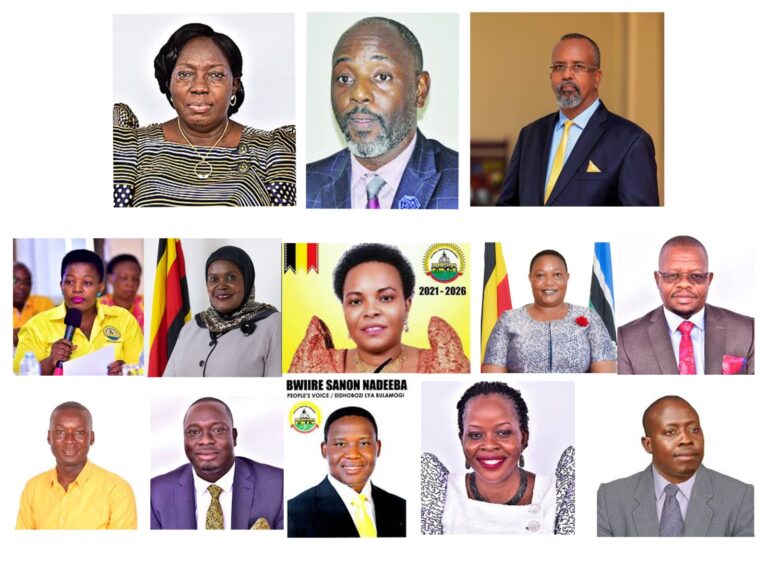
The presence of high-ranking officials from Busoga in cabinet such as  RebeccaKabaga ,  Justine  kasule Lumumba , LukiaNakadama , Moses AshimMagogo , MillyBabalanda and  many others  has not shielded the region from economic struggles. Instead, many leaders appear more preoccupied with personal ambitions, political rivalries, and internal power struggles than addressing the dire needs of their constituents. The competition for influence and position within the ruling party has taken precedence over the unified pursuit of development. The failure to prioritize Busoga’s progress raises serious concerns about whether these leaders truly represent the interests of their people or if they have become comfortable in their positions, disconnected from the struggles of the ordinary Musoga.

The Cycle of Political Loyalty and Neglect

Busoga has remained loyal to the NRM for decades, delivering overwhelming support in every election. In return, the region expected economic empowerment, better public services, and a fair share of the national cake. But what has been the reward for this unwavering support? The sad reality is that Busoga’s loyalty has not translated into meaningful transformation. Instead, the region continues to suffer from chronic poverty, youth unemployment, and underdevelopment, while other regions with far less political representation are making significant strides forward.

One must ask: Is Busoga being taken for granted? Has the government assumed that because Busoga votes overwhelmingly for NRM, there is no urgency to improve its living standards? Or have the region’s own leaders failed to demand more for their people?

A Call for Accountable Leadership

The people of Busoga must rise and demand accountability from their leaders. Political positions should not be viewed as personal achievements but as responsibilities to serve and uplift communities. It is not enough for politicians to attend high-profile meetings and make promises; their legacy should be measured by the impact they have on the ground.

The solution lies in shifting the focus from politics to service. The people of Busoga must challenge their leaders to deliver tangible results. Infrastructure must improve, industries must be established to create jobs, and education must be prioritized. Leaders must stop using their positions for self-preservation and instead use their influence to advocate for policies that directly benefit the people.

A Wake-Up Call to Busoga’s Leaders and the NRM

The time for empty promises is over. Busoga’s leaders must wake up and recognize that their legacy will not be defined by the number of years they serve in cabinet but by the difference they make in the lives of their people. If they continue to ignore the region’s development, history will judge them harshly.

At the same time, the ruling NRM must not take Busoga’s loyalty for granted. The region’s patience is wearing thin, and failure to deliver on key development projects may lead to a political shift in future elections. The government must take deliberate steps to address the economic and social challenges facing Busoga if it hopes to maintain the trust of its people.

Conclusion: The Choice is Ours

Busoga is at a crossroads. Will the region’s political leaders rise to the occasion and champion the development their people desperately need? Or will they continue to enjoy the privileges of power while their constituents remain trapped in poverty?

The people of Busoga must decide. They can either continue to tolerate broken promises or demand real change. The time for rhetoric is over. It is time for action. The leaders have the power, but the people have the voice. And that voice must be heard.

DaglousBakinyumya is Political TV Producer and TV Host – @BDouglasPaapa

NEW BLOOD: Journalist wants to kick Mike Mukula out of NRM’s fat slot

0

By Tuuke Joseph Allan

The National Resistance Movement (NRM) is working around the clock to elect a new leadership that will drive them through the 2026 general elections. While the old guards are reluctant to retire, the youth are becoming more aggressive to take up leadership positions in the party.

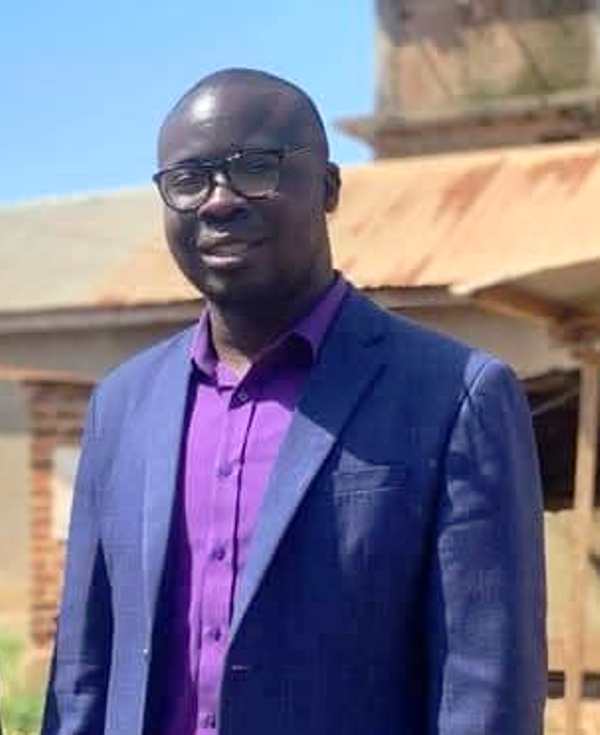
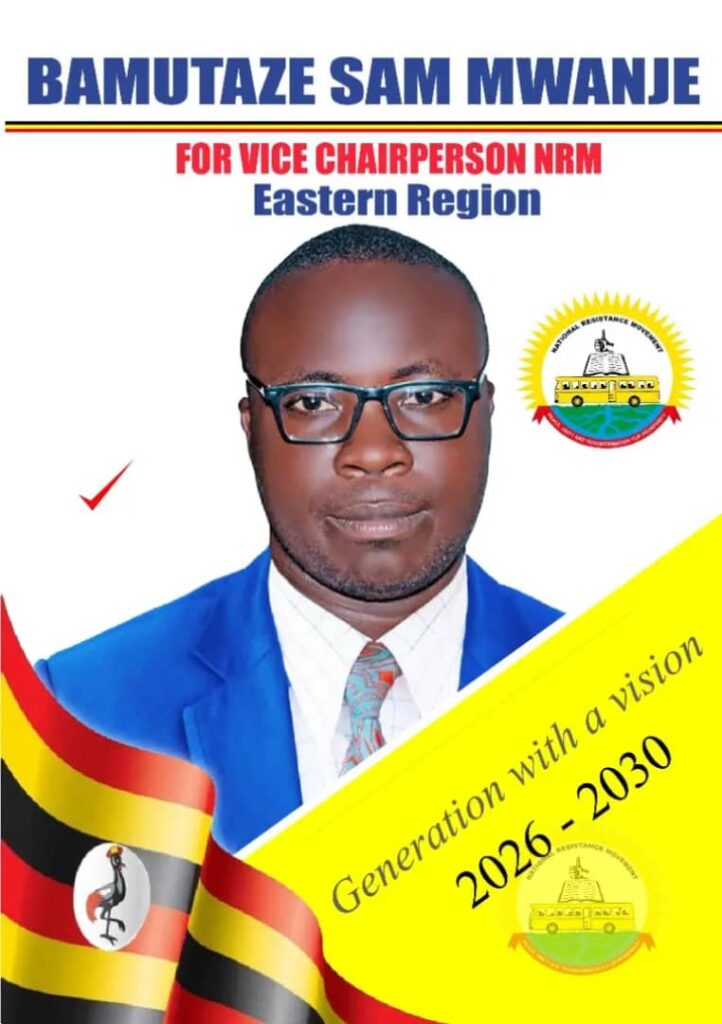
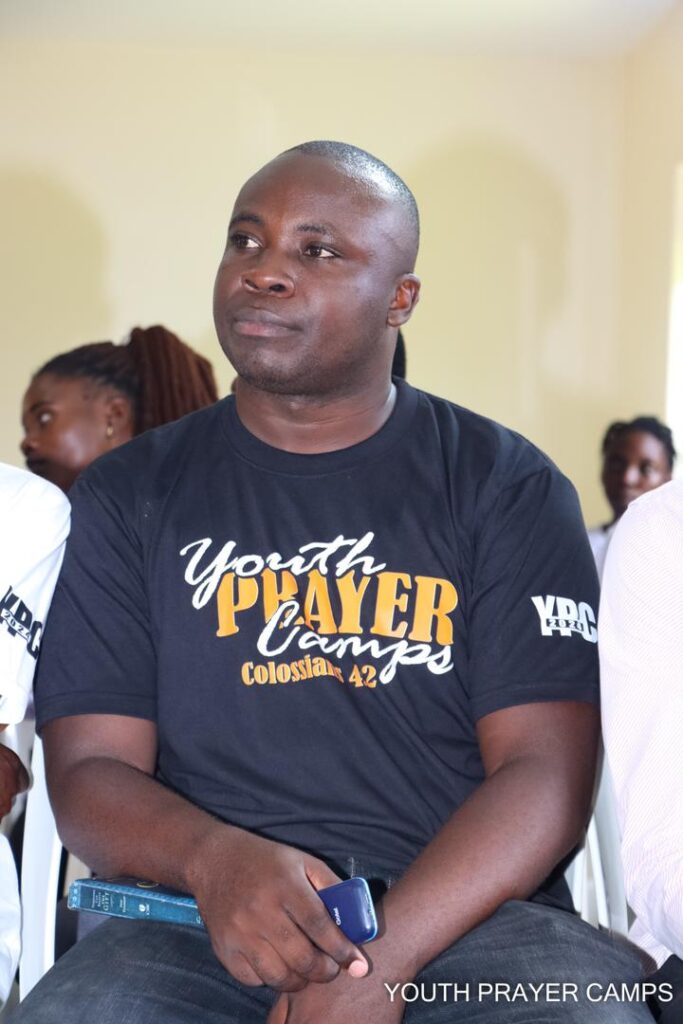
One such youth vying to get a seat at the table of men in the NRM is Sam Bamutaze Mwanje, a journalist based in Mayuge district. Mwanje, boasting of a 12-year journalism experience, has vowed to unseat Capt. Mike Mukula as the NRM vice chairperson (male) in the Eastern Region.

Mwanje, a servant of God at God with Us Healing Ministries International in Mayuge, believes that it is time for the young generation to take over the party that has ruled Uganda since 1986. He is threatening Mukula’s hold onto the position he has held for 15 years.

Mwanje respectfully commended Mukula for the service he has rendered to the party; however, he has asked him to step down. “It is our generation as we are youth. We have to take over and continue leading our party,” he said, adding, “We respect him for his work towards the development of our party but let him step down and give us advice as we take over.”

About Mwanje

Mwanje, who is also a coffee and cocoa farmer, was born in Busuulu Village, Bugeywa Parish, in Butansi subcounty, Kamuli district. He is an established NRM cadre, having received extensive leadership training at the National Leaders Institute (NALI) Kyankwanzi.

He is the president of the Eastern Gospel Journalist Association. He is a talk show host and news anchor. He is also the Minister for Information and ICT in Bunole Bunanumba Chiefdom. He is the Chief Executive Officer of Sow A Smile Foundation Uganda.  

INFRASTRUCTURE LINK: Kadaga commissions Saka Bridge connecting Kaliro to Pallisa  

0

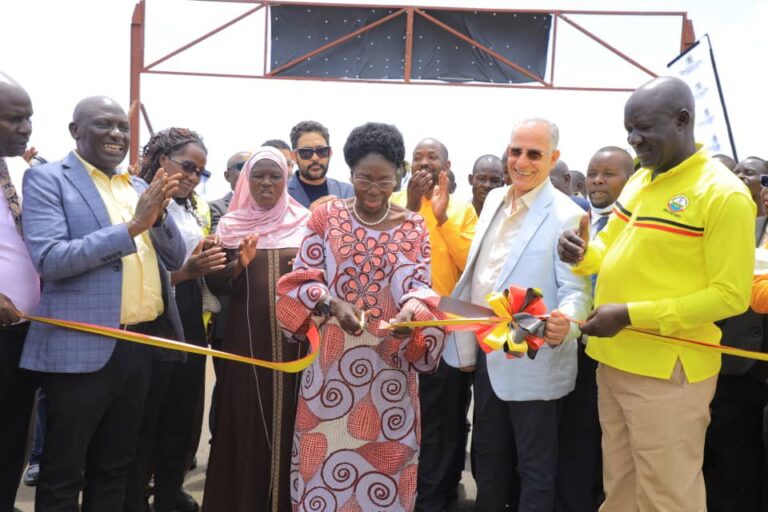
Residents in the districts of Kaliro and Pallisa can now interconnect seamlessly after the commissioning of Saka Bridge by the First Deputy Prime Minister and Minister for East African Community Affairs, Rt. Hon. Rebecca Kadaga, who represented President Yoweri Museveni.

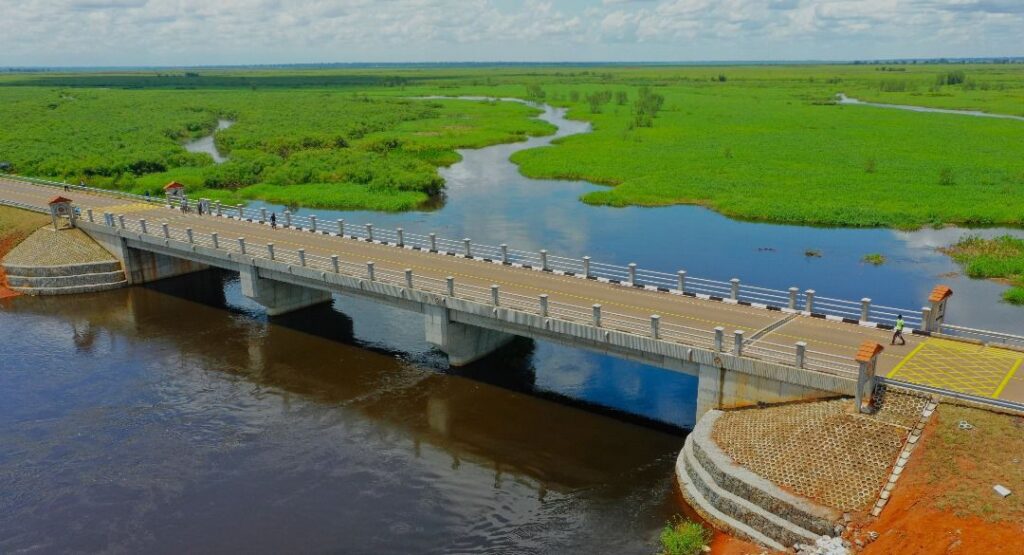
The bridge, a vital infrastructure in the region, will catalyze economic growth by boosting trade, enhance connectivity, and improve safety for local communities. The Saaka has a projected lifespan of 120 years.

Kadaga commended Arab Contractors, the company contracted to build the bridge at Saka swamp, for the quality of work done and completing it eleven months before schedule. I look forward to working with you on other projects around the country, Kadaga stated.

“You people of Pallisa, the roads are meant to enable you work and generate wealth which would translate into development of the Country,” Kadaga told the congregation at the commissioning.

Under the National Roads Development and maintenance programme (NRDMP) selected town roads (7.5km) in Pallisa and (12.2km) in Kumi were upgraded from gravel to bituminous standard.

The project was funded by the Ugandan government at UGX 76.5 billion under the National Roads Development and Maintenance Programme.

The project features a 60m bridge (3 spans), 6 box culverts, 4 pipe culverts, and paved approach roads. The works began in July 2022 and concluded in February 2024 under the supervision of the Ministry of Works and Transport.

The bridge crosses the Saaka Swamp, a 3.5-kilometre wetland located at the border between Kaliro and Pallisa Districts. With approach roads of 0.5 kilometres on either side, the crossing connects Namwiwa Sub-County in Kaliro District to Kasodo Sub-County in Pallisa District.

It is situated approximately 28 kilometres from Kaliro Town and 10 kilometres from Pallisa Town. The swamp is traversed by River Mpologoma, which drains from the Mount Elgon region and feeds into Lake Kyoga.

“Saaka Bridge offers an opportunity to guarantee safety of residents within Kaliro and those of Pallisa,” said State Minister for Works, Musa Ecweru, during the commissioning. “In the past, residents of these areas faced several unfortunate fatalities, especially during the rainy season as the available mode of transport was use of canoes.”

MORE THAN THAT: Workers of Uganda are not only those targeted by Parish Development Model

0


By Oweyegha-Afunaduula

“You will have to work hard all your life to make it produce enough food for you…….You will have to work hard and sweat to make the soil produce anything….” Genesis, 3:17-19)
President Apollo Milton Obote made Poverty, Ignorance and Disease the triplets that his two-time regime (1962-71, 1981-85) had to focus time, energy and money to combat and conquer.

Accordingly, he emphasised education, health and household incomes the primary concerns of government. Foe this matter he believed and was convinced that all development was human development or social development. In his time ecological development and environmental development were not adequately known and factored in the development equation.

President Tibuhaburwa Museveni, however, did not only demystify the gun but also education, health and house hold incomes for all. His philosophy of development was “Infrastructure first and social development last. However, when it came to social development, he made conquering poverty the hallmark of his 40-year regime occupation and domination of Uganda. As the perennial Minister of Finance, the President disoriented the national budget to financially support his numerous, often defective schemes, to combat poverty.

The schemes included Bonna Bagaggawale, Operation Wealth Creation, Myooga and Parish Development Model. Unfortunately, while it was sold that the schemes were to make the poor rich, they ended up being tools for illusionary richness in the case of the poor. The schemes benefitted the already rich, who through corruption accessed those enormous amounts of money invested into the schemes to enrich themselves.

It, was, therefore, deceptive socio-economic development of the poor. As a result, the more time, energy and money were focused on those schemes, the more development time and energy were lost and the more poverty (in is diverse forms and/or dimensions it proliferated. It was as if the schemes were intended to sow seeds of poverty rather than conquer poverty.

Except Operation Wealth Creation, which emphasised giving the beneficiaries materials, plants and animals, the schemes involved giving money bonanzas to a few select individuals, often in a partisan way. It was difficult to make who ever got the money bonanza (s) to work had and produce to conquer poverty. So much public money, which would have been used to combat poverty in a more informed, less politicised way and improve the quality of education and health of our people was instead lost in the schemes. However, the more money was lost, the more The Parliament of Uganda invested in the developmentally fruitless schemes.


There was no day President did not talk about poverty the more time, energy and money were invested conquering the vice. In fact, it would not be far-fetched to state that the absolute majority of Ugandans are far more impoverished than ever before the schemes were initiated at the bottom of society. Many times, during his focus on poverty, the President decried the poverty that reigned in the country. He more or less was telling Ugandans that the schemes were not working although they consumed billions of Shillings.
Let me focus on one of the schemes: the Parish Development Model (PDM). I have written about it before, especially in connection with its capacity to destroy the total environment. Now I want to write about it in connection with its capacity to impoverish rather than improve the income levels of the absolute majority of Ugandan families.


PDM was initiated in 2022 almost in the middle of Myooga, which performed and continues to perform disastrously after consuming billions of shillings. It is a Uganda government strategy aimed at improving incomes and welfare of households by bringing services closer to the people. With the parish as the lowest administrative and operational hub for planning, budgeting, reporting and service delivery.


PDM primarily targets subsistence households and vulnerable grouped, ostensibly to include them in the money economy. However, it initially targeted 30 people but now targets only 100 people parish. The falsehood is that once these people start experiencing development and prosperity, these two will trickle down and proliferate throughout the parish communities and then be felt throughout Uganda.


The introduction of the PDM in Uganda raises the question of whether state-led local development initiatives, when undertaken in partnership with the private sector and civil society are feasible in a resource constrained country (Kayizzi, 2024). Katusiime (2025) submits that by prioritizing key commodities, promoting financial inclusion and providing affordable loans through SACCOs, the PDM has already demonstrated its potential to uplift vulnerable households and communities. However, Kayizzi (2024) identifies four specific challenges of PDM: (i) maintaining policy and institutional coherence; (ii) establishing credible partnerships for local development between the government, the private sector and civil society; (iii) mobilizing human and financial resources, including at the local level, to sustain program implementation; and (iv) fostering self-determination at the local administrative levels and preventing local-level system capture.


Kayizzi (2024) and Katusiime (2025) agree that the success of PDM programme hinges on addressing the critical challenges, including human and financial constraints and the inefficiencies in resource allocation. Katusiime (2025) stresses that tailoring solutions to meet the unique needs of different regions of the country and improving oversight mechanisms will be essential for achieving the PDM’s full potential. So far so bad. The majority of Ugandans, however, are outside the precincts of PDM and have yet to feel its usefulness in transforming their livelihoods. The absolute majority not targeted by PDM are likely to continue swimming in ever deepening poverty which paying taxes to support the programme. In fact, the poverty situation today is worse among them than ever before. Yet as of January 2025, the Uganda government has allocated a total of Shs 2.3 trillion for the Parish Development Model (PDM), with a plan to increase funding to Shs 200 million per parish.


Effectively the Government of Uganda is segregating the labour force at household level, seeking to enhance the incomes of 100 people in every household in a parish at the expense of the rest of households. All Ugandans of different households, except those ever waiting to steal taxpayers’ money without working, are labouring, as instructed by God in the Bible Book of Genesis 3:17-19, to make ends meet with little or no helping hand from the government, now focussing on PDM, Myooga, and Operation Wealth Creation at a very high cost to the tax payers.


It is against this background that we are celebrating the Labour Day, May 1 2025 in Uganda. Nationally, the Labour Day will be celebrated at Nakapiripit. I have learn’t that the theme will be the Parish Development Model. If what I have claimed, that PDM is segregating the labouring Ugandans, is correct, and Labour Day is for all labouring Ugandans and beyond, then Parish Development Model is a misnomer for the Labour Day 1 May 2025.


It should be remembered that in my article (Oweyegha-Afunaduula, 2025) titled “How the Parish Development Model is Destroying Uganda’s Environment”, I stated that PDM operates mainly in the socio-economic dimension of the environment and predates on the ecological-biological dimension of the environment, which is the theatre in which all projects are imposed, often at the exclusion of environmental guidance since the focus is just on increasing the incomes of the PDM beneficiaries. It also ignores the sociocultural and temporal dimensions of the environment.

Therefore, it is destroying the total environment in all its dimensions and reducing its productivity for majority of labouring Ugandans. It is being environmentally unconscious and environmentally ignorant if we put PDM at the centre of celebrating Labour Day 1 May 2025. We can say that the environmental costs of PDM are very high for the labouring Ugandans, especially in the rural areas. This means that the dire consequences on the productivity of the environment should also be very serious. These include climate change. But who cares where the focus is to invest money to make more money, even if it is public money lost in a non-performing programme! In the case of corruption, whereby the country is said to lose as much as 10 trillion shillings annually, it does not matter because the money lost is government money (read public money)!
No! Workers of Uganda are not only those targeted by Parish Development Model (PDM)! The absolute majority of the workers of Uganda are outside PDM! PDM segregated Uganda’s workers!


For God and My Country


Further Reading


Guloba, M. 2022. “Uganda’s new ‘parish’ model tries development from the grassroots,” The Conversation, March 8.
Muhamadi Matovu (2022). Parish Development Model to target only 39% of Ugandans. Nile Post,
Musinguzi Patrick, Donald Kayuza and Peter Byabenda (2023). Merits and Challenges of Parish Development Model (PDM): Strategies for Improvement. Researchgate, August 2023, https://www.researchgate.net/publication/372951292_MERITS_AND_CHALLENGES_OF_THE_PARISH_DEVELOPMENT_MODEL_PDM_STRATEGIES_FOR_IMPROVEMENT Visited on 10 August April 2025 at 10:25 am EAT.
Oweyegha-Afunaduula (2025). How the Parish Development Model is Destroying Uganda’s Environment. MUWADO, March 6 2025. https://muwado.com/how-the-parish-development-model-is-destroyng-ugandas-environment/?v=2a0617accf8b Visited on 11:20 am EAT.
Steve Kayizzi-Mugerwa (2024). Uganda’s Parish Development Model in Practice: Rationale, Impact and Relevance for Bottom-Up Economic Development in Africa. Southern African Journal of Policy and Development, Volume 7 (2) May 2024. https://scholarship.law.cornell.edu/cgi/viewcontent.cgi?article=1101&context=sajpd Visited on 10 April 2025 at 10:11 am EAT.
Zacc Katusiime (2025). Uganda’s Parish Development Model: Uganda’s Solution to Poverty. The Borgen Project, Blog https://borgenproject.org/the-parish-development-model/ Visited on 10 April 2025 at 10:31 am EAT.

The centrality of money in Uganda’s politics: Poor quality leadership explained

0

By Oweyegha-Afunaduula

Former Vice-President of Uganda, Dr Specioza Kazibwe, said two things that still ring in my head. One was that Ugandans who do not embrace globalisation will be left behind. The other was that the poor will never rule Uganda.

Globalisation does not require the citizens to embrace it. It is beyond their understanding, although the fact is that the Uganda government was the first government in Africa to embrace globalisation. Uganda as a country has been harmed by globalisation far more than she has gained from it.

With respect to the statement that the poor will never rule Uganda, the former Vice-President seems to have correctly predicted what is happening today.

Those who seek to lead put money first and use money – often inappropriately resourced public money or unethical, immoral money – to buy their way to leadership.

Besides poor people, who may be the ones the country needs, are eliminated from accessing leadership positions at the level of nomination. A person seeking to be a Member of Parliament must pay 3 million Shillings on nomination day. A person seeking to be President of Uganda must pay 20 million Shillings  on nomination day.

Therefore, in Uganda we do not only have school dropouts or university dropouts. We also have political dropouts.

However, President Tibuhaburwa Museveni, who long ago in Busia said people should come to him because he has all the money, does not feel any financial stress at nomination, during elections, and after elections because all the time he is giving money to individuals and groups of individuals, such as ghetto children, to consolidate his power.

Of course, the money that he gives out is not personal money because he has repeatedly said he gets only 3.8 million Shillings every month as salary. If you want to ask how he gets his money, maybe refer to his cows in Rwakitura and Kisozi or the Parliament of Uganda, which ensures that he is a major factor in the national budget and in every supplementary budget, either as state house or classified expenditure.

During political campaigns, it is no longer a time for people to hear what ideas political candidates have. But it is time to expect to be given money. In the rural areas, politicians do not come to attend burials and “cry” with the bereaved but to show that he or she has money to give out. So, the mourners – the potential voters – do not compare the politicians on the basis of the ideas they have but on how much money they give out.

It is easy to link the declining quality in the people that end up as leaders in Uganda to the money they have and how much they give out. It no longer matters how long one interfaced with a blackboard. Apparently, even the President of Uganda does not emphasize it in the councils and in the Parliament.

We have people in Parliament who are not well exposed in terms of education and ideas and who are not friendly with readings. However, they are well endowed with money. They do not really meaningfully participate in parliamentary proceedings but only wait for the next round of political campaigns either to dance before their constituents or dish out money to them or both.

Therefore, what former Vice-President Specioza Wandira Kazibwe predicted has come to pass in the 21st century. Politics has become both an industry and the most lucrative employer, but the employees are more poor quality and financially empowered. When they are elected, the first thing they emphasize is filling their pockets with money.

They do not add value to the quality of legislation – something they leave to only a handful of Members of Parliament. The Cabinet is full of them too. Of the 83 Cabinet Members, only a handful of them are heard of. The rest are just consuming public money.

As I have always said, behind every problem is the problem of leadership. Although President Tibuhaburwa Museveni once said, “The problem of Africa is leaders who overstay in power,” in Uganda the problem of the country is leaders “who are leaders” because of money, not brains with ideas.

For God and My Country.