


Residents of 18 villages designated as a nuclear power project zone in Buyende District have been unable to develop their land and are still waiting for compensation two years after the government conducted a valuation exercise, Jinja South Division East MP Paul Mwiru has told Parliament.
Mwiru said the affected communities remained uncertain about when the government would compensate them, leaving residents unable to undertake development activities on their land because of the planned nuclear power project.
“They don’t know what to do; they cannot develop their land; they cannot do anything,” Mwiru said, raising concerns about the prolonged uncertainty facing the affected households.
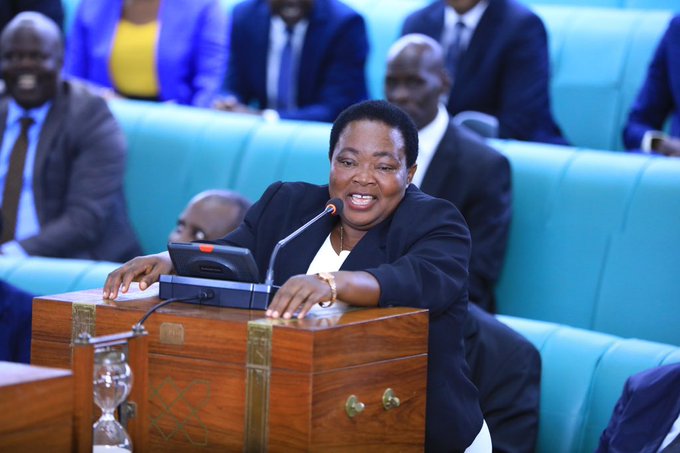
He asked Prime Minister Robinah Nabbanja, the Kakumiro District Woman Representative, when the government intended to compensate the residents.
In response, Nabbanja requested that Mwiru submit a written question to enable her to provide a concrete answer on the matter.
Presiding Officer Thomas Tayebwa directed that the question be extracted from the parliamentary proceedings for Nabbanja to respond to the following week. However, no specific compensation timeline was provided.
The concerns come as Uganda advances plans to establish its first nuclear power plant in Buyende District, in the Busoga subregion, with the proposed facility located at Kasaato Hill in Kasato Village.
The government has identified Buyende as the preferred site for the country’s first nuclear power station following evaluations of potential locations across the country. The site was selected based on its geological suitability and location outside seismically active zones.
Uganda is targeting 2031 for the commissioning of its first nuclear power plant, which is expected to initially generate 1,000 megawatts (MW), with capacity planned to expand to 8,400MW in phases.
The project is part of the country’s broader nuclear energy ambitions, which also include establishing a Centre for Nuclear Science and Technology to strengthen local research, technical training and institutional capacity in the nuclear sector.
The land compensation concerns come amid growing financial requirements for the government’s nuclear energy programme.
In February, during the budget process, lawmakers revealed that the government required an additional Shs150 billion to facilitate land acquisition and preparatory works for the proposed nuclear power plants in Buyende and Nakasongola districts.
According to the World Nuclear Association’s 2026 World Nuclear Output Report, Uganda’s nuclear development roadmap comprises four proposed power plants in Buyende, Nakasongola, Kiruhura and Lamwo districts.
The proposed Buyende facility is planned to have six reactors, each with a capacity of 1,400 megawatts electric (MWe), while Nakasongola is planned to have six 1,200MWe reactors.
The roadmap further provides for four 1,200MWe reactors in Kiruhura and four 1,000MWe reactors in Lamwo, with Buyende expected to be the first project to be developed.
Uganda has also engaged international nuclear technology expertise to advance preparations for the programme. Last year, Korea Hydro & Nuclear Power was contracted by the Ministry of Energy and Mineral Development to undertake an evaluation of a proposed nuclear power plant site in the Buyende region.
However, the concerns raised by Mwiru highlight the land ownership and compensation challenges that could affect communities living in areas earmarked for major infrastructure investments.
For residents in the 18 affected villages, the immediate concern remains when the government will fulfil its compensation obligations and allow them to move forward with their lives as preparations for Uganda’s nuclear energy ambitions progress.